Start with the words, not the artwork
A striking design can still be spoiled by one incorrect letter. Before reviewing colours or placement, copy every word from the artwork into a separate text document. Check spelling, punctuation, capitalisation and the intended order of words. Do not rely only on a spellchecker: names, slogans and deliberately unusual wording need a human review. Read the text slowly, then ask someone who has not been working on the design to read it as well.
Compare the artwork against the original brief rather than against your memory. For personalised shirts, check each name, number, nickname and message individually. Look closely at characters that are easy to confuse, such as O and 0 or I and 1. If a design uses several versions for different wearers, label the files clearly and confirm that the correct text appears in each one.
Review the layout at more than one size
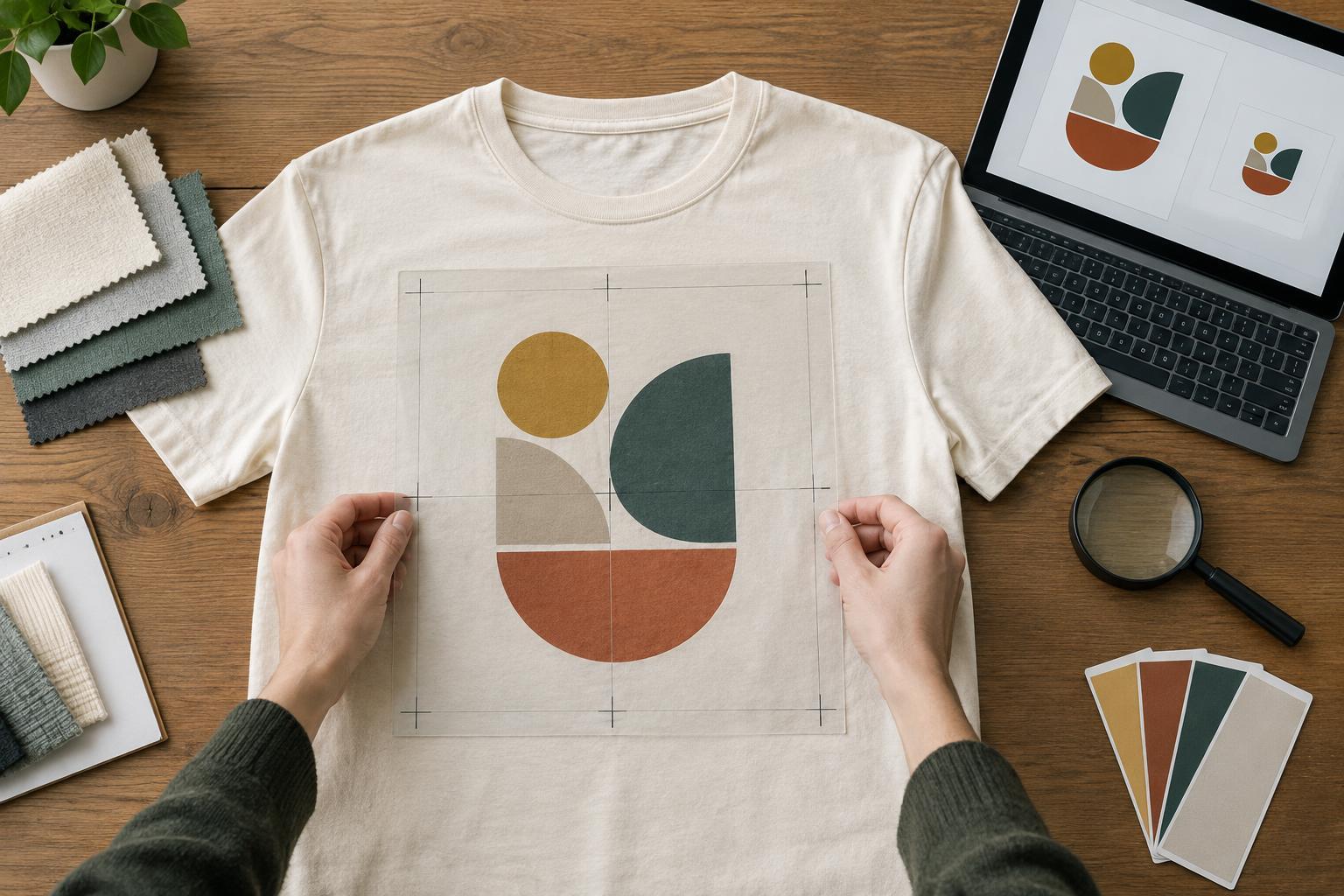
Open the design at its intended print size and also view it from a distance on screen. A phrase that looks balanced when enlarged may be difficult to read at the size it will appear on a shirt. Check whether the main message stands out, whether smaller text remains legible and whether decorative elements compete with important words. Pay attention to spacing around letters and between lines, especially in curved text or tightly arranged designs.
Then check the edges and alignment. Are elements centred where you intended, or does an illustration make the composition feel off-centre? Is there enough space around the design so it does not look cramped? Inspect any outlines, shadows and overlapping shapes at high zoom for stray marks or accidental gaps. Finally, return to normal viewing size: a tiny imperfection may not matter visually, while a spacing problem that disappears at high zoom can be obvious on the finished layout.
Place the design on the garment, not just a blank canvas
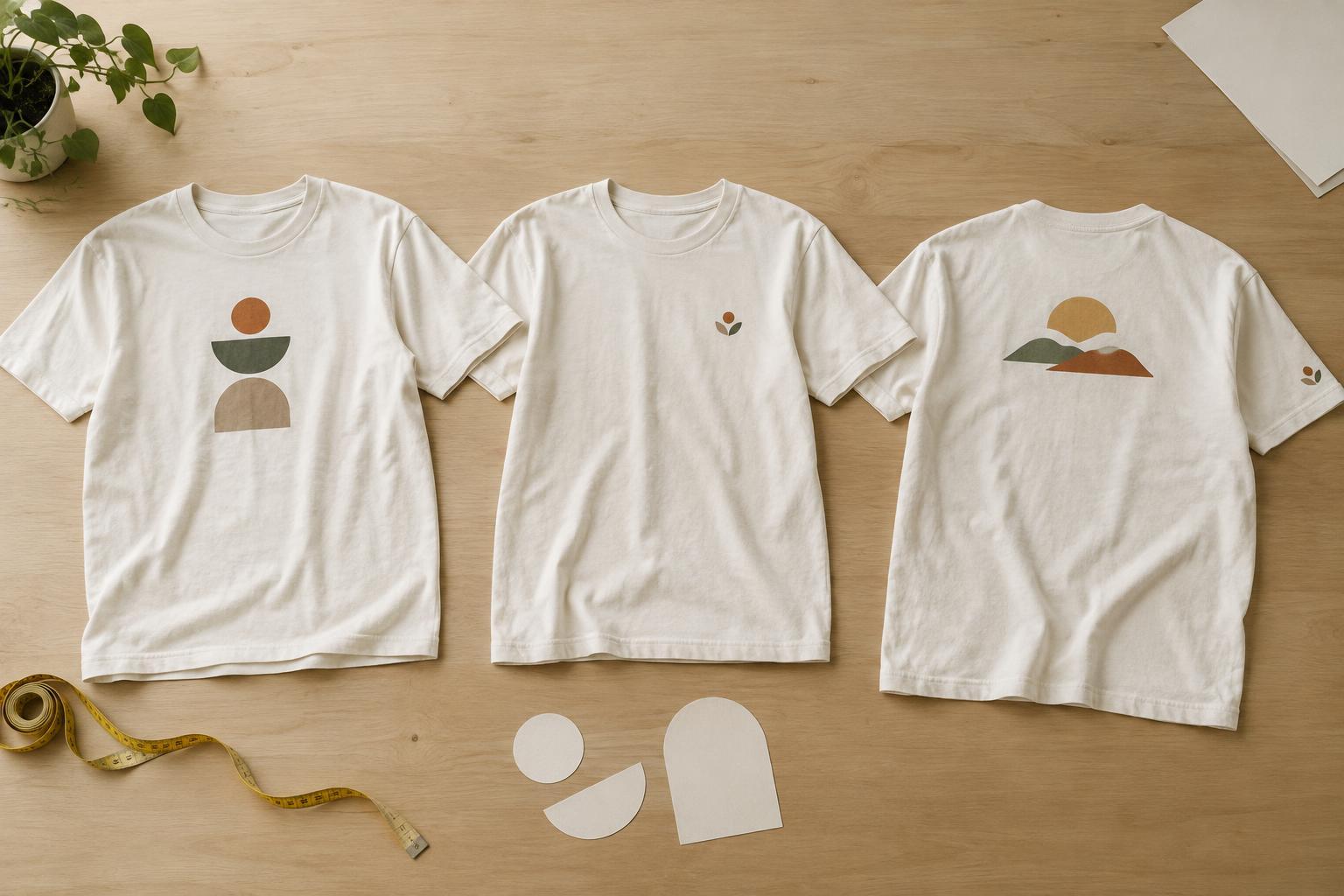
A flat artwork file does not show how a design relates to a collar, sleeve or hem. Put the artwork on a mockup of the intended shirt style and check its position in relation to those features. Review front and back designs separately, including which side should face outward on a sleeve. If more than one shirt size will be used, consider whether a single artwork size and placement will suit the range or whether adjustments may be needed.
Check the design against the garment colour, too. Fine lines and small text can become hard to see when their contrast with the fabric is low. A mockup helps reveal these concerns, but it is only a preview; it cannot guarantee exact colour, placement or print appearance. If the garment has seams, pockets or other features near the artwork, flag them before approving the layout.
Check that the artwork suits the decoration method
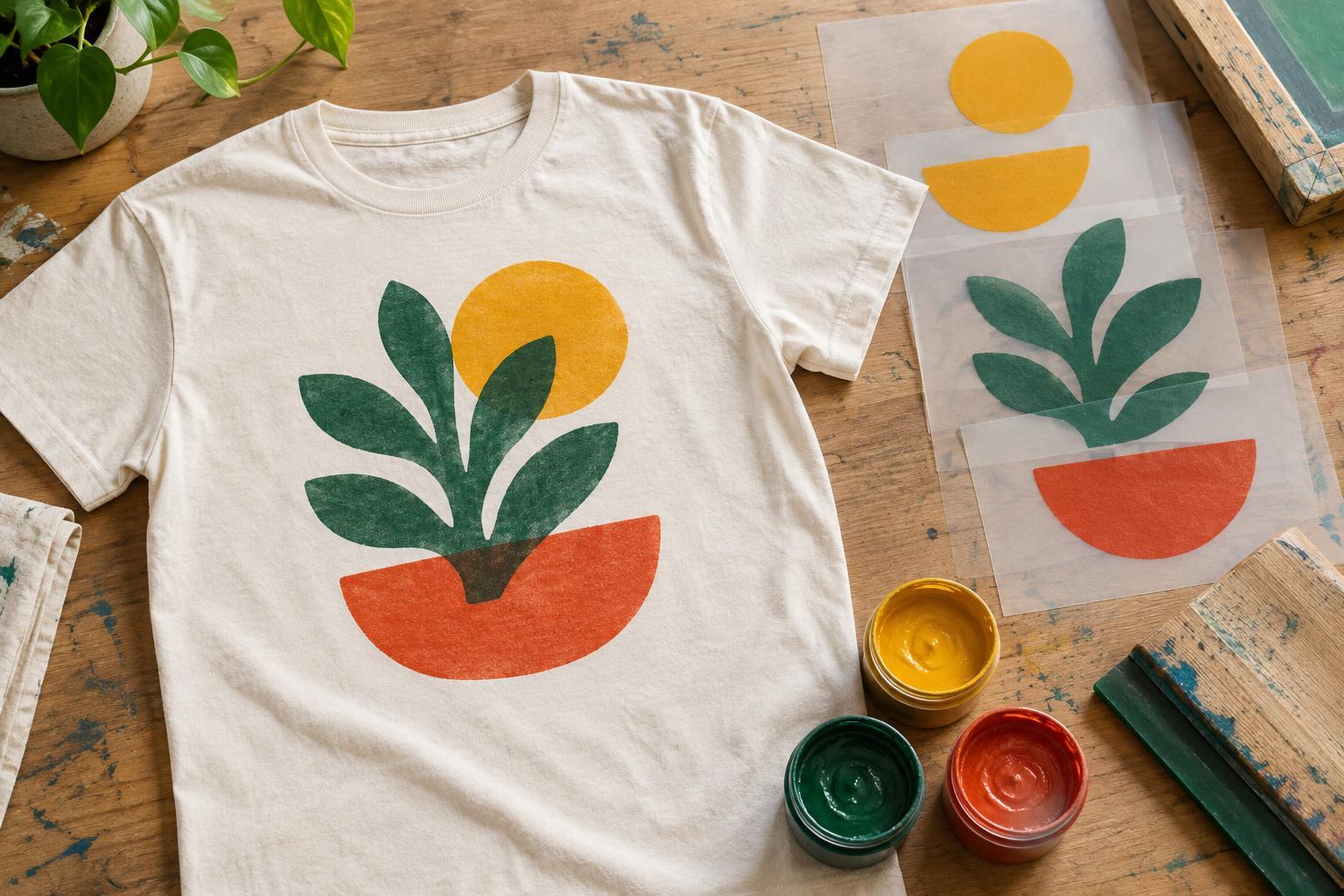
Different decoration methods place different demands on artwork. Very small lettering, thin lines, gradients and complex colour blends may be more or less practical depending on the method and the provider’s process. Ask for the relevant artwork requirements before treating the file as final. Confirm the requested file format, colour setup, background treatment and any minimum detail or placement guidance. Do not assume that a design which looks crisp on a monitor will reproduce the same way on fabric.
Inspect the actual file you plan to send, not just an exported preview. Make sure linked images are included or embedded as required, and check that no hidden layer contains outdated text. If a transparent background is needed, verify that the export has one rather than a white rectangle. Keep an editable original in case the printer requests changes, and give exported files unambiguous names.
Make final approval a separate step
Before production, review one final proof using a short sign-off list: correct wording, correct version, intended garment colour, intended print location, readable text and no missing elements. Where possible, have a second person check it without telling them what errors you expect. Fresh eyes are often better at spotting a transposed letter or a design placed on the wrong side.
Once approved, save the proof and the corresponding final file together so there is a clear record of what was checked. If anything changes afterward, repeat the review rather than assuming the edit affected only one detail. A deliberate final pass takes less effort than trying to diagnose an error after shirts have been decorated.