Start with the apron, not just the shirt
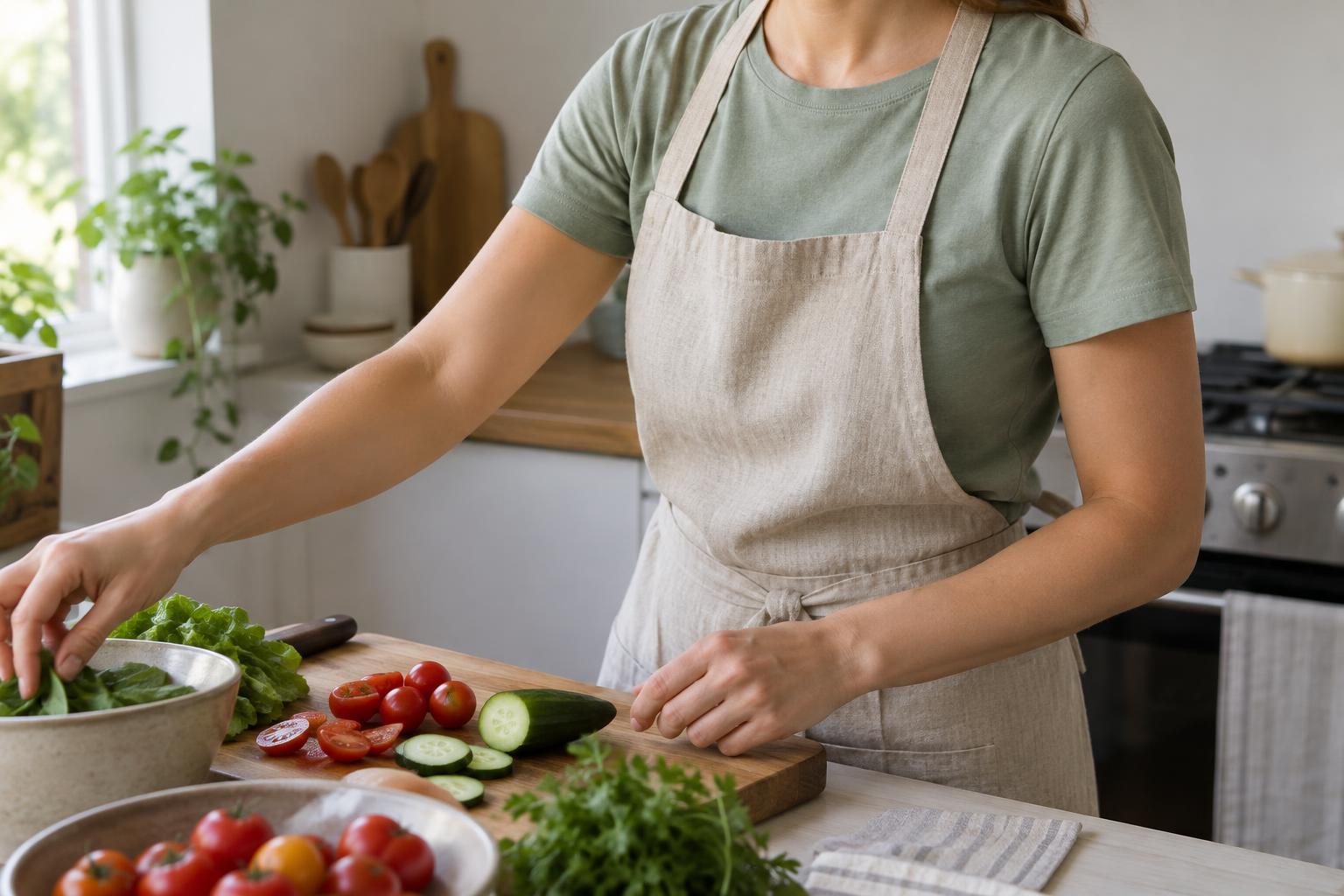
An apron changes how a T-shirt feels. Its neck loop, shoulder straps or waist ties may hold fabric against your body, while the bib can trap warmth across your chest. A shirt that feels loose on its own may bunch under an apron; one that feels close-fitting may become uncomfortable when you reach across a counter. Try the two together before deciding whether the combination works.
Pay attention to where the apron touches the shirt. If a neck loop rests over a thick collar seam, that area might feel bulky after a while. If the apron has cross-back straps, check for fabric gathering between your shoulder blades. Tie the apron as you normally would, then lift your arms, turn and bend to see whether the shirt stays comfortable.
Kitchen routines vary, so it helps to think about what you actually do while wearing the apron. Preparing a quick meal may call for different comfort priorities than spending hours moving between a sink, counter and table. For ideas about ingredients you might enjoy working with, browse Regional Ingredients · Central Valley Table; then consider the movements those meals involve.
Choose fabric for comfort and realistic care
A soft cotton jersey can be a comfortable starting point if you prefer a familiar feel against your skin. A cotton blend may appeal if you want a shirt that tends to dry more readily after washing, though the feel depends on the particular knit. Rather than choosing by fiber name alone, handle the garment if possible: notice its surface, weight and how easily it flexes.
Fabric weight matters under an apron. A very light shirt may feel pleasant in a warm kitchen but show moisture or the outline of apron straps more clearly. A heavier shirt may feel substantial yet warmer once covered by a bib. Neither is automatically better. If you can, wear the shirt with your apron for a short stretch of ordinary kitchen tasks and notice whether you keep adjusting it.
Consider how willing you are to care for the shirt after splashes and spills. Check its care label before buying, especially if you expect to wash it often. A color or pattern you enjoy may also make an everyday kitchen shirt feel less precious, although stains can remain visible on any fabric.
Look for a fit that moves without getting in the way
Aim for enough room to reach forward and overhead without the shirt pulling tightly across your back or riding up uncomfortably. At the same time, excess fabric at the torso can fold beneath apron ties. A useful test is to put the apron on, tie it, and reach toward the places you use most: a shelf, the sink and the far side of your worktop.
Sleeves deserve a separate check. Short sleeves that sit comfortably above the elbow may stay out of your way during food preparation, but the ideal length depends on your preference and tasks. If you wear longer sleeves, see whether they stay where you want them when you wash your hands or work near food. Avoid relying on a loose cuff that repeatedly slides down.
Check the shirt hem while bending and turning. It should give you the coverage you want without leaving a large amount of material gathered at your waist. When planning what to cook at home, you can browse Home Cooking · Central Valley Table for meal ideas and think through which tasks make you reach, lean or move most often.
Make the final choice easy to live with
Before committing to a kitchen T-shirt, wear it through a brief practice run: tie your apron, fill a glass at the sink, reach into a cupboard and sit down. Notice pressure points rather than judging fit only in a mirror. If you find yourself tugging at the collar, smoothing the back or pulling down the hem, a different cut may be more comfortable.
It can help to keep kitchen shirts separate from T-shirts you want to preserve for other occasions. That does not mean they need to be plain or disposable. Choose a color, graphic or fit you like, then check whether its care instructions suit your routine. The best option is one you can move in comfortably and clean without turning every meal into a garment-care project.