What pilling is and why it happens
Pills are small tangles of loose fibres that collect on a fabric’s surface. As a T-shirt rubs against a seat belt, bag strap, jacket or another garment, fibres can work their way out of the yarn and knot together. This is why pills often appear under the arms, at the sides or wherever a bag rests. Their presence does not necessarily mean a shirt has been washed incorrectly.
Some fabrics are more prone to visible pilling than others. Yarn structure, fabric construction, fibre length and the amount of rubbing all play a part. A smooth-looking shirt can still develop pills with regular wear. Removing them improves the appearance, but it does not change the conditions that caused them, so they may return.
Reduce friction while wearing your T-shirt
Notice where a particular shirt tends to pill. If the marks sit beneath a crossbody strap or backpack, try adjusting the strap so it does not repeatedly rub the same spot. A rough inner seam on an outer layer can have a similar effect. You do not need to stop wearing layers or bags; the aim is to limit concentrated rubbing when it is practical to do so.
Fit can matter too. A shirt that pulls tightly across the body may experience more friction in certain areas, while an oversized shirt may bunch beneath a jacket. Neither fit automatically causes pilling, but looking at where fabric gathers or rubs can help you decide whether a different layering combination would be gentler on a favourite tee.
Make laundry less abrasive
Check the care label first, then give the shirt enough room to move in the wash. A tightly packed load can increase rubbing, while garments with open zips, hooks or hook-and-loop fasteners may catch on softer fabric. Closing fasteners and separating particularly rough items from T-shirts are simple ways to reduce contact. A mesh laundry bag may help protect a delicate tee, although it cannot eliminate all movement.
Choose a wash cycle appropriate for the garment rather than assuming a vigorous cycle will clean it better. Turning a printed shirt inside out can reduce direct rubbing on its decoration. After washing, follow its drying instructions and avoid unnecessary handling while the fabric is damp. These habits cannot guarantee a pill-free shirt, but they can reduce avoidable wear.
Remove pills without pulling the fabric
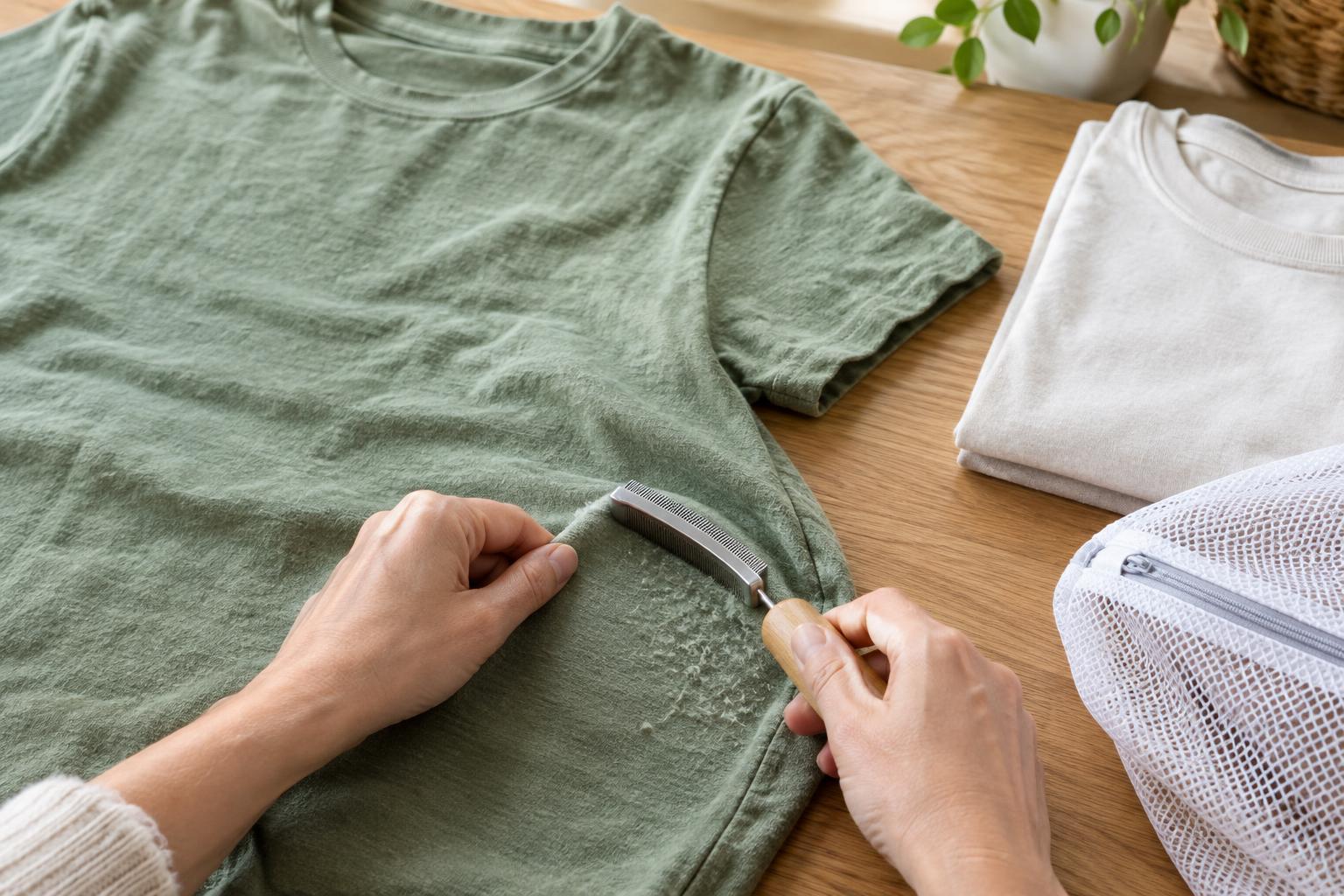
Lay the clean, dry T-shirt flat on a firm surface and smooth it without stretching it. For scattered pills, a fabric comb may be enough; for a larger area, a fabric shaver can be useful if its settings suit the material. Test any tool on an inconspicuous area first. Work lightly, pause often and remove only the pills that lift readily. Pressing harder risks thinning the fabric or catching a loose thread.
Avoid pulling pills off with your fingers, which can tug more fibres out of the yarn. Be especially cautious around seams, embroidery, transfers and raised prints. It is often better to leave a pill close to a decoration than to run a blade or comb across its edge. If the fabric is very thin, loosely knitted or already has a hole, skipping mechanical removal may be the safer choice.
Know when to leave well enough alone
Inspect the shirt after a gentle pass rather than aiming for a perfectly smooth surface. A few remaining pills are less noticeable than a worn patch caused by repeated shaving. If the same area pills quickly after each removal, focus on reducing friction there instead of removing fibres more often.
Pilling is mainly an appearance issue, so the right response depends on how you wear the shirt. A tee reserved for relaxed days may not need any treatment at all. For one you want to keep looking neater, careful laundry habits and occasional light removal offer a more measured approach than aggressive de-pilling.