What a surface finish does
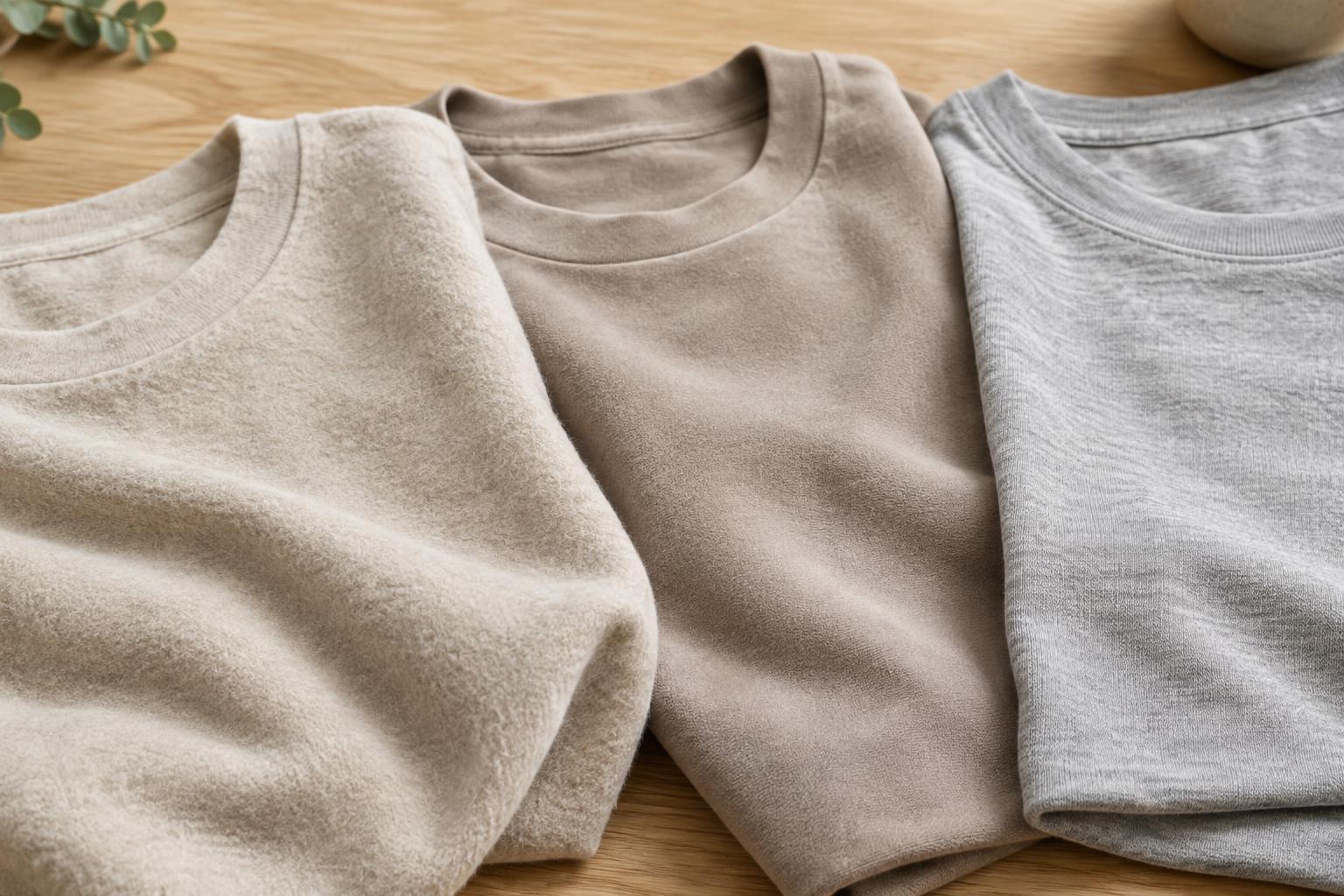
Two T-shirts made from similar yarns can feel surprisingly different. One reason is the treatment applied to the fabric surface. Brushing and peaching both disturb some of the outer fibres to create a softer touch, but they typically do so to different degrees. An untreated surface has not been deliberately raised in this way. “Untreated” does not mean the garment has had no finishing at all: it may still have been washed, dyed or prepared for sewing.
Finish is only part of the story. Fibre content, yarn construction, knit density and fabric weight also affect softness, drape and durability. Use the finish as a clue to what a shirt might feel like, rather than a guarantee. If you are choosing blanks for a custom design, compare samples in the intended colour and size whenever possible.
Brushed fabric: a more noticeable soft texture
Brushing uses a mechanical process to lift fibres from the fabric surface. The result can be a lightly fuzzy, cosy hand feel that suits casual T-shirts and cooler-weather layers. Depending on how the fabric is made and finished, brushing may be applied to the outside, the inside or both. An inside-brushed shirt can feel soft against the skin while keeping a comparatively smooth outer face for a graphic.
The raised surface can make colours look a little softer or less crisp than the same colour on a smooth fabric. It can also make fine printed details harder to judge before production. Loose surface fibres may shed or form pills with wear, particularly in areas that rub against bags or other garments. These are possibilities, not inevitable outcomes; the underlying fabric quality and care routine matter too.
Peached fabric: subtle softness without a strong nap
Peaching is a fine surface treatment that gives fabric a touch often compared to peach skin. It usually produces a shorter, subtler texture than pronounced brushing. A peached T-shirt may feel smooth at first contact and gently velvety when you run a hand across it. For someone who wants softness without an obviously fuzzy appearance, it can be a useful middle ground.
The label alone will not tell you exactly how a garment will feel. Brands may use “peached” for fabrics with different fibres, weights and degrees of treatment. Check whether the finish is on the face that will carry the design or only on the inside. For small lettering or thin lines, a smoother face is generally easier to assess than one with visible raised fibres, but a test print is the best way to check a particular fabric and decoration method.
Untreated surfaces: a clearer view of the knit
A fabric without a deliberately raised surface tends to show its knit structure more clearly. Depending on the yarn and construction, it might feel crisp, smooth, dry or naturally soft. It is not necessarily rougher than a finished alternative. A well-chosen smooth T-shirt can feel comfortable while providing an even-looking background for artwork.
This surface is often a practical starting point when comparing decoration options. A relatively even face can help you see edges, fine details and colour placement more clearly. Still, no finish guarantees a printing result. Ink type, artwork, fabric composition and the printer’s process all influence the outcome. If the design is important, ask for the method and garment to be tested together rather than judging from a fabric description alone.
Choosing and caring for the finish
Start with the shirt’s purpose. For a soft, relaxed feel, consider brushed or peached fabric; for artwork with delicate detail, give a smoother surface a close look. Then consider fit and weight separately. Surface treatment does not determine whether a shirt is boxy, close-fitting, light or substantial. Handling a sample, checking the size measurements and viewing the fabric in ordinary light will tell you more than a single finish label.
Follow the garment’s care label, especially after decoration. Washing inside out and avoiding unnecessary abrasion can help protect both a raised surface and a printed design. Use gentle drying when the label permits, and avoid assuming that a softer finish will stay identical after repeated washes. The most useful comparison is between shirts that meet your fit and design needs: choose the surface whose feel and appearance you will enjoy wearing, not simply the one described as softest.