Why the neckline is easy to pull out of shape
A T-shirt neckline has to stretch enough to pass over your head and then return toward its original shape. The collar’s knit structure, stitching, fabric and any elastic fibres all affect how well it does that. Repeated pulling can gradually change its shape, particularly if the fabric is wet or the collar is used to support the weight of the whole shirt.
Some changes are part of normal wear. A shirt with a relaxed collar may also look looser than one with a firmer ribbed band, even when both are in good condition. Before blaming the wash, check whether the neckline has actually grown uneven, developed waves or stopped lying flat. Those signs can help you spot habits worth changing.
Lifting a wet shirt by its collar
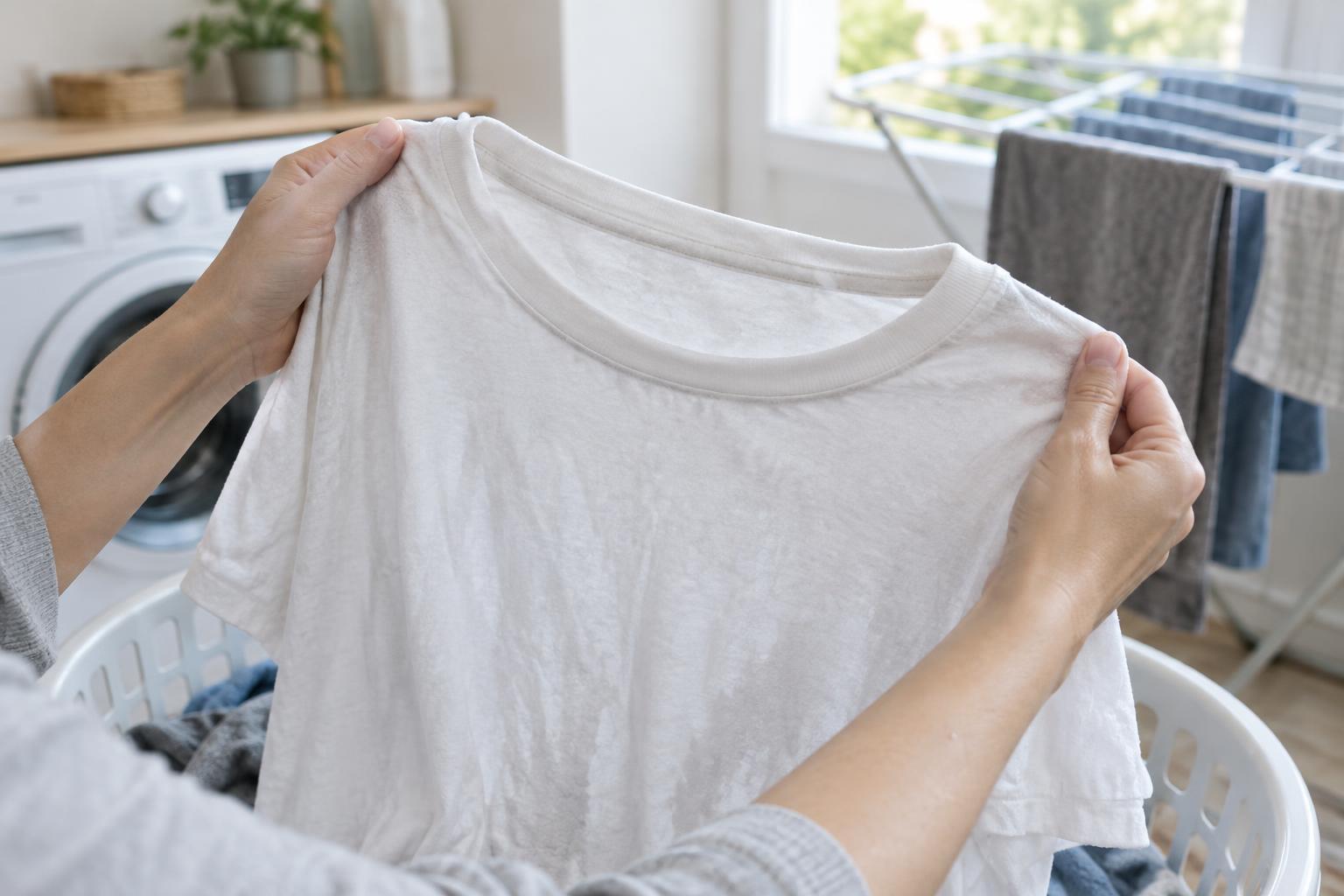
One of the simplest ways to strain a neckline is to pull a wet T-shirt out of the machine by the collar. Water adds weight, and the full weight of the garment then hangs from a narrow band of fabric. The same thing can happen when you tug a shirt free from tangled laundry or carry it to the drying rack by its neck opening.
Instead, slide your hands under the body of the shirt and lift it from more than one point. If garments have twisted together, separate them gently rather than pulling on whichever edge is easiest to grab. This takes only a moment and spreads the load across a larger area.
Overloading the washer and using more force than needed
A tightly packed washer leaves less room for garments to move freely. Shirts may become knotted with heavier items, making them harder to remove without tugging. Rough handling while loading or unloading can add to the strain, especially if you repeatedly pull a T-shirt by its collar or shoulder seams.
Give laundry enough space to circulate according to your machine’s guidance, and consider washing delicate tees away from bulky items that can catch or twist around them. Turning a printed T-shirt inside out may help reduce rubbing against its design, but it does not make the neckline immune to pulling. When choosing a cycle, start with the garment’s care label; a gentler setting may be useful for shirts that tend to twist or lose shape.
Drying methods that leave the collar bearing the weight
Hanging a soaking-wet T-shirt from a narrow hanger can make the neckline carry much of the garment’s weight. For some shirts, this encourages a stretched opening or creates bumps near the shoulders. Pegging a shirt by the collar can concentrate force in an even smaller area.
After washing, gently reshape the neckline with your hands while the shirt is damp; avoid yanking it back into place. If the care label permits air drying, lay the shirt flat on a suitable surface or hang it so its weight is supported across the body rather than by the neck. Follow the label’s dryer instructions if you use a machine dryer. High heat can affect some fibres and finishes, so it is not a reliable way to fix a loose collar and may cause other unwanted changes.
Small habits that help between washes
Laundry care begins before a shirt reaches the washer. Pulling it off by hooking fingers under the front of the neck puts repeated pressure on the same spot. Try loosening the shirt from the hem and lifting it evenly over your head instead. If the opening feels consistently tight, choosing a different neckline or fit may be more comfortable than forcing it each time.
Once a T-shirt is dry, folding it avoids leaving a soft collar stretched around a hanger for long periods. If you prefer hanging, use a hanger that supports the shoulders and feed it into the shirt from the hem rather than pushing it through the neck opening. These habits cannot reverse every stretched collar, but they can reduce avoidable strain and help a well-fitting tee hold its shape for longer.