Start with how the shirt will be worn
The best T-shirt fabric depends on what the wearer will do in it. A soft shirt for everyday use, a top for exercise and a blank for a detailed print may call for different materials. Cotton, polyester and blends are useful starting points, but the fibre name alone cannot tell you everything about a shirt. Knit structure, fabric weight, finishing and cut also affect how it feels and fits.
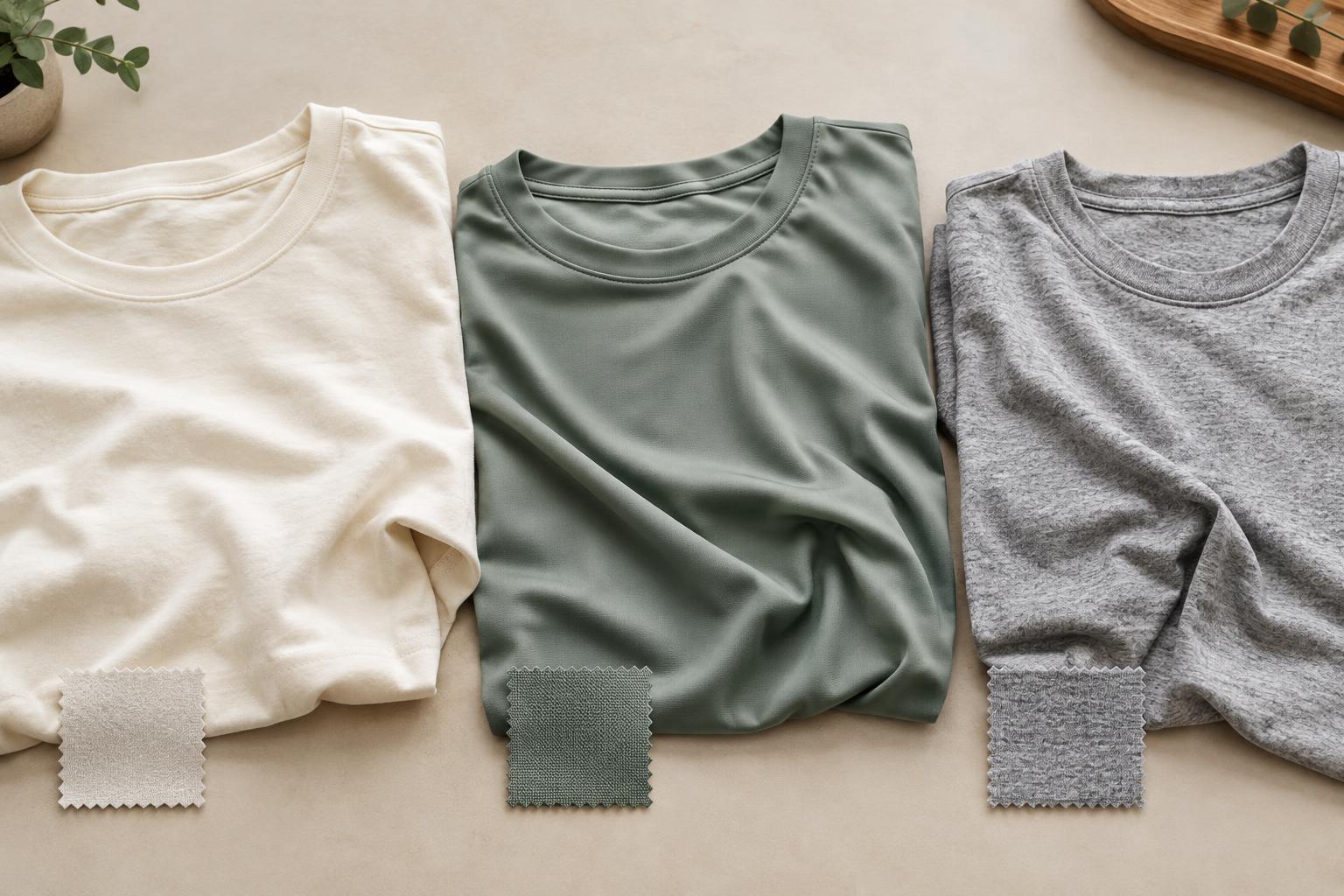
When comparing blanks, handle the fabric if possible. Notice whether it feels smooth or textured, light or substantial, stretchy or firm. Hold it up to the light to get a rough sense of coverage, then check how it hangs from the shoulder. Two shirts with the same fibre content may still drape quite differently. If a design depends on a particular fit or print finish, testing one sample is more useful than relying on a fabric label alone.
Cotton: a familiar feel with some care considerations
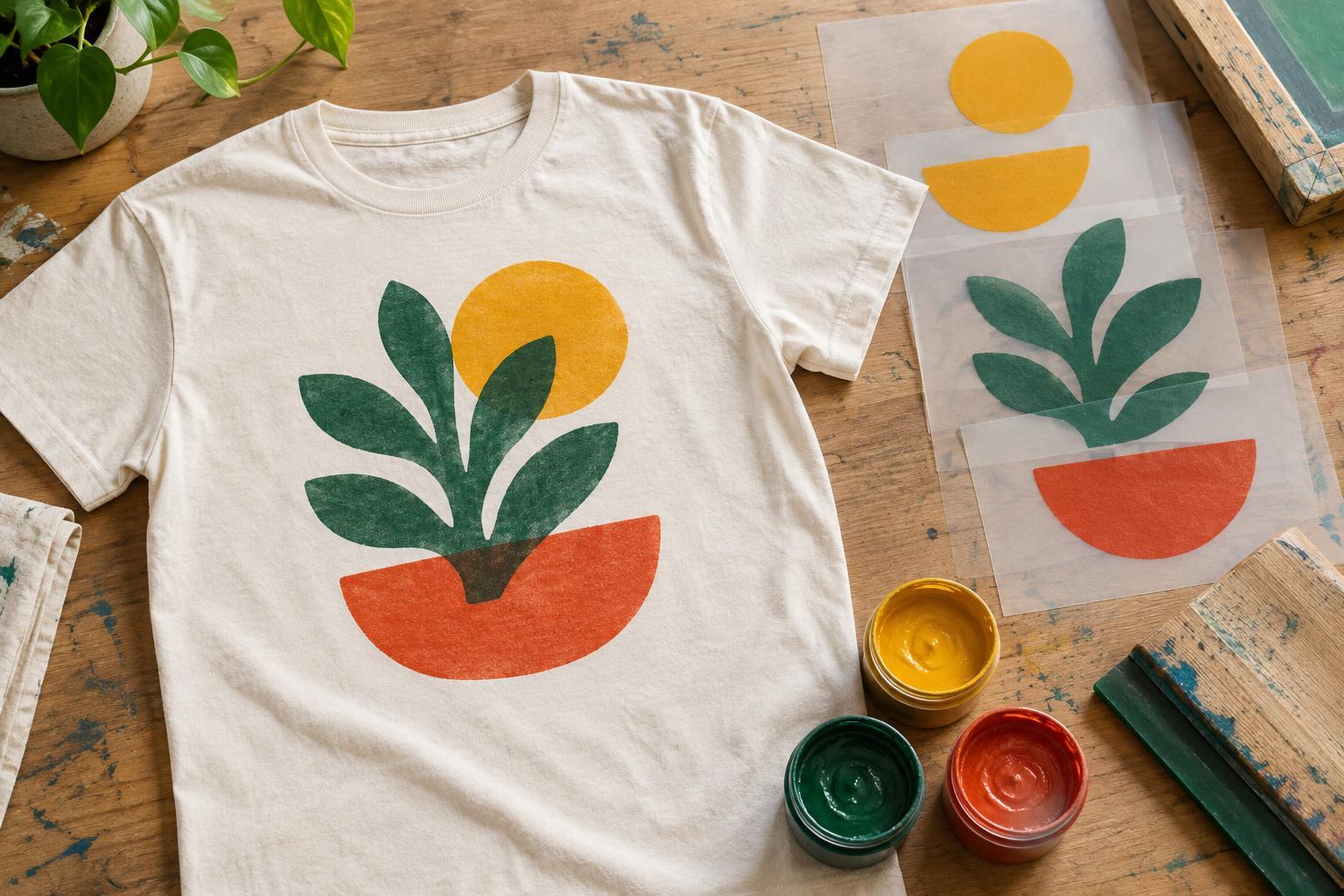
Cotton is often chosen for its soft, familiar feel and its ability to absorb moisture. Many people like it for casual shirts worn against the skin. Its surface can also work well for common decoration methods such as screen printing and direct-to-garment printing, although the finish depends on the specific shirt, ink and process. A smooth, even knit generally gives a design a more predictable surface than a heavily textured one.
Because cotton absorbs moisture, it may stay damp longer than a polyester shirt after heavy sweating or washing. Cotton can also shrink, especially if exposed to high heat, though the amount varies with the fabric and any pre-shrinking treatment. For a shirt that needs to keep a precise fit, check the maker’s sizing and care information rather than assuming every cotton tee will behave alike.
Polyester: quicker drying, with a different feel
Polyester tends to absorb less moisture into its fibres than cotton and can dry more quickly. That makes it a common choice for activewear and shirts that need to be washed and worn frequently. It also generally resists shrinking and wrinkling better than cotton. Depending on the knit and finish, however, polyester may feel slicker or less familiar to someone who prefers a traditional cotton tee. Comfort is personal, so a fabric sample matters.
Polyester is often used for dye sublimation, a decoration method that can produce designs integrated into compatible fabric. Results depend on the garment, colours and process; a design intended for sublimation should be planned for an appropriate polyester-rich blank. Other print and transfer methods may also work on polyester, but heat settings and materials must suit the garment. If printing at home or ordering custom work, confirm compatibility before committing to a batch.
Cotton blends: a compromise worth checking closely
A cotton-polyester blend combines fibres in one fabric, but there is no single “blend feel.” A cotton-rich shirt may feel closer to cotton, while a polyester-rich shirt may dry more quickly and feel closer to performance wear. Blends can offer a useful balance of softness, shape retention and easy care. The exact result depends on the fibre proportions, yarn, knit and finishing, so compare actual garments rather than assuming a blend sits neatly halfway between the two fibres.
Blended shirts can be attractive for everyday designs that need to feel comfortable without requiring especially careful handling. They do call for attention when choosing a decoration method. Some processes work across a range of blends, while sublimation relies on polyester fibres and may look different on a blend than on a suitable all-polyester garment. Ask for a sample or test print when colour and detail are important.
Make the choice around your design, fit and routine
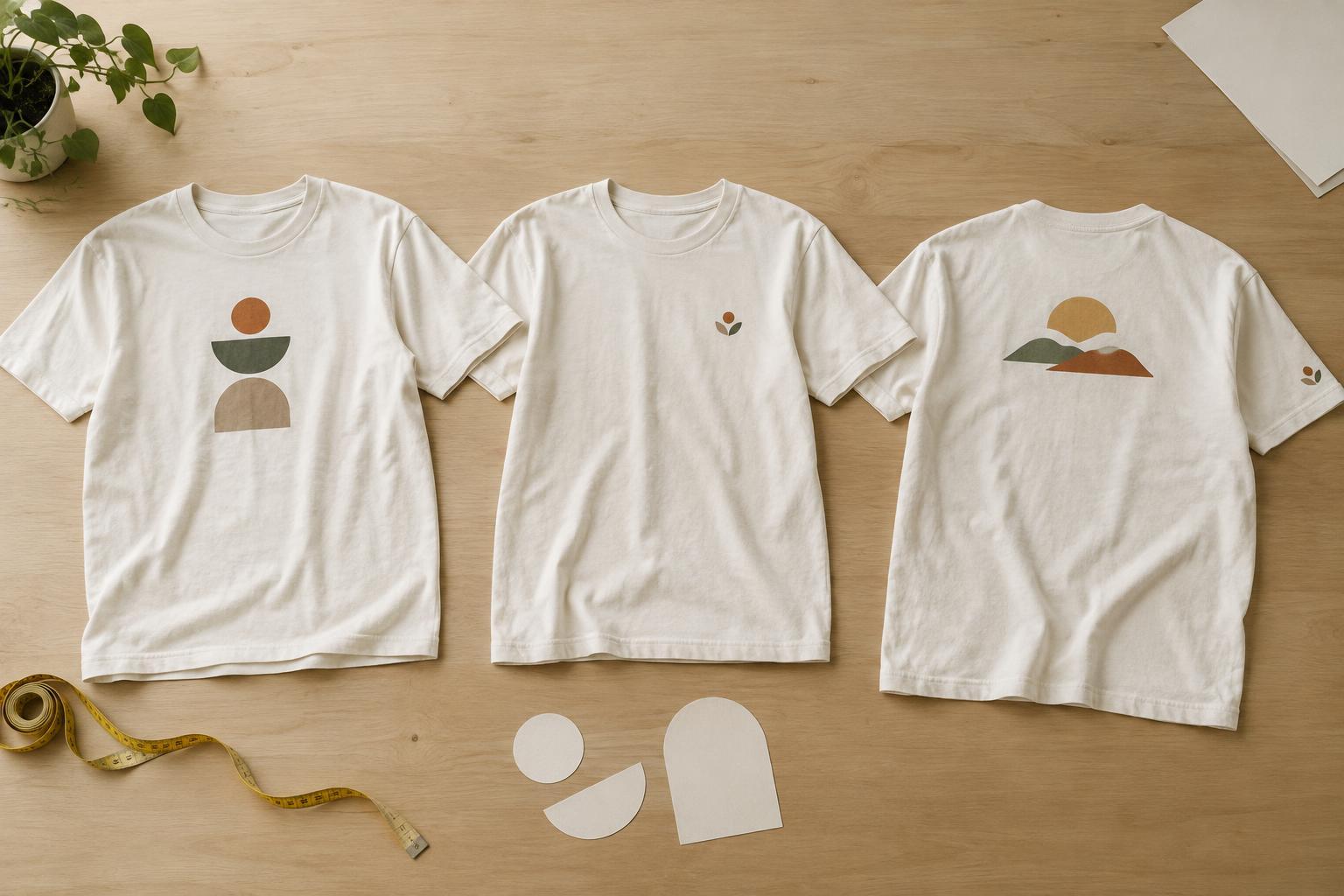
For a relaxed everyday tee, start by comparing cotton and cotton-rich blends in the weight and cut you like. For exercise or frequent quick washing, consider polyester or a polyester-rich blend. If a particular printing method is central to the design, choose the garment and decoration process together rather than treating fabric as an afterthought. Light-coloured, smooth blanks may present a design differently from dark, textured ones, even when their fibre content matches.
Finally, think about how the shirt will be cared for. Follow its label, wash and dry at suitable temperatures, and take any decoration-specific instructions into account. Heat can affect fit, fabric finish and some prints, so a gentle routine is a sensible starting point when the garment permits it. The most useful choice is the shirt that feels right, supports the intended design and fits the way its wearer will actually use it.