Why the neckline matters
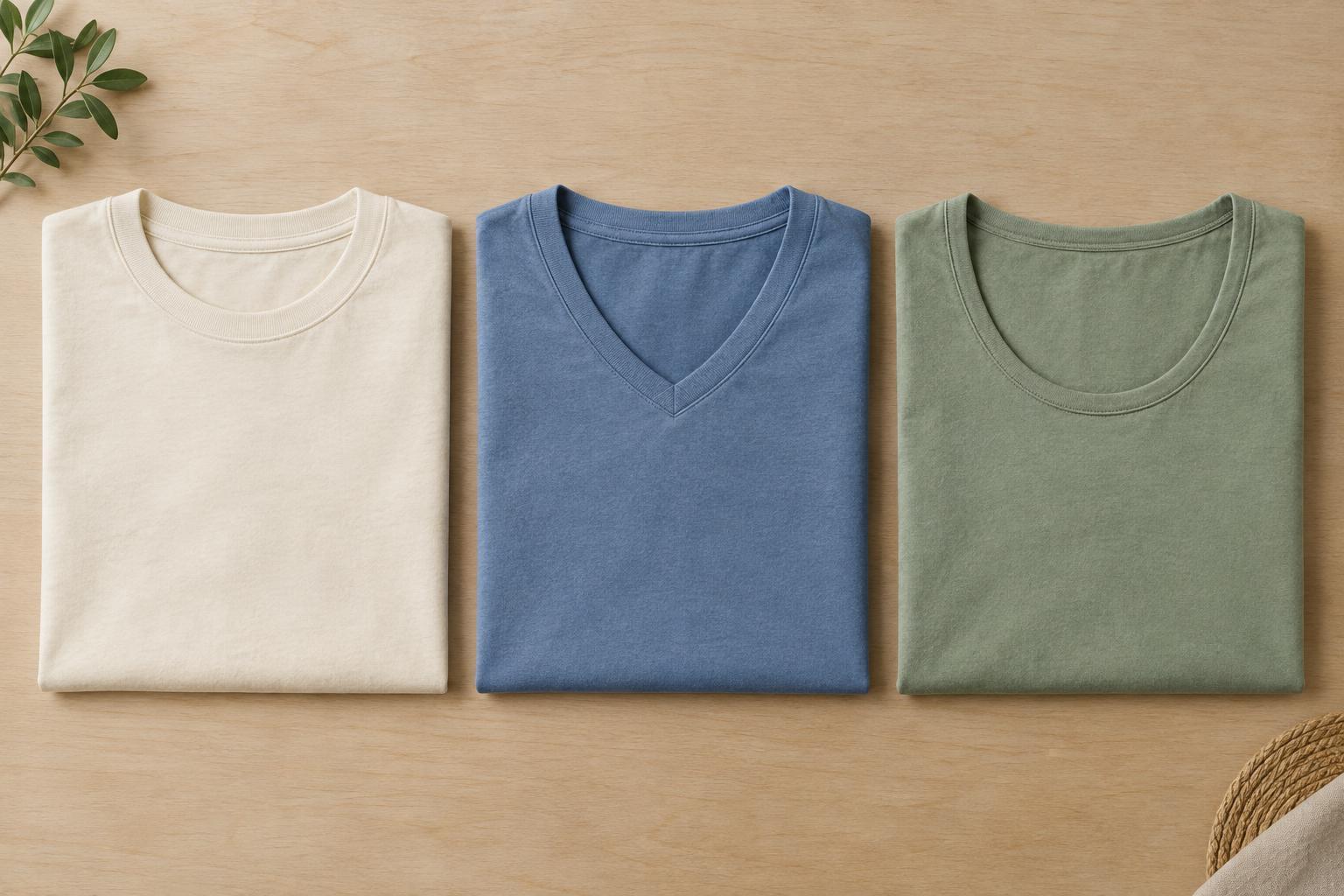
Two T-shirts made from similar fabric can feel quite different when their necklines change. The opening affects how closely the collar sits, how much of the upper chest is visible and where the eye lands when looking at an outfit. It also changes the space available for artwork near the top of the shirt. Crew, V and scoop necks each offer a useful starting point, but the label alone cannot tell you exactly how a garment will fit.
Pay attention to both width and depth. A wide opening can expose more shoulder or collarbone without dropping far down the chest; a narrow opening can sit lower while staying close to the sides of the neck. Collar construction matters too. A firm ribbed band may hold its shape differently from a thin self-fabric edge, especially after repeated wear and washing.
Crew neck: a close, versatile frame
A crew neck has a rounded opening that generally sits relatively close to the base of the neck. Its familiar shape makes it easy to wear alone or under a shirt, jacket or sweatshirt. It also leaves a broad, uninterrupted area across the upper chest, which can be helpful for a centered graphic or a design that begins fairly high on the garment.
Crew necks vary more than their name suggests. One may have a narrow, snug collar, while another has a wider opening that feels more relaxed. If collars tend to bother you, check where the front edge rests when you sit and move, not just when you stand still. A well-fitting crew should feel comfortable without needing to be pulled away from the neck throughout the day.
V-neck: an angled opening with adjustable depth
A V-neck dips to a point at the center front. This creates an angled frame that shows more of the upper chest than many crew necks. A shallow V can be a subtle change for someone who wants a less enclosed collar; a deep V makes the neckline a more prominent part of the outfit. The best choice depends on the level of coverage you want and what you plan to wear underneath.
Look closely at the point of the V. If the trim twists, puckers or pulls when the shirt is worn, it may distract from an otherwise simple design. V-necks can also reduce the space available for artwork directly below the collar. For a custom graphic, position the design with the actual neckline in mind rather than using placement measurements intended for a crew neck.
Scoop neck: a broader curve
A scoop neck forms a rounded opening that is usually wider or deeper than a standard crew. Some scoops sit just below the collarbone; others open farther across the shoulders and chest. That range makes it worth checking the shape on the specific shirt instead of assuming every scoop will offer the same coverage.
The softer curve can work well when you want the neckline itself to add visual interest to a plain tee. It can also create space for a necklace or another layer to show. On the practical side, a very wide scoop may shift on the shoulders or reveal undergarment straps, depending on the cut. If you plan to decorate the shirt, remember that the open neckline changes the apparent distance between the collar and any chest print.
Choose by trying the whole shirt, not just the collar
Start with how you intend to wear the T-shirt. For a straightforward everyday layer or a high chest graphic, try a crew. For a more open neckline with a central point, compare shallow and deeper V-necks. For a rounded, open frame, try a scoop. These are starting points, not rules about which neckline suits a particular body or style.
Then check the shirt in motion. Raise your arms, turn your shoulders and sit down. Notice whether the collar presses, gapes, shifts or stays where you want it. Consider the fabric and overall cut as well: a soft, drapey shirt may hang differently from a more structured one, even when both have the same neckline shape. If you are choosing blanks for a group design, comparing samples can help you judge consistency of fit and print placement.
Finally, look at the neckline after laundering according to the care label. A collar that keeps its shape will usually be easier to style than one that rolls or stretches out. The most useful neckline is the one that gives you the coverage, comfort and design space you want in the garment you will actually wear.