What discharge printing does
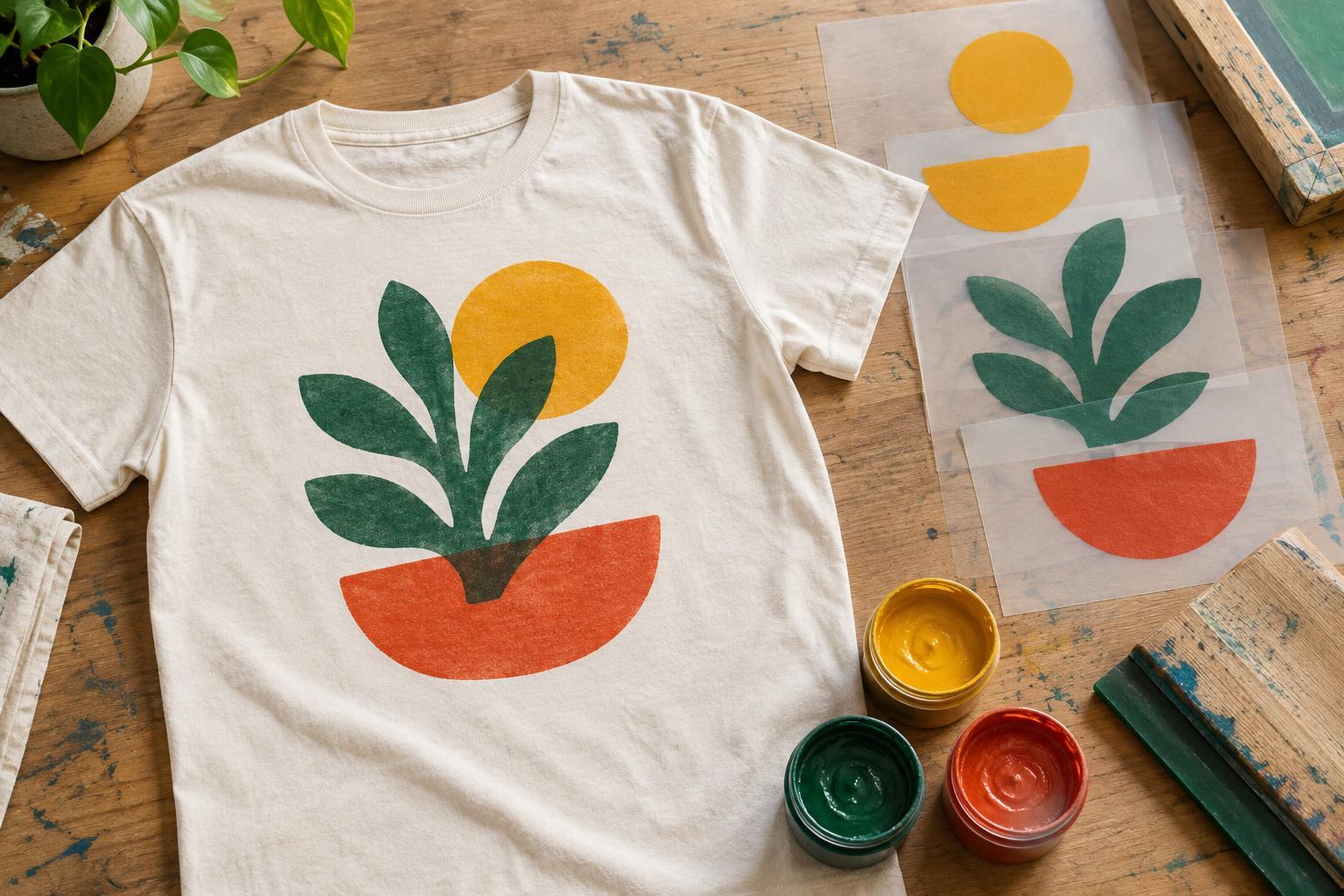
Discharge printing is a method for decorating dyed fabric, often a dark T-shirt, without leaving a heavy print on its surface. A printer applies a specially formulated ink containing a discharge agent. During proper heat curing, that agent breaks down certain dyes in the garment. The printed area becomes lighter, revealing more of the fabric’s underlying color. The ink can also contain pigment to add a new color where the original dye has been removed.
The result can feel unusually soft because much of the design sits within the fibers rather than forming a thick coating above them. A print may have a faint hand, however, rather than no feel at all. The texture depends on the ink, artwork, fabric and production process. Discharge is best thought of as a way to change the color of suitable fabric, not as a reliable way to turn any dark shirt into a perfectly white canvas.
Why the shirt matters as much as the artwork
Discharge printing generally works best on cotton garments dyed with compatible dyes. Two shirts that look like the same shade of black can react differently if their dye formulations differ. One might discharge to a pale neutral tone, while another reveals a warmer or duller color. Even shirts of the same style may show some variation, so an approved sample is more informative than a digital mockup when an exact appearance matters.
Polyester and other synthetic fibers typically do not respond like cotton because their dyes and fibers differ. On a cotton-polyester blend, the cotton portion may lighten while the polyester remains dark, producing a muted or heathered effect instead of a clear, solid shape. That can suit a distressed design, but it is a poor fit for artwork that needs crisp, consistent pale areas. Garment finishes and fabric construction can also affect how evenly an ink prints.
If you are choosing a blank specifically for discharge printing, ask the printer which garments they have successfully tested. Supplying an unfamiliar shirt may still be possible, but it makes a test print especially valuable. The garment’s labeled fiber content is a useful starting point, not a guarantee of how its dye will react.
Where the method shines
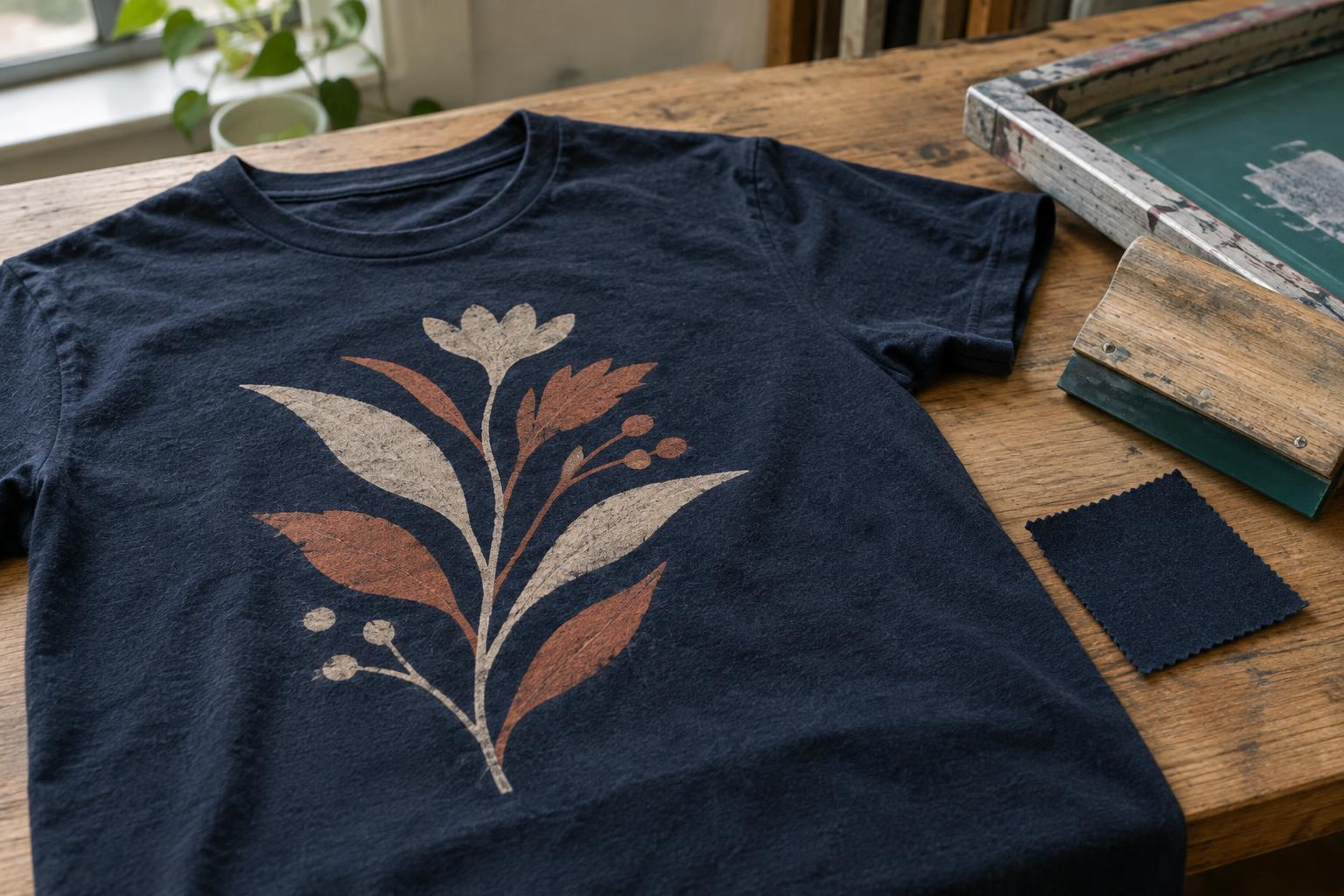
Large designs on dark cotton shirts are a common reason to consider discharge. A broad graphic printed with a thick layer of conventional ink can feel prominent against the fabric. Discharge can give the same area a lighter, more integrated feel, which may be comfortable for an everyday shirt. It can also complement vintage-inspired art, loose textures and illustrations that do not depend on exact color matching.
Artwork still needs to be prepared for the process. Fine lines, small lettering and tight registration between colors deserve discussion with the printer, just as they would with other screen-printing methods. A soft print does not make a complex design automatically easy to reproduce. When color is important, judge a physical sample in the intended garment color rather than assuming a screen preview shows the finished result.
Where discharge falls short
Predictability is its main limitation. The original garment dye influences the final color, so a requested shade may print differently across blanks or batches. Discharge does not necessarily produce a bright white underbase, and replacement pigments may look less vivid than expected. If a design requires precise brand colors, bright opaque details or a uniform result across several fabric types, another method may give the printer more control.
The process also requires suitable equipment, careful curing and appropriate handling of the printing materials. It is not a casual at-home technique: printers need to follow the ink maker’s instructions and use suitable workplace controls. Ask a prospective printer whether they offer discharge on your chosen garment rather than assuming every shop can apply it. Practical availability may be more limited than for familiar alternatives.
For comparison, plastisol screen printing sits more visibly on top of the shirt and can provide strong opacity, though large printed areas may feel heavier. Standard water-based printing can offer a softer feel on some garments, but printing light colors on dark fabric may call for additional steps. Neither is automatically better; the right choice depends on your shirt, design and tolerance for variation.
How to decide before placing an order
Start with the priorities you cannot compromise on. If softness on a dark cotton shirt is central and some tonal variation would suit the design, discharge is worth exploring. If exact color, mixed-fiber garments or consistent matching across multiple shirt styles matters more, discuss other print methods first. Share the actual garment style, color and artwork with the printer so they can assess the combination rather than the design alone.
Request a test print or production sample when the project allows it. Check the color, fine details and feel after the sample has been properly processed, and ask how the printed shirt should be washed and dried. Following the garment and printer’s care guidance helps protect the design, although ordinary wear and laundering can still change a shirt’s appearance over time. Discharge printing can be an excellent creative choice when its natural, soft finish is the goal—and a frustrating one when every print must look identical.