Start with the T-shirt and the waistband
A tuck changes more than where a T-shirt ends. It can show the waistband, define the waist or leave the shirt’s original shape intact. There is no rule that pairs one tuck with one type of bottoms: the most useful choice depends on the shirt’s length and weight, the rise and shape of the bottoms, and how much movement you want.
Before choosing, stand naturally and look at where the hem falls. A shirt that ends near the waistband may look balanced untucked but leave little fabric to secure in a full tuck. A longer shirt offers more options, although extra fabric can bunch inside close-fitting bottoms. Also consider the design. A large graphic near the hem may disappear when tucked, while a chest-level design is more likely to remain visible.
Use a full tuck for a defined outline
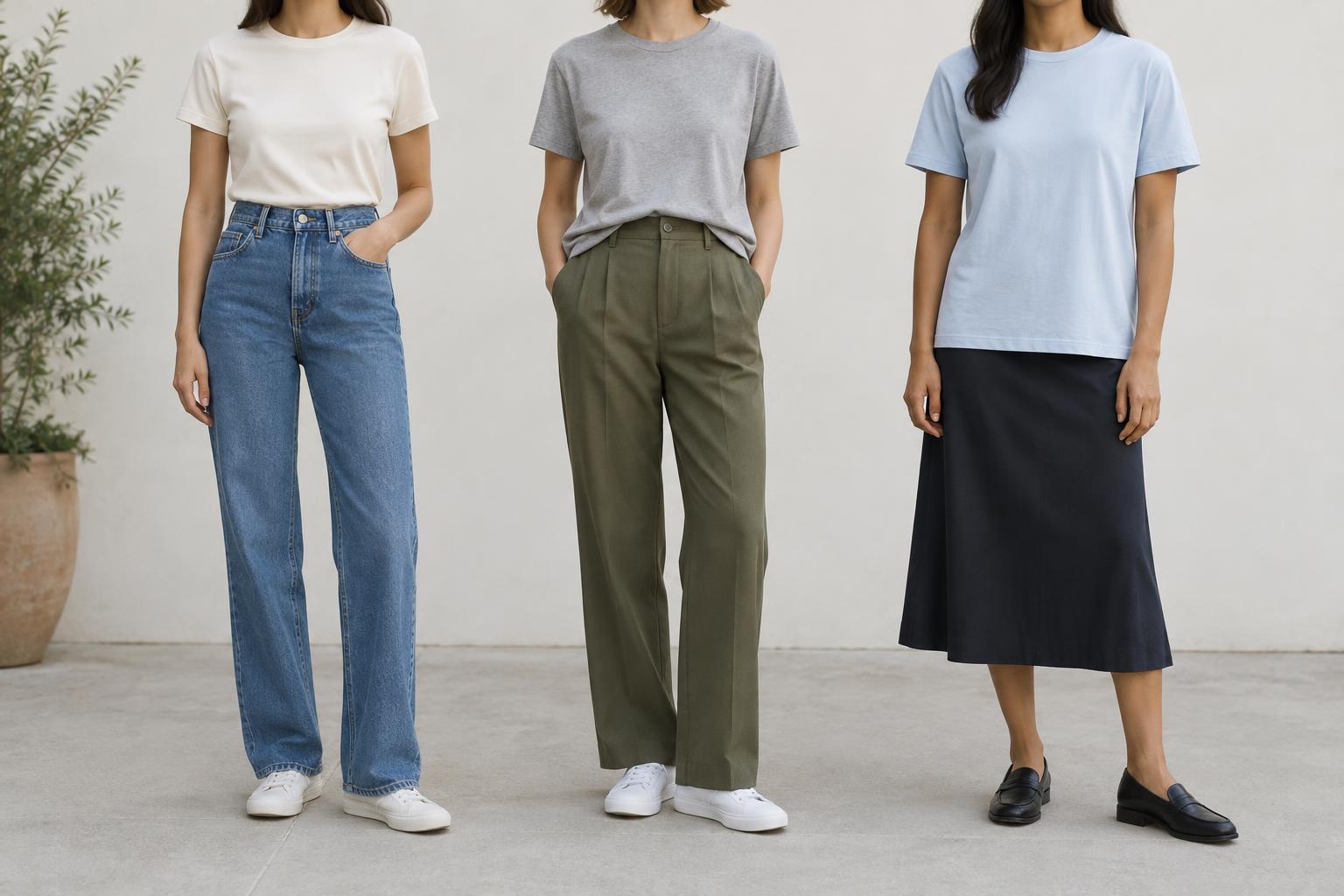
A full tuck puts the entire hem inside the waistband. It works well when you want to show the shape of high-rise jeans, pleated trousers or a skirt with an interesting waist detail. With wider-leg trousers or a full skirt, it can distinguish the shirt from the volume below. A full tuck can also make a roomy T-shirt look more deliberate without changing its relaxed fit through the shoulders.
For a comfortable result, tuck the hem all the way around, then lift your arms and draw a little fabric back out. This gives you room to move instead of pulling the shirt tight. Smooth any excess toward the sides rather than packing it into one spot. Thin, drapey shirts usually create less bulk than heavy, oversized ones; with a thick tee and fitted trousers, another styling option may feel easier.
Try a front tuck for a softer transition
A front tuck secures a small section of the hem at the front while leaving the sides and back loose. It reveals part of the waistband without requiring every inch of fabric to fit inside it. That makes it useful with straight-leg jeans, relaxed shorts or casual trousers when a full tuck feels too neat and an untucked shirt hides the outfit’s shape.
Start with a section roughly as wide as your hand, then adjust it in a mirror. A narrow tuck creates a subtle dip; a wider one shows more of the waist. Let the fabric fall naturally on either side rather than forcing a perfectly even drape. If a graphic extends across the lower front of the shirt, check whether the tuck folds through an important part of the image. Leaving the shirt out may display the design more clearly.
Leave it untucked when the hem adds to the look
An untucked T-shirt keeps its full silhouette and makes the most of an all-over print, a low-placed graphic or a distinctive hem. It pairs easily with slim or straight jeans and fitted shorts, where the contrast between a loose top and narrower bottoms can give the outfit shape. It can also work with wide-leg bottoms or a flowing skirt; in that case, consider whether the hem lands at a point that separates the top from the bottoms clearly.
Length matters more than a fixed styling rule. If an untucked shirt covers most of the pockets or waistband and feels overwhelming, try a shorter tee, a front tuck or a small fold of the hem to compare the proportions. Conversely, if the shirt has a cropped or boxy cut, leaving it out may preserve the shape the garment was designed to have. Check the view from the side as well as the front, especially with a longer back hem.
Make the choice practical for wearing and care
Try the outfit while sitting, reaching and walking. A tuck that looks tidy while standing may pull free or feel restrictive once you move. A firm waistband can help hold a tuck, but it should not need to be uncomfortably tight. If you plan to add a jacket or overshirt, test the complete outfit: the extra layer may change how much of the T-shirt and its graphic you want to show.
Repeatedly tugging at a tucked shirt can stretch its hem or distort a printed area. Adjust the fabric gently, and avoid placing a stiff or raised decoration where the waistband will press and rub against it. After wearing, follow the garment’s care label and any instructions supplied with its decoration. The best styling choice is the one that lets you move comfortably, shows the details you like and requires little fuss to keep in place.