Fit Is About Proportions, Not Height Alone
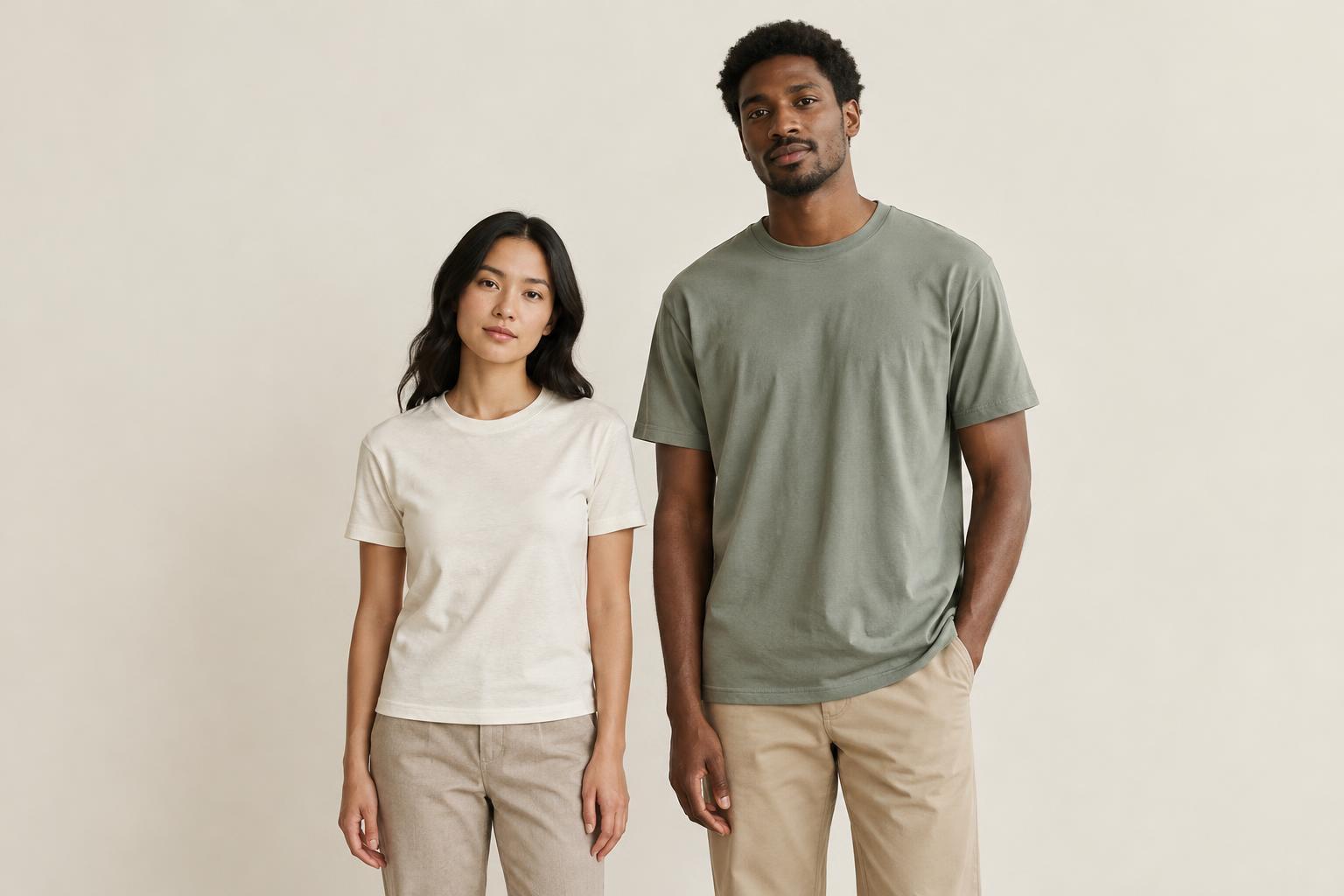
Petite and tall are useful descriptions, but height does not tell you exactly how a T-shirt will fit. Two people of the same height may have different torso lengths, shoulder widths and arm lengths. A person with a shorter torso may find that a standard tee hangs well below the intended hem position, while someone with a longer torso may find the same tee rides up when they reach overhead.
The label size mainly helps you find a starting point for width. It does not guarantee that the neckline, sleeves or hem will land where you want them. Before deciding that a T-shirt is simply “too big” or “too small,” look at which part feels wrong. If the chest has comfortable room but the hem is misplaced, changing size may fix one problem while creating another.
What to Check in the Shoulders and Sleeves
Start with the shoulder seam on a conventional, set-in-sleeve tee. It generally looks most balanced when it sits near the edge of your shoulder. On a petite frame, a broad shoulder measurement can make the sleeve begin farther down the arm than intended. On a tall or broad-shouldered frame, a narrow shoulder measurement may pull the sleeve inward and make the upper body feel restricted.
Sleeve length is a separate choice. A standard short sleeve might reach closer to the elbow on someone with shorter arms but sit high on someone with longer arms. Sleeve width also changes the look: a wide opening can make a sleeve appear looser, while a close opening may feel restrictive even when the body of the shirt fits. If you prefer a relaxed drop-shoulder tee, the seam is meant to sit lower; judge its overall drape rather than applying the rules of a fitted tee.
Find the Hem Length That Works for You
The hem has a strong effect on how a T-shirt looks and moves. For someone with a shorter torso, extra length can bunch at the hips or make a relaxed tee feel larger than intended. For someone with a longer torso, a shirt that looks fine while standing may expose more of the waist when sitting, bending or lifting an arm. Try those movements before deciding the length works.
Think about how you plan to wear the shirt. A tee intended for tucking needs enough length to stay comfortably tucked; one worn untucked may look better if its hem does not gather where your hips are widest. A cropped cut can be deliberate rather than a sign of poor fit, just as an oversized cut can be deliberately long. The useful question is whether the length matches your preferred shape and remains comfortable during normal wear.
Also check the side view. A shirt can appear to have the right front length yet pull forward or back if the shoulder or chest fit is off. Fabric with more drape may follow the body differently from a firmer knit, so compare how the shirt hangs rather than relying on the length measurement alone.
Use Measurements to Compare T-Shirts
A T-shirt you already enjoy wearing is often the best reference. Lay it flat without stretching it, then note the width across the chest, the length from the high shoulder to the hem, the shoulder width and the sleeve length. Compare those garment measurements with a size chart when one is available. Body measurements and garment measurements are not interchangeable: a tee needs some room beyond your body measurement to fit and move as intended.
Prioritise the measurements that are hardest to change. A hem can sometimes be shortened, but adjusting shoulders or armholes is more involved. If your torso is relatively long, look for sufficient garment length without automatically adding unwanted chest width. If your torso is relatively short, check both length and width before sizing down; a smaller tee may become tight across the chest. A “petite” or “tall” label can be a helpful starting point, but the garment measurements give you a clearer comparison.
Make Small Adjustments With the Whole Design in Mind
Styling and alterations can help when a tee is close to right. A partial tuck can control extra length without changing the garment. Hemming may improve an overly long shirt if there is enough space between the proposed new hem and any graphic. Rolling sleeves can change their apparent length, though it will not correct a tight sleeve opening.
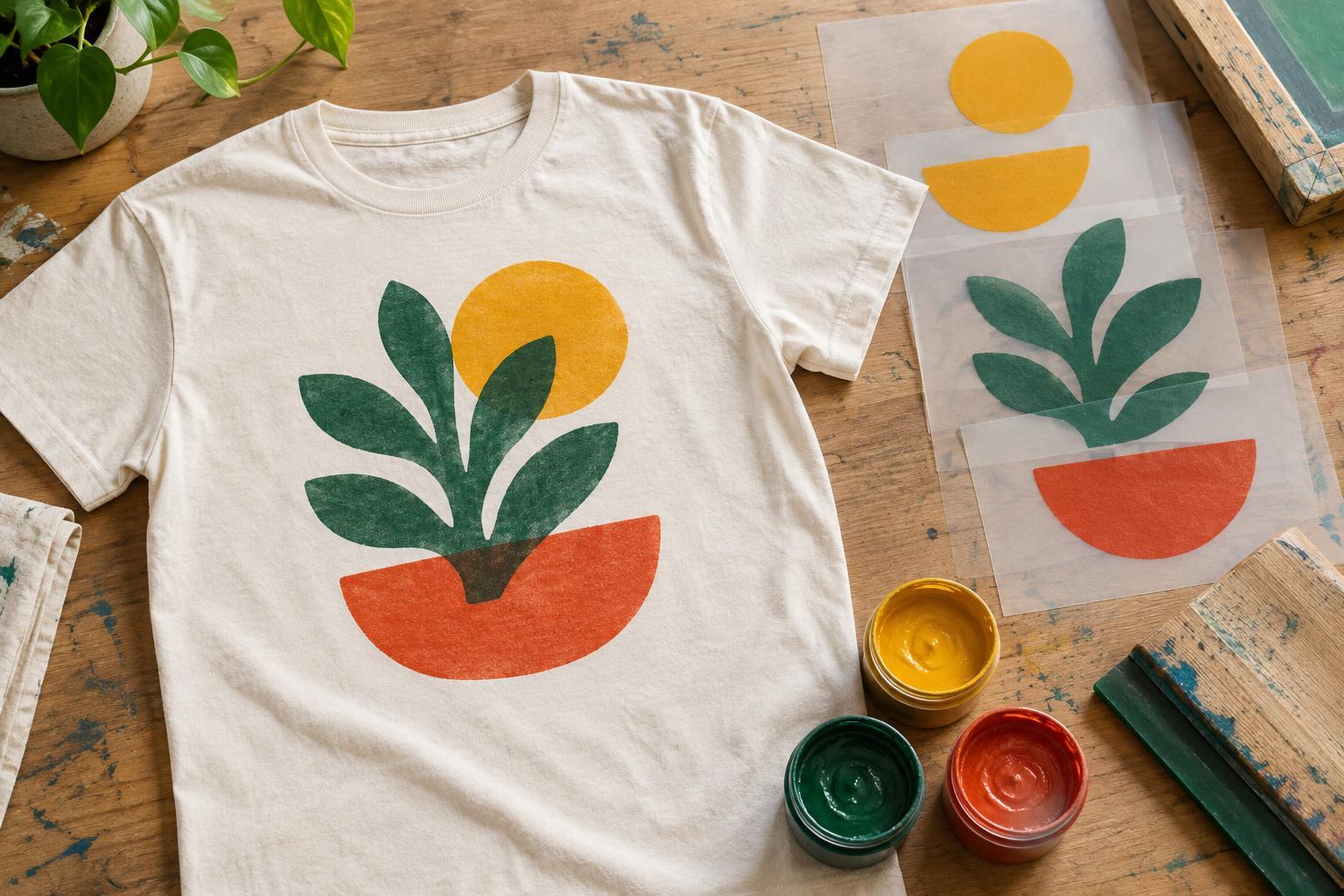
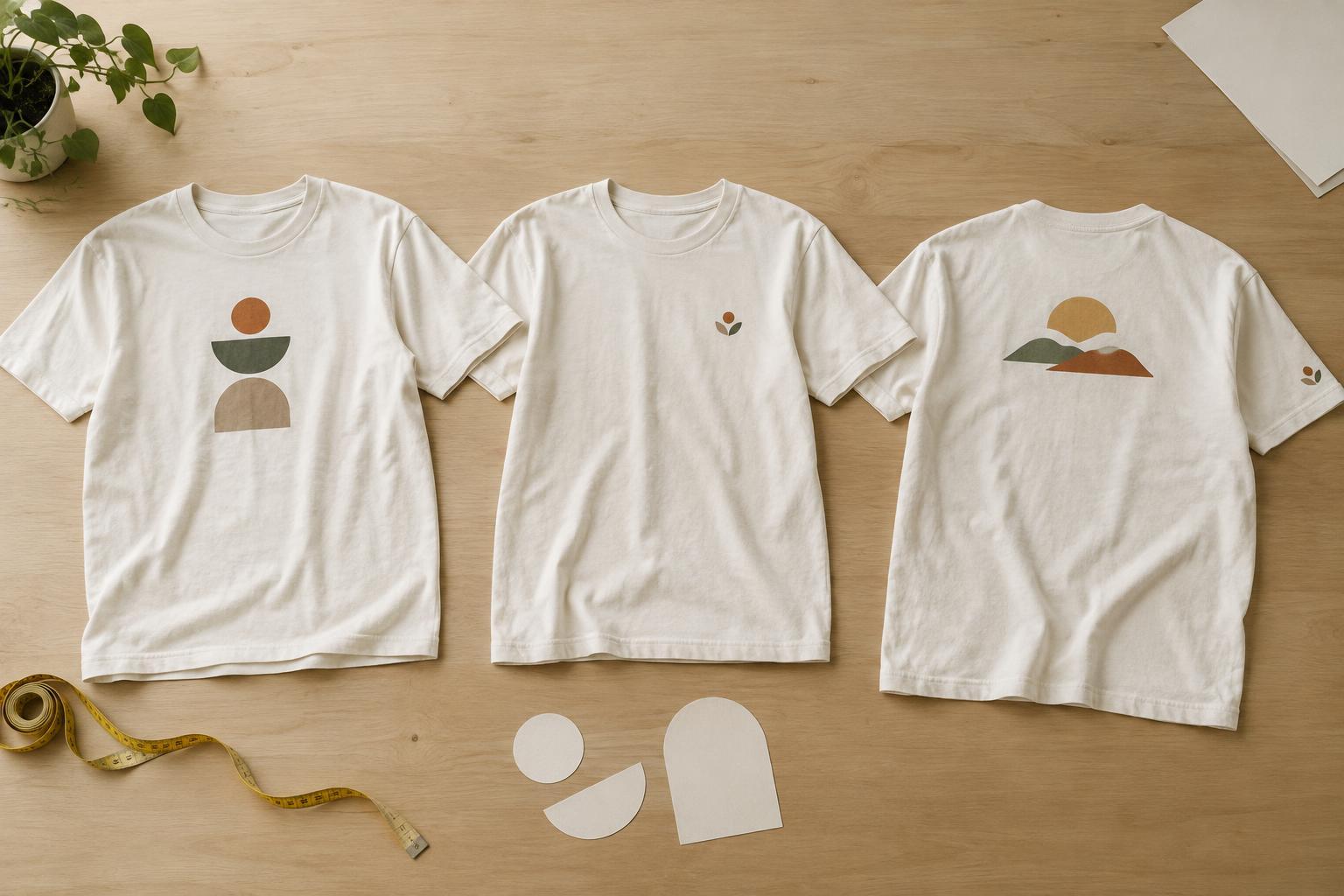
For a custom or printed T-shirt, consider fit before settling on artwork placement. A design that looks centred on a shirt laid flat may sit differently when the fabric stretches across the chest or falls loosely over the torso. Shortening the hem can also change the space beneath a graphic. Choose a tee whose basic proportions you like first, then assess the design at that length and on that fit. The best result is not a prescribed petite or tall silhouette; it is a shirt that feels comfortable and places its details where you want them.