Why T-shirt colors change
A T-shirt rarely changes color all at once. A black tee may gradually look less deep, a bright shade may lose some intensity, or an area covered by a fold may appear different from the fabric around it. These changes can come from several sources, including sunlight, washing, friction and the way the garment is stored. The fabric, dye and decoration method also affect how noticeable a change becomes.
Color change is not always fading. Dust can dull a shirt’s appearance, while detergent residue may make fabric look less clear. Repeated rubbing against bags or other clothing can wear the surface, changing how it reflects light. Before deciding that a favorite tee has faded, check it in even lighting and compare areas that receive similar wear.
What sunlight does to fabric and prints
Light exposure can gradually alter dyes and printed designs. Direct sunlight is particularly relevant because it is intense and includes ultraviolet light. A shirt left on a sunny windowsill or hung outdoors in the same position for long periods may develop uneven color, especially if part of it remains folded or shaded. The effect depends on the materials and the amount of exposure, so two shirts may age differently.
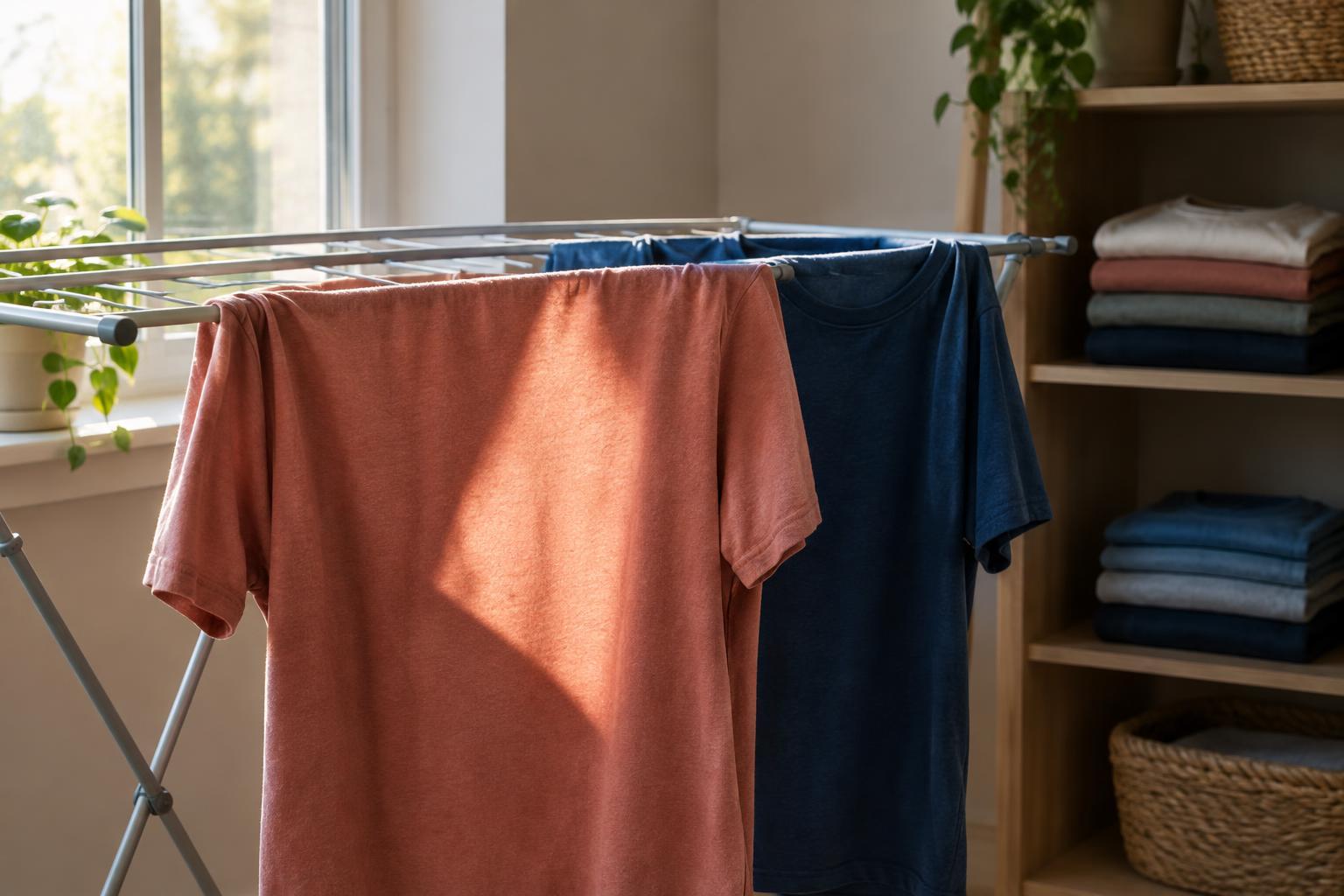
Printed graphics can change at a different rate from the fabric underneath them. An inked area, a heat-applied graphic and an uncovered patch of cotton do not necessarily respond to light in the same way. If a design is important to you, avoid displaying the shirt where direct sun falls on it day after day. For routine drying, a shaded outdoor spot or an indoor area with good airflow can reduce prolonged direct exposure without leaving the garment damp.
How storage conditions make a difference
Storage affects more than wrinkles. A shelf beside a bright window can expose the visible parts of folded shirts to light while protecting the layers beneath. Over time, this can create a difference between exposed edges and covered areas. Closed drawers or wardrobes help limit light exposure, particularly for tees kept between wears or saved for occasional use.
Heat and moisture deserve attention too. A hot storage space can be hard on some decorations, while a damp space may encourage musty smells or visible spotting. Let shirts dry completely before putting them away, and choose a reasonably cool, dry place when possible. Avoid sealing a tee that still feels damp in a box or bag. If you store seasonal clothing, check it occasionally so you can catch moisture problems before they become harder to address.
How you arrange a shirt matters for its design as well as its color. Folding a printed tee tightly along the same line may leave a persistent crease through the graphic. Hanging it can avoid that fold, but a hanger may stretch the shoulders of a soft or heavy shirt. For longer storage, a loose fold in a dark drawer is often a practical compromise; place printed areas so they are not sharply creased.
Everyday habits that help preserve color
Start with the garment’s care label, especially when a tee has a print, embroidery or other decoration. Turning a shirt inside out before washing can reduce rubbing on the visible surface and graphic. Washing similar colors together helps avoid unwanted dye transfer, while using only as much detergent as directed may make rinsing easier. These steps cannot stop all color change, but they can help avoid unnecessary wear.
Drying is another chance to be deliberate. If you use a line or rack, spread the shirt out so air can circulate rather than leaving it bunched up. Move it out of direct sun once it is dry instead of leaving it outside for hours. If you use a dryer, follow the care label and remember that high heat may be unsuitable for some prints or fabrics. Put the shirt away only after it has cooled and dried fully.
What to do when a shirt has already changed color
Fading caused by light exposure is not usually something a wash can reverse. If a shirt looks dull, however, a careful wash according to its label may remove surface residue and reveal its color more clearly. Avoid trying strong treatments on a printed tee without checking whether they are appropriate for both the fabric and the design; an attempt to brighten one area could affect another.
For future designs, consider how you expect to wear and store the shirt. Strong contrast can keep a graphic easy to read even as a garment develops a worn-in look, while a deliberately soft color palette may suit a more relaxed style. No color or printing method is immune to aging. The most useful approach is simple: limit long stretches of direct sunlight, keep stored tees dry and give decorated areas room to lie without sharp folds.