Decide what the T-shirt is saying
A statement T-shirt might have an oversized illustration, a bold slogan, a vivid colour or an unusual cut. Before adding accessories, identify what draws your eye first. If it is the graphic, keep that area visible. If it is the colour, let other pieces create a calm frame around it. The aim is not to remove every other interesting detail; it is to give each detail a clear role.
Try getting dressed with the T-shirt and your main bottoms before choosing extras. From a few steps away, notice whether the shirt still reads as the focal point. This quick check is especially useful for designs with small lettering or fine details, which can get lost next to a patterned scarf or a large necklace.
Use colour to create a connection
Accessories do not have to match the shirt exactly. A simple starting point is to repeat one colour from the print in a small item, such as a cap, watch strap or bag detail. A shirt with several bright colours may need only one repeated accent. Neutral accessories in black, white, brown, grey or denim tones can also give the design room to stand out.
Consider contrast as well as colour. A highly saturated shirt paired with equally vivid shoes, a bright bag and colourful jewellery can feel busy unless that energetic effect is deliberate. If you want a quieter outfit, limit the strongest colour to the shirt and one accessory. For a shirt with a restrained, single-colour print, a more colourful accessory can add interest without obscuring the design.
Choose jewellery for the neckline and print
Placement matters more than a rule about how much jewellery to wear. A large graphic across the chest often works well with earrings, rings or a bracelet, because these sit away from the artwork. If you want a necklace, check where it falls: a short chain near the neckline may leave the graphic clear, while a long pendant may cut across lettering or an illustrated face.
The neckline offers another guide. A crew neck can look neat with small hoops, studs or a close-fitting chain. A wider or lower neckline leaves more space for a necklace if the print begins farther down the shirt. You can mix jewellery styles, but choosing one piece to draw attention—rather than several of similar size—usually makes the outfit easier to read.
Let bags, belts and layers play supporting roles
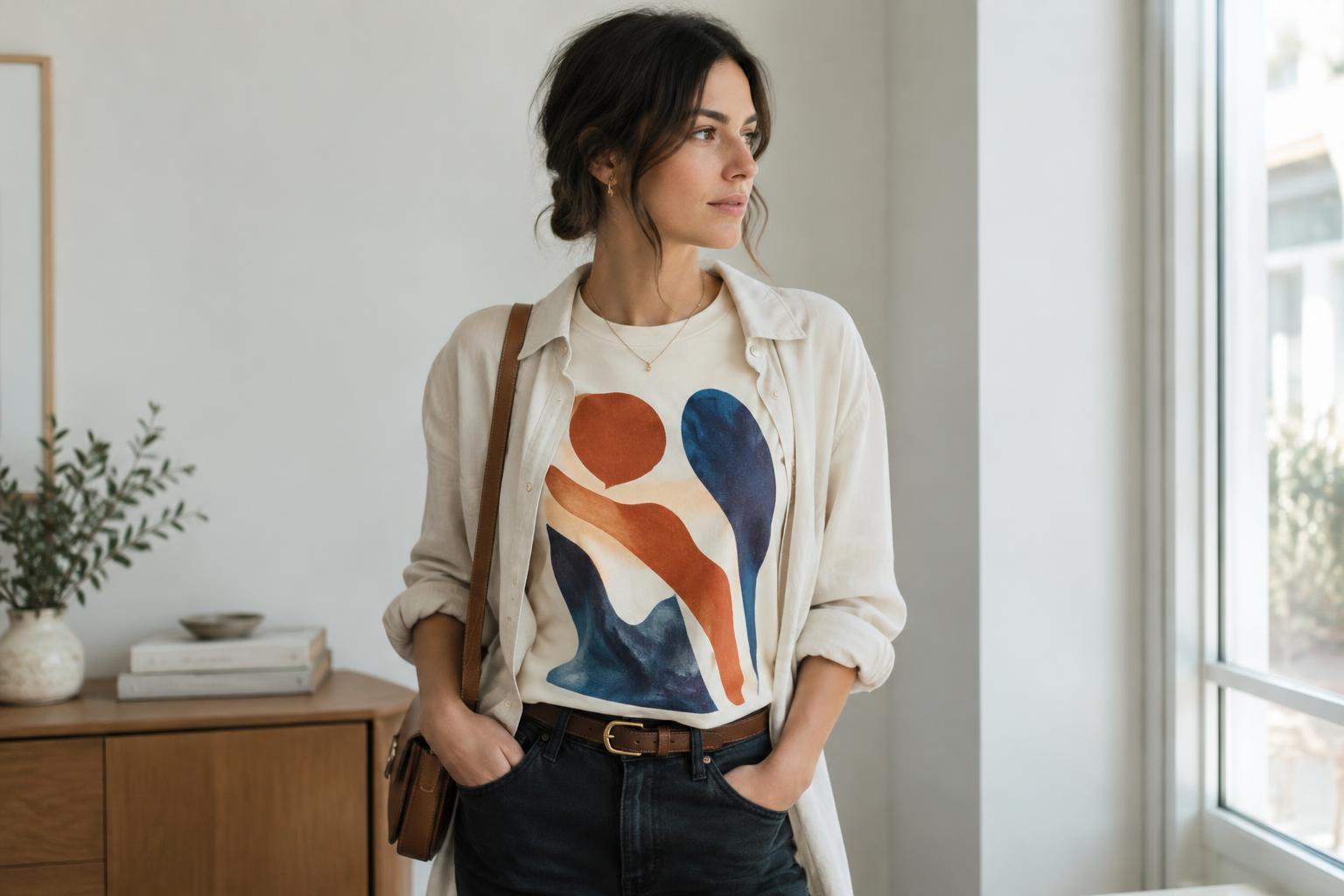
A bag can complement a statement T-shirt without copying its motif. A plain crossbody or tote often suits a detailed print, while a simple logo or small graphic may leave room for a more textured bag. Pay attention to the strap, too. A wide strap worn diagonally can cover words or a central image, so try carrying the bag on one shoulder or adjusting its position when you want the design to show.
Belts and layers can help define the outfit around the shirt. A belt may give shape to a tucked or half-tucked tee without drawing attention from the graphic. An open overshirt, cardigan or jacket can frame a central design, but check that its edges do not hide an important word or crop the image awkwardly. For an all-over print, a plain outer layer can provide a useful visual break.
Edit for the occasion and for everyday wear
The same T-shirt can take different accessories depending on where you are going. For a casual day, comfortable shoes and a practical bag may be enough. For a more polished outfit, consider tidy footwear, a structured bag or one piece of distinctive jewellery. There is no need to add all three: choose the items that make the shirt feel intentional in that setting.
Before heading out, check both the overall look and how it feels to wear. Does a pendant swing over the print? Does a bag strap pull the neckline out of shape or rub against a decorated area? Raised or delicate decoration may benefit from less contact with rough straps and sharp jewellery. When you get home, remove accessories before changing or laundering the shirt to reduce the chance of snags. A good accessory choice should let you move comfortably as well as let the T-shirt speak.