Why embroidered T-shirts need a little extra care
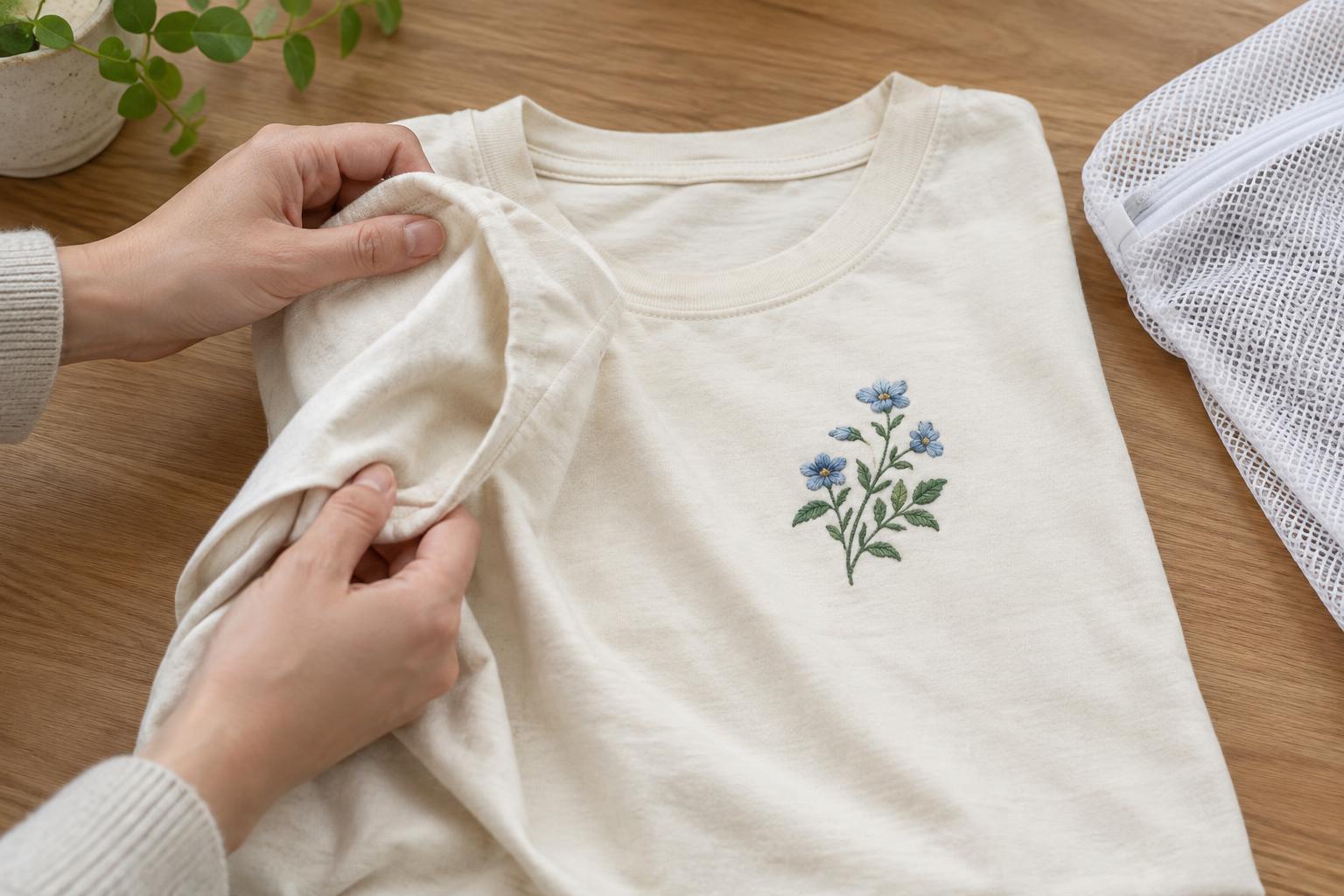
Embroidery is made of thread stitched through fabric, often with a backing on the inside to support the design. The stitches sit above the surface of the shirt, giving the artwork its texture. That raised surface can also catch on zippers, hooks, rough furniture or other items in a wash load. A snag may pull a loop out of place, while repeated rubbing can make an area look fuzzy.
The goal is not to keep an embroidered T-shirt untouched. It is to reduce friction, stretching and unnecessary heat during everyday wear and cleaning. Start with the garment’s care label: fabric blends, embroidery thread and backing materials can vary, so the label should take priority over general advice.
Wash with less friction
Before washing, turn the T-shirt inside out so the embroidered face is less exposed to other garments and the washer drum. Check for open zippers, hooks and hook-and-loop fasteners in the load; close them or wash those items separately. A mesh laundry bag can provide another barrier, particularly for a small or densely stitched design. Avoid packing the washer so tightly that clothes rub hard against one another.
If the care label allows machine washing, a gentle cycle with cool water is a reasonable starting point. Use an appropriate amount of mild detergent and skip vigorous scrubbing over the design. For a small mark near the embroidery, dab carefully rather than rubbing the stitches. If you hand-wash, move the shirt gently through the water and support it when lifting it out; wet knit fabric can stretch under its own weight.
Do not twist the embroidered area to wring out water. Instead, press the shirt gently or roll it in a clean towel to absorb excess moisture. Take a moment to smooth the fabric around the design before drying so it does not set in a puckered position.
Dry and press without flattening the stitches
Air-drying is a useful way to limit tumbling and rubbing. Reshape the T-shirt and lay it flat on a clean, dry surface, or hang it if the fabric is unlikely to stretch. Keep the embroidered area clear of clips or pegs that could mark or pull the stitches. If you use a dryer, follow the care label and choose a suitable low-heat setting; remove the shirt rather than leaving it to tumble longer than needed.
Embroidery can be flattened by direct pressure from an iron. If the shirt needs pressing and its label permits it, turn it inside out, place a soft towel beneath the design and use an appropriate temperature for the fabric. Press the surrounding shirt lightly instead of dragging the iron across the stitches. Avoid applying direct heat to any added decoration or backing unless its care instructions say that is safe.
Prevent snags during wear and storage
Think about what touches the embroidery during a normal day. Crossbody straps, backpack straps and seat belts may repeatedly rub a chest design. Rings, watch clasps and rough bag hardware can catch stitches when you put the shirt on or take it off. You do not need to avoid these items entirely, but shifting a strap away from the design or dressing more slowly can help reduce wear.
Store embroidered T-shirts where the design will not scrape against sharp fasteners. Folding them with the embroidery facing inward works well for many shirts; avoid placing heavy items on a thick design for long periods. If you hang a lightweight knit tee, check that the hanger does not distort the shoulders. Give the shirt enough space that you can lift it out without dragging it past other garments.
What to do if a thread catches
If you notice a raised loop, resist the urge to pull it. Tugging can tighten surrounding stitches, distort the fabric or enlarge the snag. Lay the shirt flat and inspect both sides in good light. A small loop may be eased toward the inside with a blunt needle or a fine snag-repair tool, using gentle movements that do not pierce or split the thread. If the design is complex or the thread appears broken, leave it alone rather than cutting blindly.
Loose thread ends are not always a sign that the whole design is coming apart, but trimming the wrong strand can make matters worse. For a valued shirt or a visibly damaged design, an embroidery or clothing-repair specialist may be better placed to secure it. After any repair, check the area before washing again and continue using a low-friction wash routine.