Why color alone does not tell you whether a shirt is opaque
Opacity is how well a fabric conceals what is behind it. A shirt may look solid when laid on a table but reveal the outline of an undershirt, a skin-tone contrast or the edges of a print when worn. This matters most if you want a light-colored shirt to stand on its own, but darker colors are not automatically opaque.
Color is only one factor. Knit construction, yarn, fabric thickness and the way the shirt fits all affect how much shows through. A tightly constructed fabric may provide more coverage than a looser one of similar weight. Stretching the fabric across the shoulders, chest or hips can also open up the knit and make it appear sheerer. For that reason, the most useful test is one that resembles how the shirt will actually be worn.
Test a sample in light and against contrast
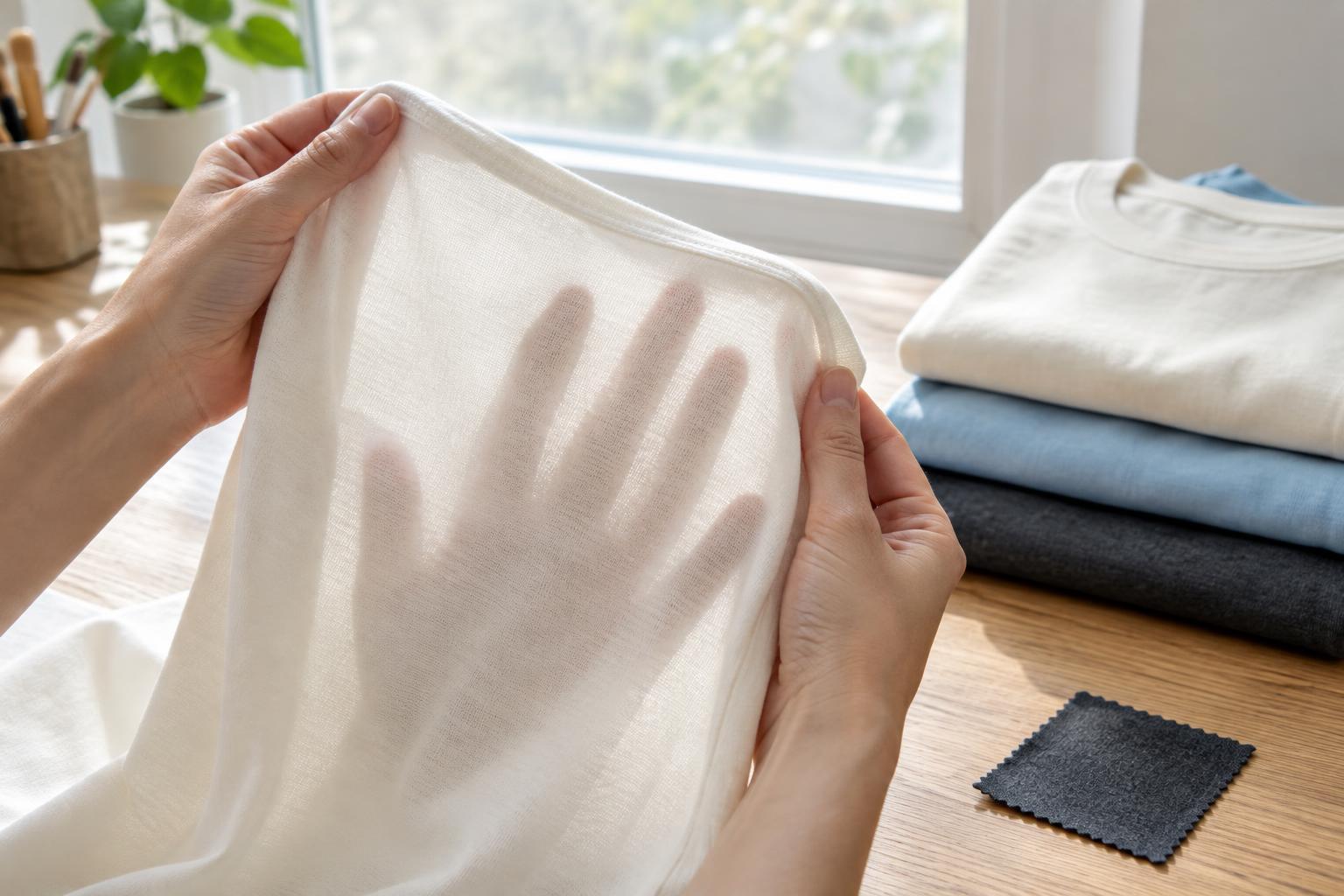
If you can handle the shirt or a fabric sample, start by holding one layer up to a window in daylight. You are not checking whether light passes through at all; most T-shirt fabrics let some light through when held up this way. Instead, compare candidate colors and fabrics under the same conditions. Notice whether you can clearly make out shapes or sharp edges behind them.
Next, place the fabric over contrasting surfaces, such as a dark piece of clothing and a light piece of paper. Try your hand beneath it as well. If the boundary between two surfaces remains distinct, that may indicate the fabric will show differences between skin and an underlayer. Check both the front and back of the garment: a printed area or folded hem can appear more opaque because it adds another layer or surface treatment.
Finally, inspect the shirt in the lighting where you expect to wear it. Daylight near a window, bright indoor light and softer room light can produce different impressions. Stand a comfortable distance from a mirror rather than judging only from inches away. If possible, ask someone to check the back too, since that view is easy to miss.
Check opacity at the fit you intend to wear
A flat sample cannot show what happens when fabric stretches across the body. Try the shirt on with the kind of underlayer you would normally wear, then move your arms, sit down and look at areas where the fit becomes taut. If the shirt is close-fitting, pay particular attention to the chest and shoulders. If you prefer a relaxed fit, check whether the fabric hangs away from the body as expected rather than relying on the size label alone.
For a fair comparison, test colors in the same style and size whenever possible. Comparing a roomy white shirt with a snug navy one tells you as much about fit as it does about color. If you are between sizes and coverage is important, a less stretched fit may help, though it will also change the silhouette. Choose the fit you like first, then assess opacity in that fit.
What to check when you cannot see the shirt in person
Online photos are useful for judging color and shape, but lighting, editing and the background can make opacity difficult to assess. Look for images of the garment being worn, especially from the front and back, rather than relying only on a flat product photo. A close-up of the fabric may help you assess the knit, but it cannot replace a worn view.
Fabric descriptions can provide clues without guaranteeing coverage. Weight describes how heavy the fabric is, not exactly how opaque it will look on your body. Fiber content and construction are worth noting when you compare shirts, but avoid treating any single specification as a pass-or-fail test. If a seller provides samples or accepts reasonable returns, those options can make a light-color choice less uncertain. Before ordering several shirts for a group or a design project, testing one in the intended color and size is especially useful.
Choose the color that works with your design and comfort
If a pale color looks too sheer, you do not necessarily need to abandon the design. Compare a slightly deeper shade, a different fabric in the same color family or a style with a more relaxed fit. If you plan to wear an undershirt, test the full outfit: its neckline and color can affect the final appearance as much as the T-shirt itself.
For a printed T-shirt, check the undecorated areas separately from the graphic. A large print may make the front look more covered while the back and sleeves remain unchanged. Dark fabric may provide coverage you prefer but can also alter how a design’s colors appear, depending on the decoration method. The best choice is the shirt that gives you the coverage, fit and visual contrast you want when worn—not just the color that looks best on a screen.