Start with the person, not the perfect phrase
A personal quote does not need to tell someone’s whole story. It can recall a shared habit, express a small piece of encouragement, or capture the way a person talks. Before drafting, decide who the shirt is for and when they might wear it. A playful line for a family gathering may feel out of place on a shirt meant for everyday wear. The best starting point is one idea the wearer would be comfortable displaying in public.
Write down a few associations: a nickname, a recurring joke, a favorite activity, or a phrase the person actually uses. Then ask what each option means to someone who does not know the backstory. An inside joke can work even if strangers do not understand it, provided the wearer enjoys explaining it—or does not mind leaving it unexplained. If the wording could embarrass them, consider a gentler version or a less prominent placement.
Find the shortest version that keeps the meaning
Treat your first draft as material to edit, not text that must all fit on the shirt. Look for a single thought and remove the explanation around it. “We always take the long way home because the conversation is better” might become “Take the long way home.” The shorter version leaves room for the shared meaning without asking a passerby to read a paragraph. You can also turn a full sentence into a compact label, motto, or two-part phrase.
Short is not automatically better. A phrase trimmed so far that it becomes vague may lose the detail that made it personal. Keep the word or image that gives the line its character, and cut repeated ideas or setup words first. Read the result aloud. If you need to pause to explain the grammar, revise it. If the quote only makes sense with a long caption, the longer story might be better suited to a card accompanying the shirt.
Give the words a clear visual priority
Once you have a candidate, decide what someone should notice first. For a short quote, that may be the entire line. For a longer one, choose a key word or brief phrase to emphasize and let the rest support it. “GOOD DAYS / START WITH COFFEE,” for example, could give “GOOD DAYS” the larger type. Breaking text into lines can make it easier to scan, but the breaks should follow the meaning rather than divide a phrase awkwardly.
Avoid trying to make extra text fit by shrinking every letter. Small type can be harder to read on a moving, folding garment, and ornate lettering may compete with the message. Simple letterforms, comfortable spacing, and a clear contrast between text and shirt color usually make the words easier to see. If you want to add a name, date, or small symbol, decide whether it strengthens the idea; each addition takes attention away from the main quote.
Test the phrase as something to wear
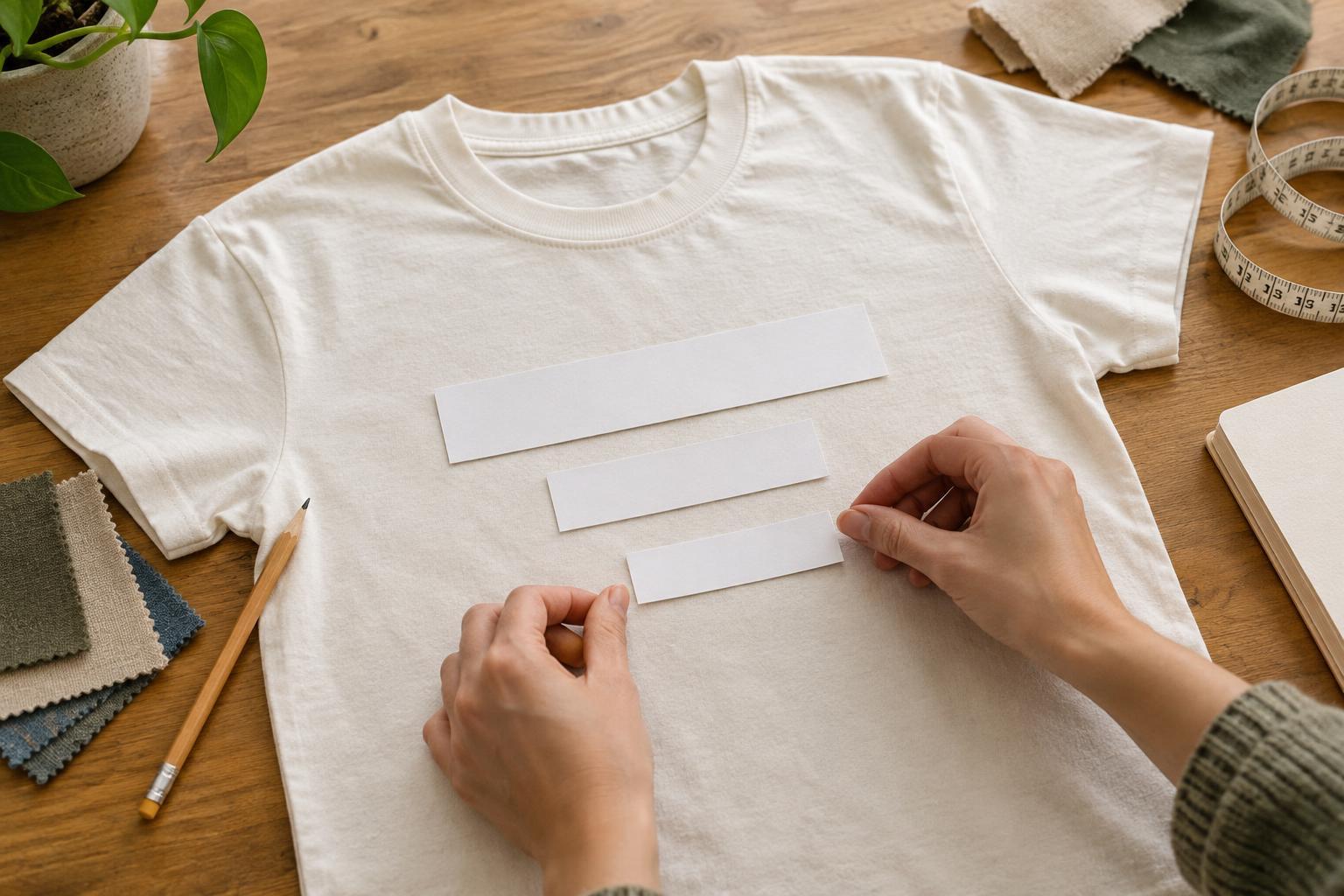
A line can sound charming in a message and feel different across a chest. Before settling on it, write the quote at roughly the size and line breaks you imagine, then view it from a few steps away. Check whether the main idea is apparent without leaning in. Also consider the shirt’s purpose: a subtle phrase near the chest can feel more personal, while a bold central line makes a stronger public statement. Neither approach is inherently better.
Think about tone as carefully as legibility. Sarcasm, teasing, and abbreviations may be read differently outside the intended group. A quote about someone else’s private life can also feel more revealing when worn in public. If the shirt is a gift, you can keep the surprise while still checking the wording with someone who knows the wearer well. When in doubt, choose a phrase the recipient would happily say for themselves.
Make a final edit before decorating
Give the design one last pass after you have chosen the words and placement. Check spelling, punctuation, capitalization, and whether a line break changes the meaning. Try reading only the emphasized words: do they still convey the intended tone? Then remove anything included merely because there is empty space. A quiet area around the quote can help it feel deliberate rather than unfinished.
If you are borrowing wording from a song, book, or another creator, consider writing your own line inspired by the feeling instead of copying a recognizable passage. Original wording can be more specific to the person receiving the shirt. A strong personal quote is not measured by how much it says; it gives the wearer a few words they recognize as their own and enough space for those words to stand out.