Start with how you want the shirt to sit
Body length is the distance from the upper shoulder area to the bottom of a T-shirt. It helps determine where the hem falls relative to your waist, hips and trousers. A shorter shirt can show more of a waistband and feel less bulky when worn untucked. A longer shirt offers more coverage and may stay in place more easily during movement. Neither is inherently more flattering or more comfortable; the useful choice depends on your proportions, your outfit and how you plan to wear the shirt.
Before comparing sizes, decide whether you want to tuck the T-shirt in, leave it loose or layer it under another garment. For a loose, untucked look, notice where the hem lands when you stand and when you sit. For a tucked look, check that there is enough fabric to stay tucked without creating a lot of bulk. If you expect to wear the shirt under a jacket or overshirt, consider whether you want its hem to remain hidden or show below the outer layer.
Measure a shirt you already like
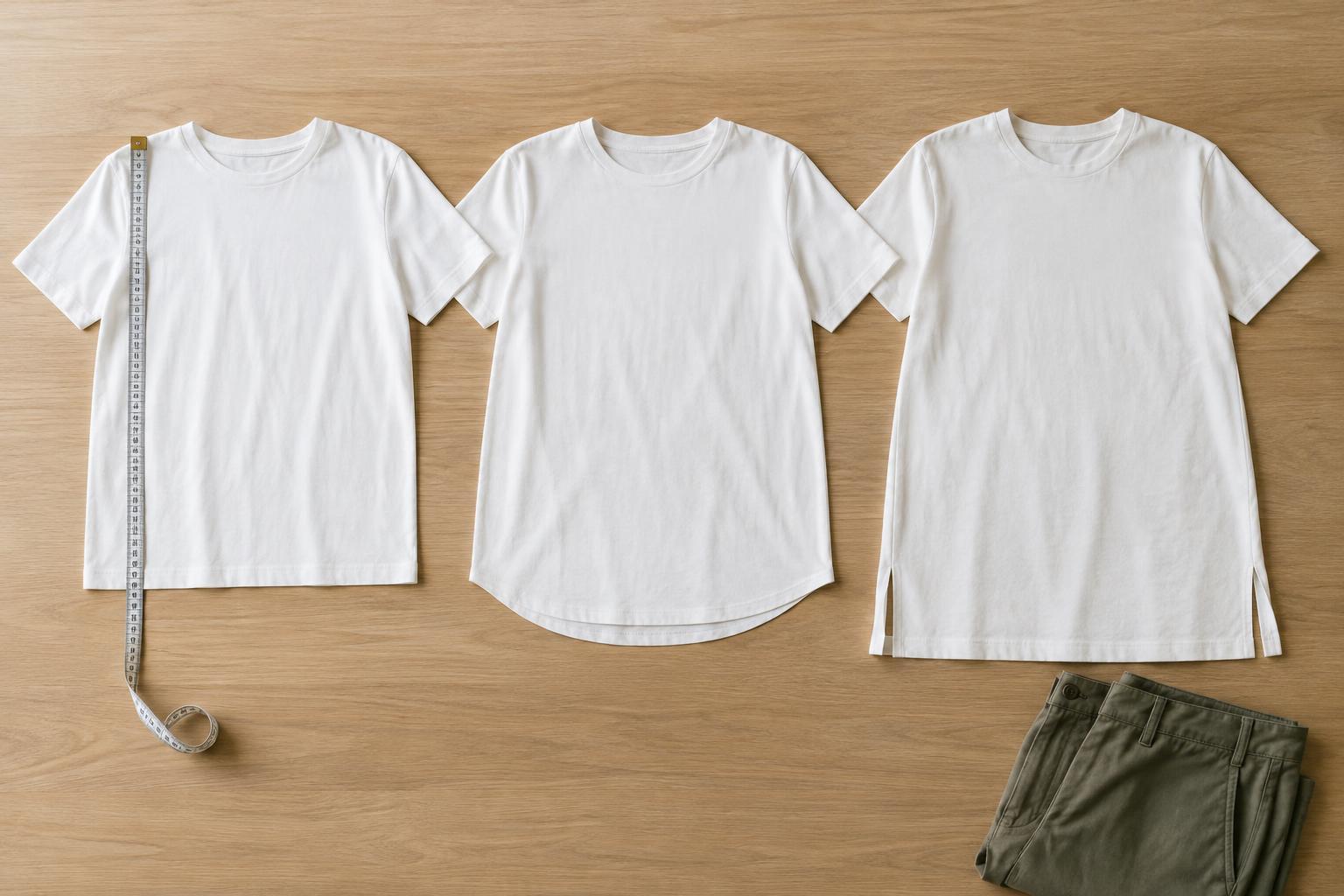
A familiar T-shirt is a more useful starting point than a size label alone. Lay it flat without stretching it, smooth out any wrinkles and measure from the highest point of the shoulder beside the collar to the hem. Record the measurement and note where that shirt falls on your body. If its hem curves, measure to the lowest point and also note where it reaches at the sides. Different brands may describe or measure length differently, so check a garment’s measurement diagram when one is available.
Compare length alongside chest width and shoulder fit. A shirt with extra width may hang differently from a close-fitting shirt of the same measured length. Fabric matters too: a light, drapey knit may follow the body, while a firmer knit may hold its shape away from it. If a garment has not been washed, allow for the possibility that its dimensions could change according to the fabric and care instructions. Measuring a shirt that has already been washed and worn can give you a useful reference for its everyday fit.
Understand what each hem shape does
A straight hem runs roughly level across the front and back. It gives the shirt a simple, familiar edge that works with many graphic placements. Its visual effect still depends on where it ends: a straight hem near the waistband reads differently from one that falls well below the hips. Check the side view as well as the front, since a level hem can appear uneven when a shirt pulls across the chest or hips.
A curved hem rises at the sides and dips at the front and back, though the depth of the curve varies. It can make a longer shirt feel less like a solid block of fabric around the hips. A drop-tail hem extends farther at the back than at the front, offering extra rear coverage and a visible layered effect. Split hems have openings at the side seams; these can give the lower part of the shirt more room to move. Look at the actual garment rather than relying only on a style name, because brands may use these terms differently.
Test length in the outfits you will wear
Try a T-shirt with the trousers, skirt or shorts you would normally pair with it. A hem that looks balanced over high-rise trousers may feel short over a lower waistband. When testing a longer shirt, check whether it bunches at the hips or catches under an outer layer. Raise your arms, sit down and bend forward to see whether the coverage still suits you. These simple movements reveal more than a front-facing mirror check alone.
If you are choosing blanks for a group, remember that the same length will not land in the same place on everyone. Offering more than one cut, where practical, can be more useful than expecting a single fit to satisfy every wearer. If you cannot try on the exact shirt, compare its listed measurements with a shirt that fits you well, rather than choosing solely by an image of a model.
Leave room for the design and the garment’s use
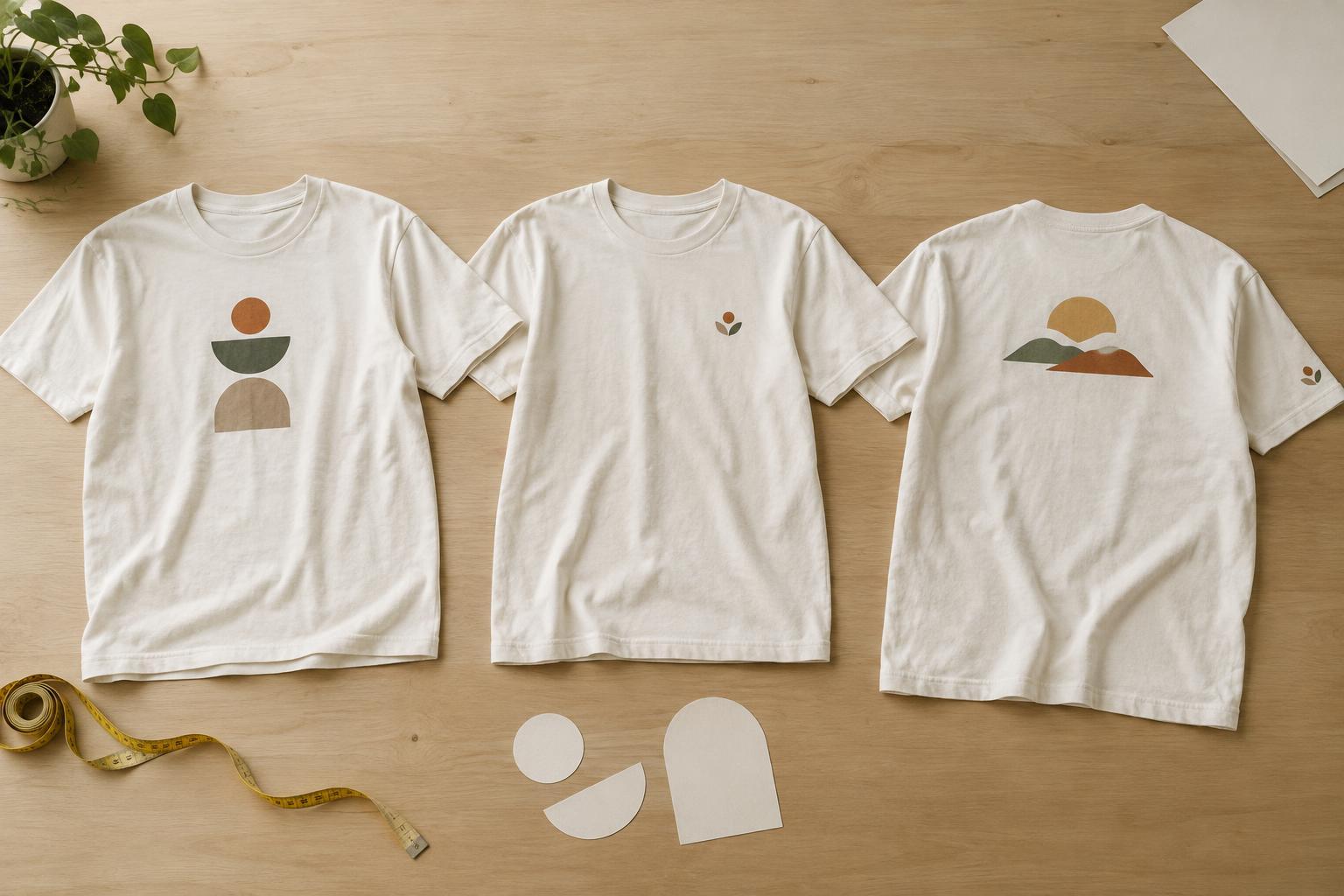
Length also affects custom artwork. A large front print may feel crowded on a shorter body, while a small chest design often leaves the hem choice visually flexible. Keep important lettering and details away from the lower edge, where the fabric may fold, be tucked in or move against a waistband. On a curved or drop-tail hem, judge placement against the part of the shirt where the design will actually sit, not just its longest point.
For a shirt intended for frequent wear, choose the length you feel comfortable maintaining rather than one that looks right only when carefully styled. Follow the garment’s care instructions and check its fit after washing before using it as a template for a larger order. The best combination of length and hem shape is the one that works through ordinary movement, suits your preferred outfits and gives your design enough clear space.