Start with the look and movement you want
Sleeves do more than cover part of your arm. Their length changes where the eye lands, while their width affects both the silhouette and how the shirt moves. A short, close sleeve tends to look tidy; a longer, wider sleeve can make the same T-shirt feel more relaxed. Neither is automatically more flattering or comfortable. The useful question is whether the sleeve works with your preferred fit, your activities and the rest of the garment.
Think about when you will wear the tee. If you want a clean layer under an overshirt, you may prefer sleeves that sit relatively close to the arm. If you want an easy, loose shape on its own, extra space around the upper arm may feel better. Raise your arms and reach forward when trying on a shirt: a sleeve that looks right while standing still may pull or ride up once you move.
Compare sleeve lengths by where they end
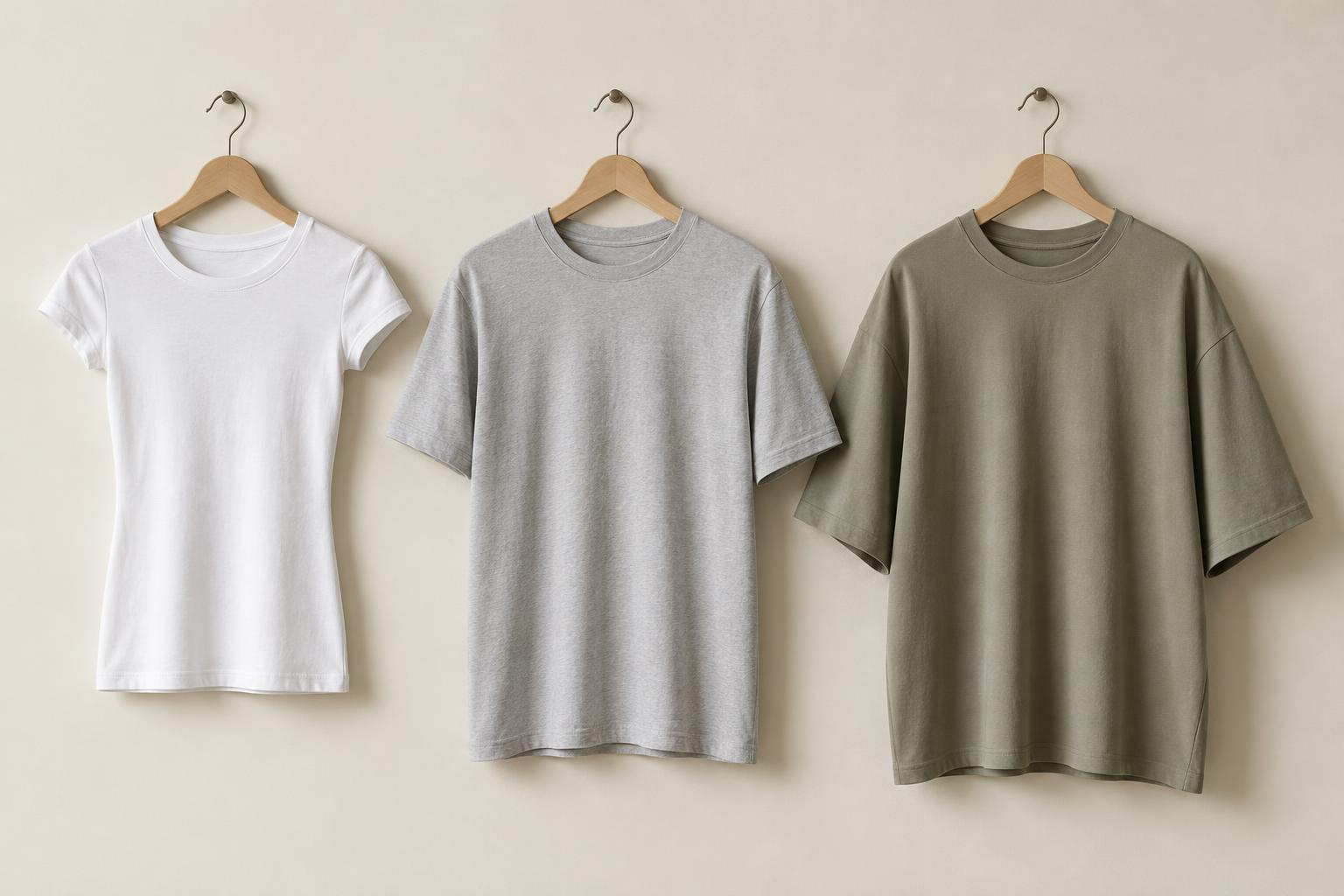
On a typical short-sleeve T-shirt, the hem may fall high on the upper arm, around its middle or nearer the elbow. A higher hem shows more arm and can give the shirt a compact, fitted appearance. A hem around the middle of the upper arm is a versatile starting point if you are unsure. Longer short sleeves often suit a relaxed or boxy tee, especially when they have enough width to hang freely rather than grip the arm.
The point where a sleeve ends matters as much as its stated length. A sleeve that finishes at the widest part of your upper arm may look and feel different from one that ends just above or below it. Your height, arm length and shoulder width all affect where a given measurement lands, so labels such as “standard” or “oversized” are less useful than seeing the sleeve on your body. If you like a particular T-shirt already, note where its sleeve hem sits and use it as a reference.
Choose width for comfort and shape
Sleeve width determines whether the fabric follows your arm or creates space around it. A narrow sleeve opening can look streamlined, but it should not dig in, twist or restrict movement. A wider opening allows more airflow and produces a straighter, looser line. On a very wide sleeve, the hem may stand away from the arm; that can be an intentional design feature rather than a sizing problem.
Look beyond the opening itself. A sleeve may have a roomy hem but still feel tight where it meets the body if the armhole is small. The shoulder seam also changes the effect: when it sits near the edge of the shoulder, the sleeve begins higher and often looks more defined. A dropped shoulder places that seam farther down the arm, making the sleeve appear longer and the overall fit more casual. Compare these features together instead of choosing solely by sleeve-opening width.
Use a familiar tee as your measuring guide
To compare shirts, lay a T-shirt you enjoy wearing flat and smooth the sleeve without stretching it. Measure from the shoulder seam to the sleeve hem along the outer edge for sleeve length, then measure straight across the sleeve opening. Note whether that opening measurement is flat width; its circumference is roughly twice that figure. You can also check the shoulder seam position and the width across the body, because a wider torso can change how a sleeve hangs.
Measurement methods vary between size charts. Some brands measure sleeves from the centre back of the neck rather than the shoulder seam, so check the diagram or description before comparing numbers. If you are choosing a blank tee for a design project, request or check the garment measurements for the exact style and size you want. Trying on a sample, when practical, reveals details a chart cannot: how the fabric falls, whether the armhole binds and where the hem lands when your arms are at rest.
Account for fabric and the finished design
Fabric affects the impression of sleeve width. A soft, drapey knit may fall close to the arm even with a generous opening, while a firmer fabric can hold a boxier shape. Stretch can make a closer sleeve comfortable, though it may also cause a snug opening to cling. Washing and drying can change a garment’s dimensions depending on its fabric and construction, so follow its care label and avoid choosing a barely comfortable fit in the hope that it will stay unchanged.
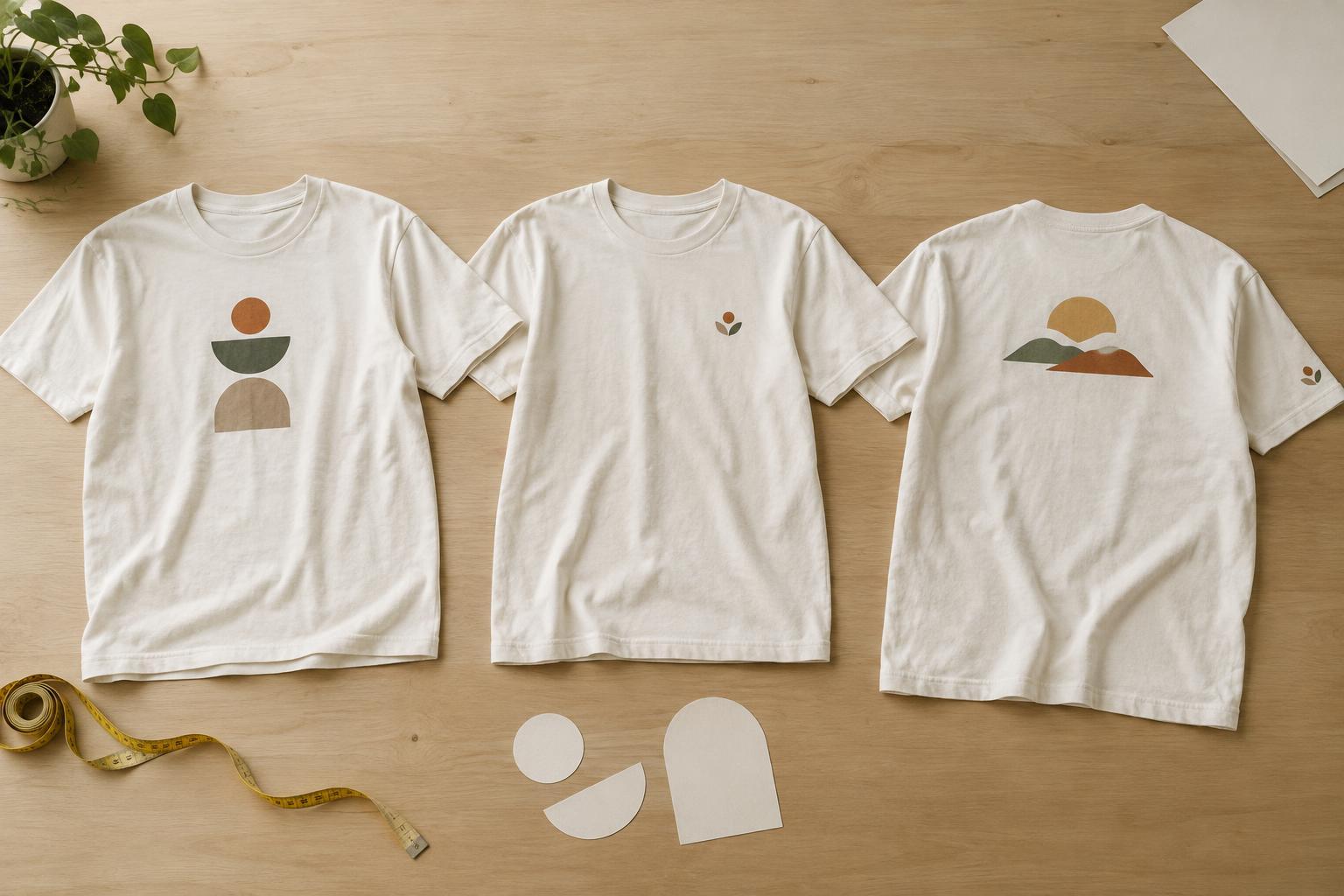
If the T-shirt will carry artwork, consider the sleeves alongside the print placement. A large chest graphic can feel balanced with a wider, longer sleeve, while a small, restrained design may suit a neater outline. Sleeve decoration needs enough usable fabric and a suitable position away from seams and hems; what works depends on the garment and decoration method. Choose the sleeve fit you would happily wear first, then adapt the artwork to it.