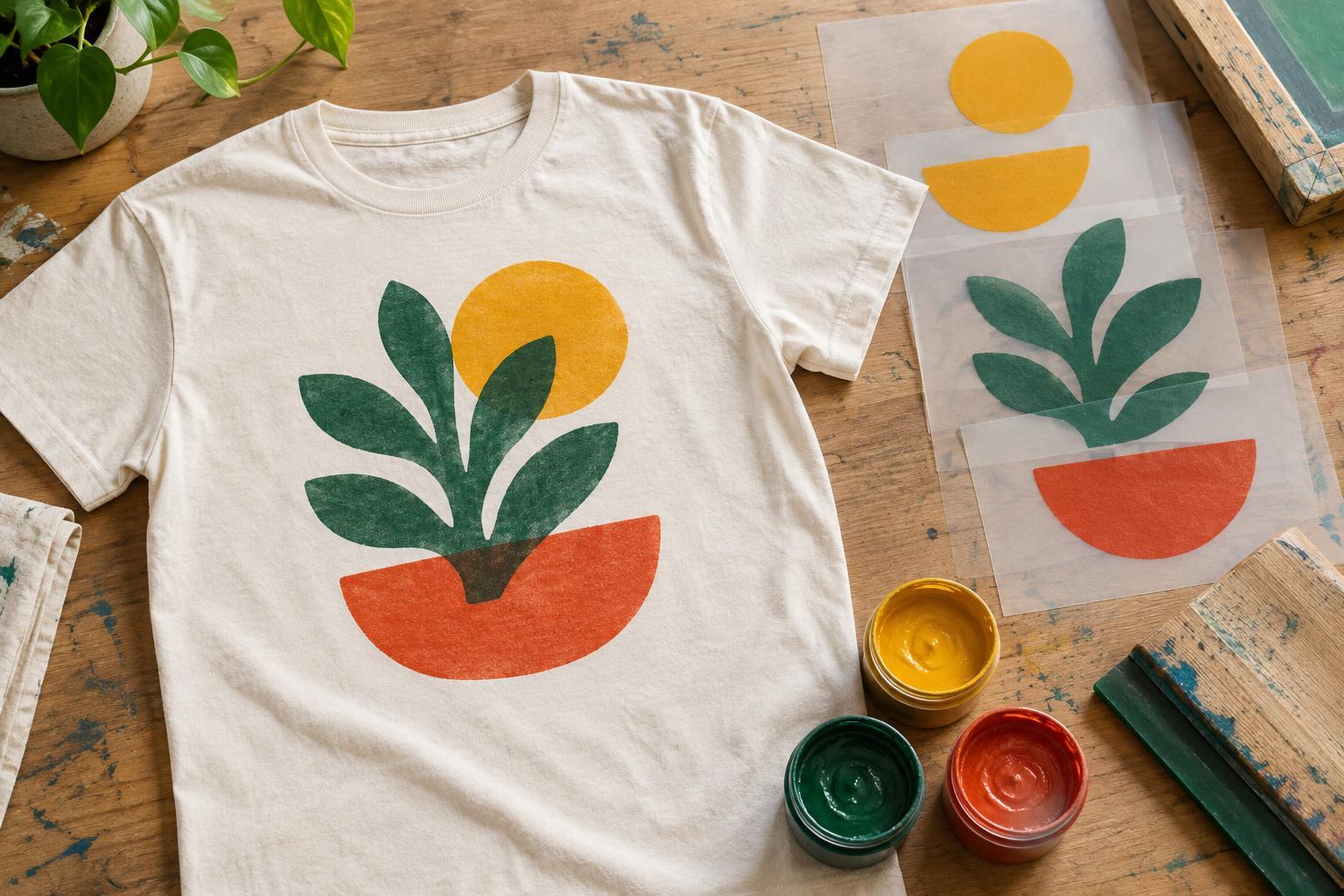
Start with a reason for the series
A cohesive T-shirt series begins with one clear idea. It might explore different places, activities, characters or phrases under a common theme. Before drawing, write a short description of what links the shirts and who might wear them. “Three shirts celebrating different ways to spend a weekend” gives you more direction than “three cool graphics.” It also helps you decide whether a new concept belongs in the set.
Choose how many designs you need and give each one a distinct role. If the series covers a garden, a beach and a mountain, each shirt can focus on one setting while sharing a similar mood. Avoid asking every design to carry every idea. A series works best when someone can appreciate a single shirt on its own and also recognize its connection to the others.
Build a small visual system
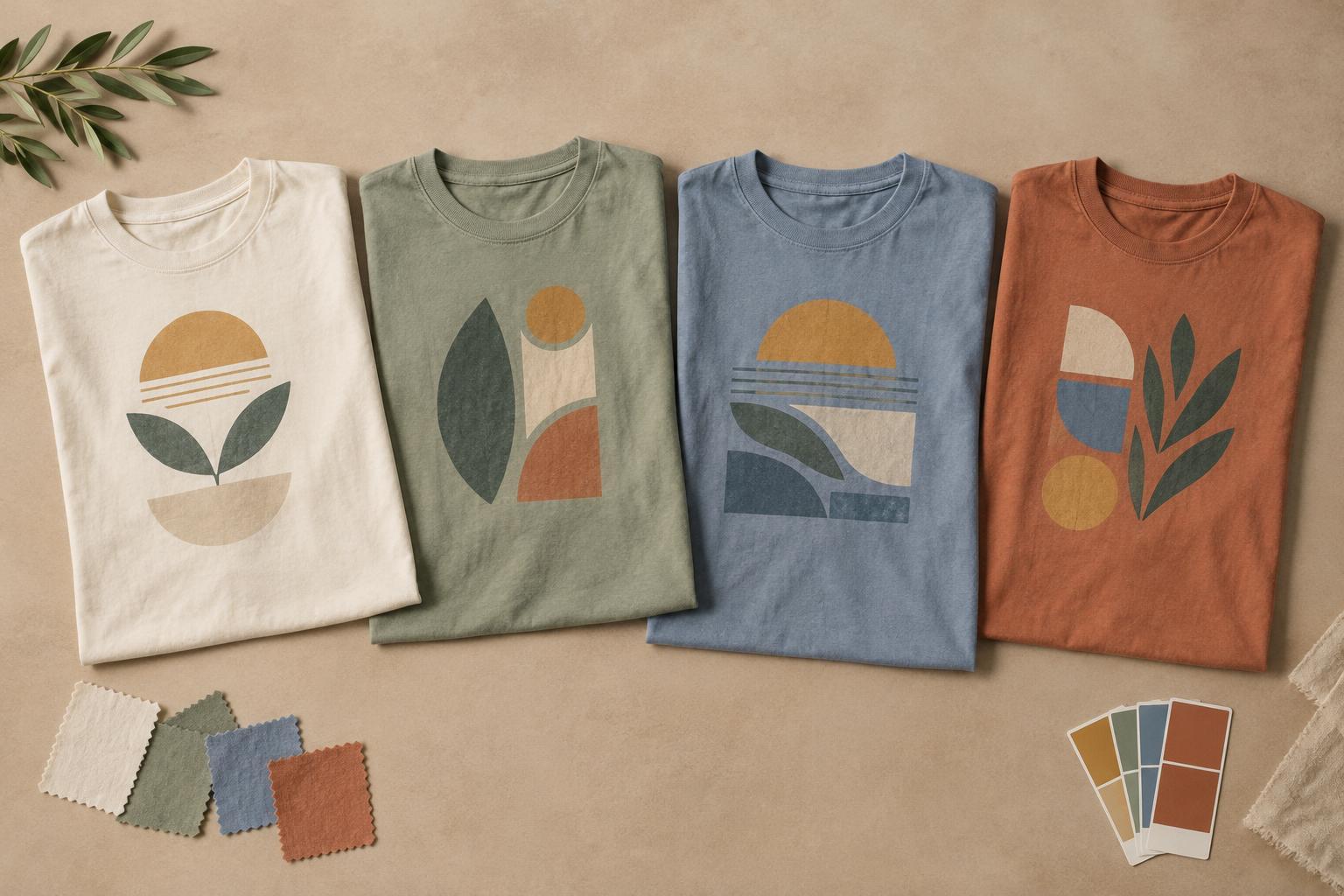
Pick a few elements that will stay consistent across the set. These could include an illustration style, a limited color palette, a typeface, the shape of a border or the position of a small recurring symbol. You do not need to use all of them. Two or three reliable connections are often enough to make the relationship visible without turning each shirt into a near-copy.
Make a simple reference sheet before developing the final artwork. Record your chosen colors, lettering styles, typical line weight and placement rules. For example, every design might use a large central illustration, a short curved heading and a small detail near the hem. The sheet is a guide rather than a rigid template: if a rule weakens a particular design, adjust it deliberately instead of following it by habit.
Decide what changes from shirt to shirt
Variety gives people a reason to look at the whole set. Change the main image, wording or accent color while keeping the underlying design language recognizable. One approach is to give each shirt the same composition but a different subject. Another is to keep the illustration style and palette steady while varying the composition. Try changing one major feature at a time in early sketches so you can see which combinations still feel related.
Pay attention to visual weight. A delicate line drawing may feel out of place beside two dense, bold graphics even when they use the same colors. Compare the shirts at the same size and from a distance. If one dominates, you might simplify it, strengthen the quieter designs or make that difference an intentional feature of the series.
Design for the garment, not just the artwork file
The shirt color is part of each design. A palette that looks consistent on a white screen may read differently on cream, navy or black fabric. Decide whether all shirts will use one garment color or a coordinated range. Then preview each graphic against its intended shirt color and check that important text and fine details remain easy to see.
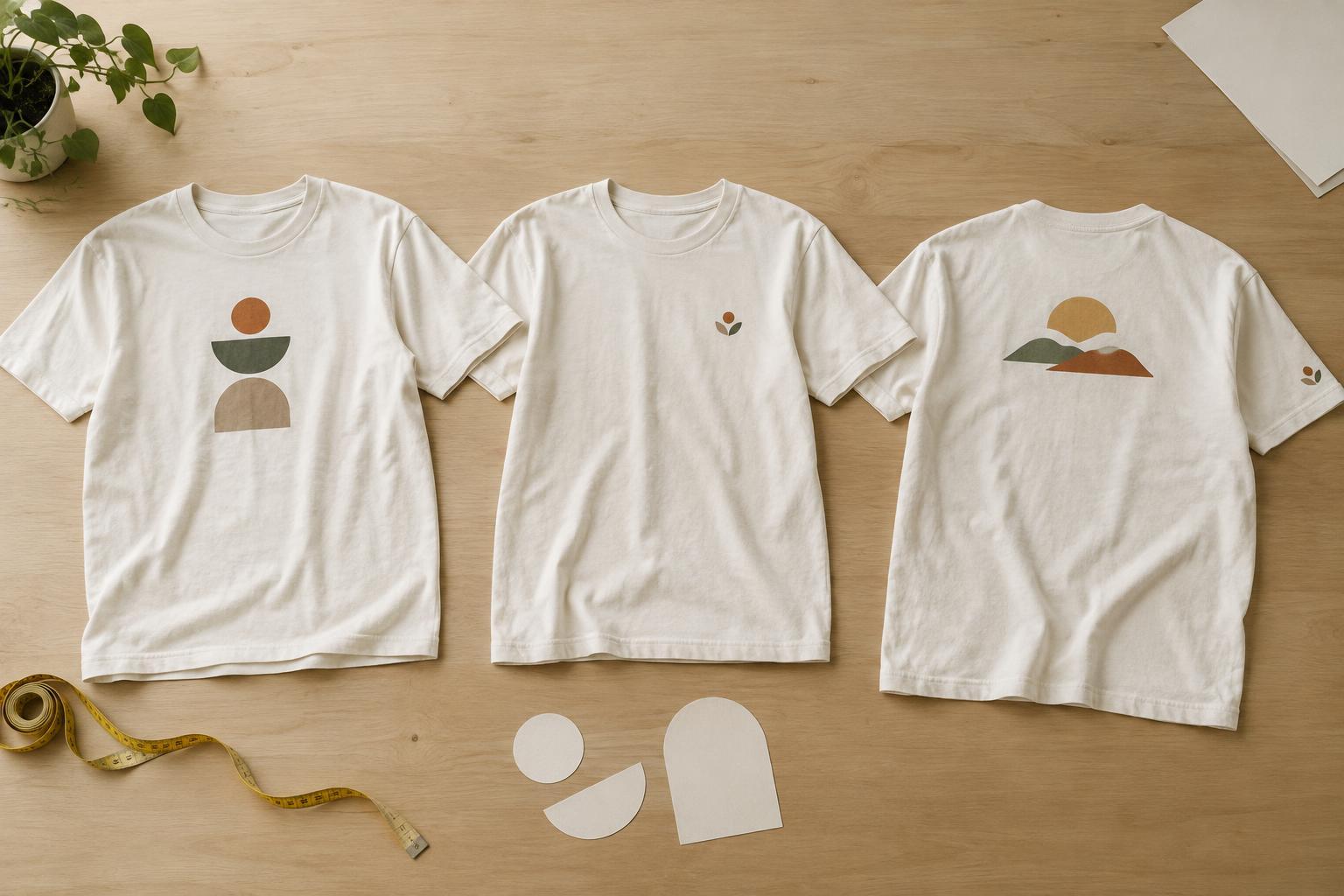
Keep placement in mind, too. A set of full-size front prints will usually feel more unified than a mix of full fronts, tiny chest marks and large back graphics unless that mix follows a clear pattern. If you plan to use more than one decoration method, consider how differences in texture and detail might affect the series. Print requirements vary by method and provider, so confirm file, color and size specifications before preparing final artwork.
Review the set as a whole
Place all your designs side by side on simple T-shirt mockups at roughly the same scale. Look first for the shared idea, then for what makes each piece distinct. Check whether lettering is legible, colors have enough contrast for the intended garments and small details still matter at a normal viewing distance. Ask whether someone seeing only one shirt would understand it without needing the rest of the set.
Finally, remove anything that feels repeated without adding value. A recurring symbol can be a useful signature; an identical slogan on every shirt may make the series feel less varied. Keep your reference sheet alongside the final designs so later additions have a starting point. A cohesive series is not one in which every shirt matches perfectly. It is one in which the choices feel connected and each design has a purpose.