Give strangers something to enjoy
An inside joke does not need to be fully explained to work on a T-shirt. The people who were there can enjoy the memory, while everyone else can enjoy an amusing phrase, a curious image or an unexpected combination of the two. The aim is not to make every passerby part of the group. It is to give them a way into the design without requiring a long explanation.
Start by separating the private memory from the part that might be funny on its own. Suppose your group keeps saying “The Great Spoon Incident” after a chaotic picnic. The words may be hilarious to your friends, but strangers have little to picture. A drawing of an oversized spoon beside a tiny picnic table gives the phrase a scene. It still holds the original meaning for your group, while offering everyone else a small visual joke.
Choose the right amount of context
Too little context can make a shirt look like a random list of words. Too much can make it read like the minutes of a meeting. Look for one short phrase and, if it helps, one supporting detail. A location, object or playful label can suggest a story without spelling out every step. “Spoon Recovery Team,” for example, is easier to grasp at a glance than a sentence describing what happened at the picnic.
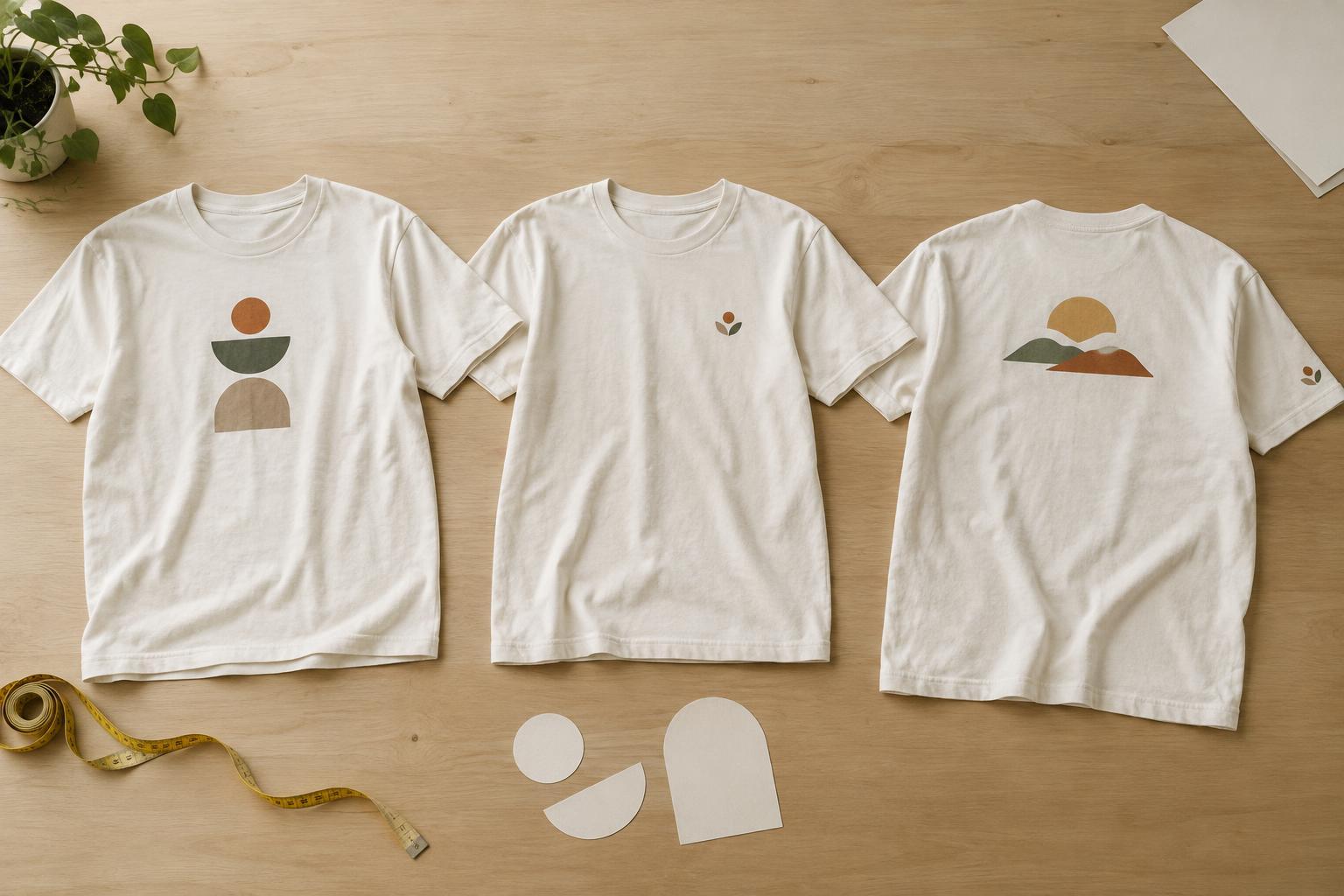
You can also build the design in two layers. Put the most accessible idea on the front, then reserve a small date-free phrase, symbol or nickname for a sleeve or back print. Outsiders get a complete design from the main graphic; group members get the extra reference. This approach is especially useful when the original joke depends on a long exchange that would be hard to fit legibly on a shirt.
Make the visual do some of the storytelling
A visual can convey the tone of a joke faster than a caption. A neatly drawn trophy for a very minor achievement suggests mock grandeur. A dramatic warning label on an ordinary object suggests that something went comically wrong. Decide whether the joke feels dry, chaotic, affectionate or absurd, then choose lettering and imagery that reinforce that mood.
Keep the main idea readable from a few steps away. Short wording, clear letterforms and enough contrast between the print and fabric will usually help more than squeezing in another reference. If you use an illustration, simplify its silhouette so it is recognizable at the size you intend to print. Very fine lines and tiny captions may be harder to notice or reproduce consistently, depending on the decoration method and garment.
Keep the joke kind to the people in it
A private joke can feel different when it appears on clothing worn in public. Before committing to a design, ask whether it reveals something a person would rather keep private, makes someone the permanent punchline or depends on a nickname they dislike. An affectionate reference to a shared mishap is often a better choice than a shirt that singles out one person for embarrassment.
If the joke involves a real name, photograph, personal message or identifiable story, check with the people involved. You can often preserve the spirit of the joke by replacing specific details with a fictional team name, an object or an exaggerated emblem. That can make the design more comfortable for the group to wear and more inviting to someone who has never heard the story.
Test the shirt before settling on the design
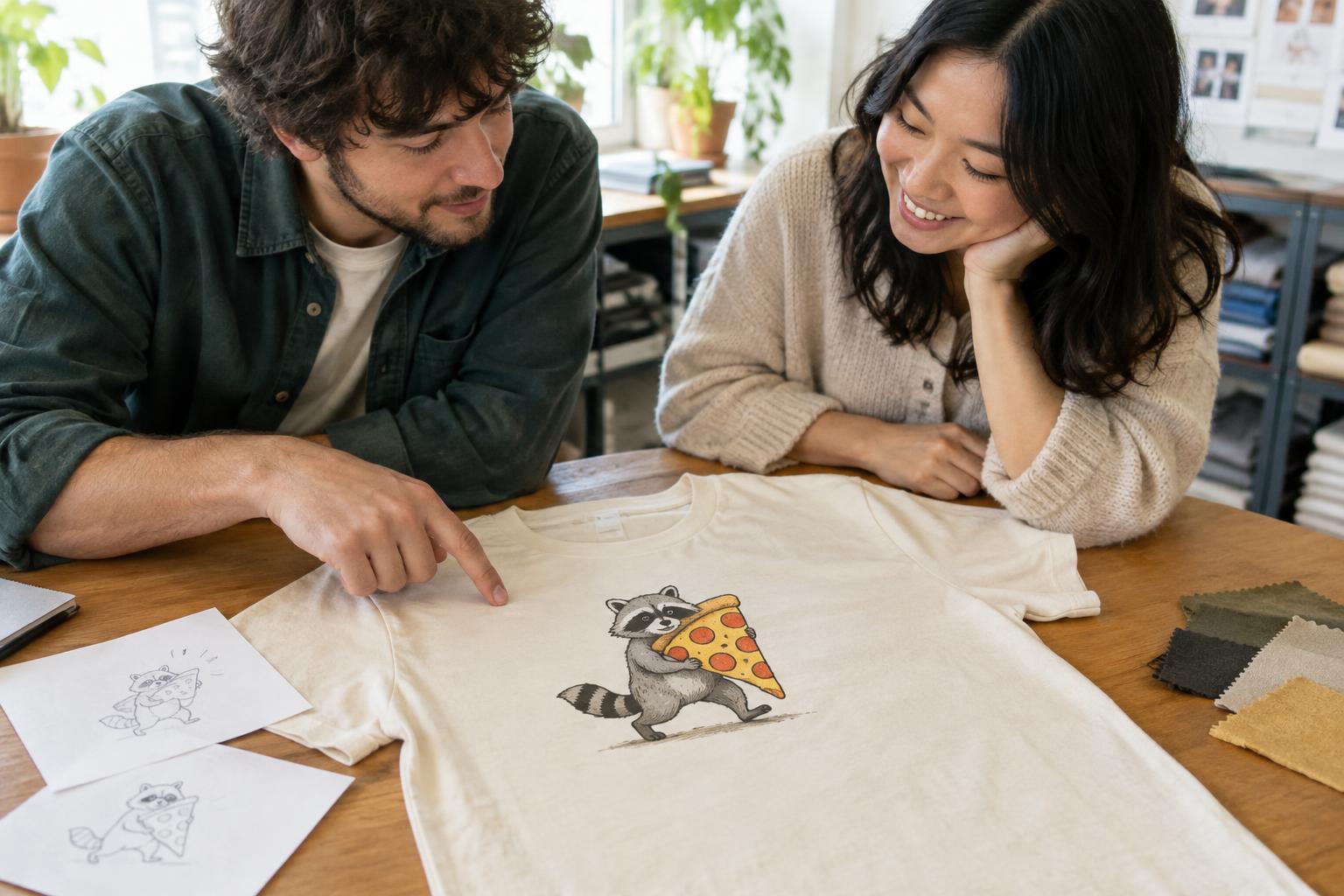
Make a quick mockup at approximately the size the design will appear on the garment. View it both close up and at a distance. Then show it to one person who knows the joke and one who does not. Ask the first whether it still feels like your shared memory; ask the second what they notice and what tone they take from it. They do not need to guess the backstory. They should be able to tell that the design has a point.
If the outsider sees only confusion, try changing one thing at a time: shorten the wording, strengthen the image or remove a competing detail. If the group member says the design has lost its meaning, restore one distinctive element rather than adding the entire story. The strongest inside-joke shirts leave room for someone to ask, “What’s that about?” while still being worth wearing when no one asks.