Choose the detail that connects the set
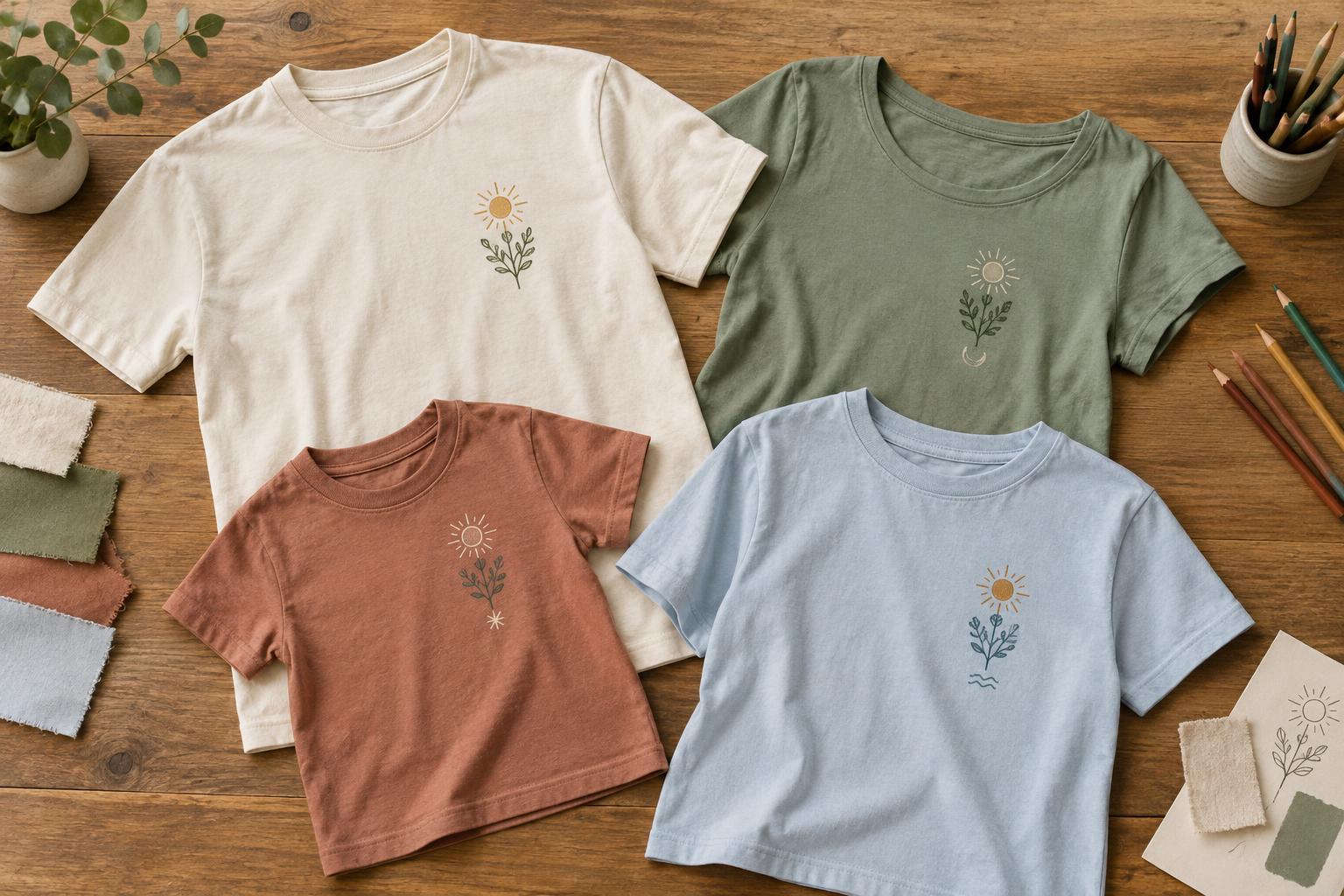
The easiest way to make a matching set feel intentional is to decide what will stay the same before choosing what will change. A shared illustration, short phrase, typeface or colour palette can act as the link between the shirts. For a family trip, that might be a simple drawing of the destination. For a club, it could be a small emblem that reflects a shared interest rather than a large slogan.
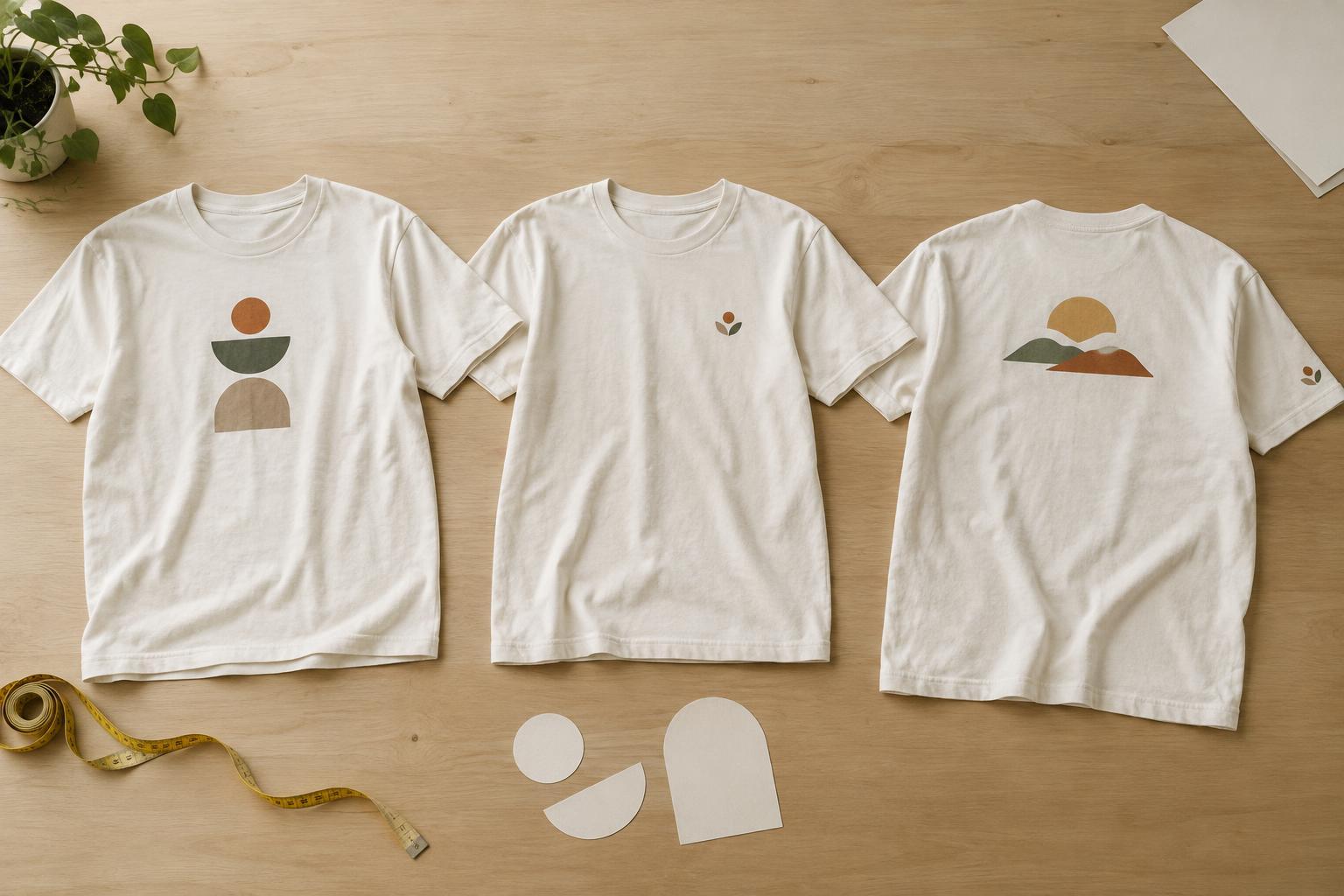
Keep the common element in a consistent position and at roughly the same visual scale on every shirt. This gives the set a recognizable look even when the garments differ in size or colour. A small chest graphic, for example, leaves room for individual details on a sleeve or back. Sketch one base shirt first; it is easier to judge each variation when you have a clear starting point.
Make the variations meaningful but manageable
Names, initials and nicknames are straightforward choices, but they are not the only ones. Each wearer could choose a favourite colour from a limited palette, an icon that represents a hobby, or a word that describes their role in the group. A set for a garden project might share one plant illustration while giving each person a different leaf or flower. These differences add personality without requiring a new concept for every shirt.
Limit the number of elements that vary. If everyone chooses a different font, graphic, colour and placement, the shirts may no longer read as a set. One or two changeable details are usually easier to coordinate. Ask wearers how they want their names spelled and whether they are comfortable displaying them in public. Initials or a private symbol can be a useful alternative for anyone who prefers a less identifiable shirt.
Design for different sizes and fits
A layout that looks balanced on one shirt size may feel cramped or oversized on another. Choose a design that can be adjusted for smaller and larger garments while keeping its proportions. Check that lettering remains readable at the smallest intended size, especially if it sits beside an illustration. Very thin lines and tiny text can also be difficult to reproduce clearly with some decoration methods, so simplify details when in doubt.
Let each wearer choose a fit they are likely to use rather than insisting on one garment style. A relaxed cut, a fitted cut and a youth size can still belong to the same set if the shared graphic and colours carry through. If you are ordering blank shirts, compare garment measurements with shirts people already own. A stated size alone may not tell you how a particular style will fit.
Plan the artwork before choosing a decoration method
Make a simple list of every shirt, noting its garment colour, size and personalised detail. Then create a mock-up for each variation, even if it is only a rough drawing. This helps catch swapped names, inconsistent placements and text that disappears against a shirt colour. Use clear contrast between artwork and fabric; a colour that stands out on a light shirt may need to change on a dark one.
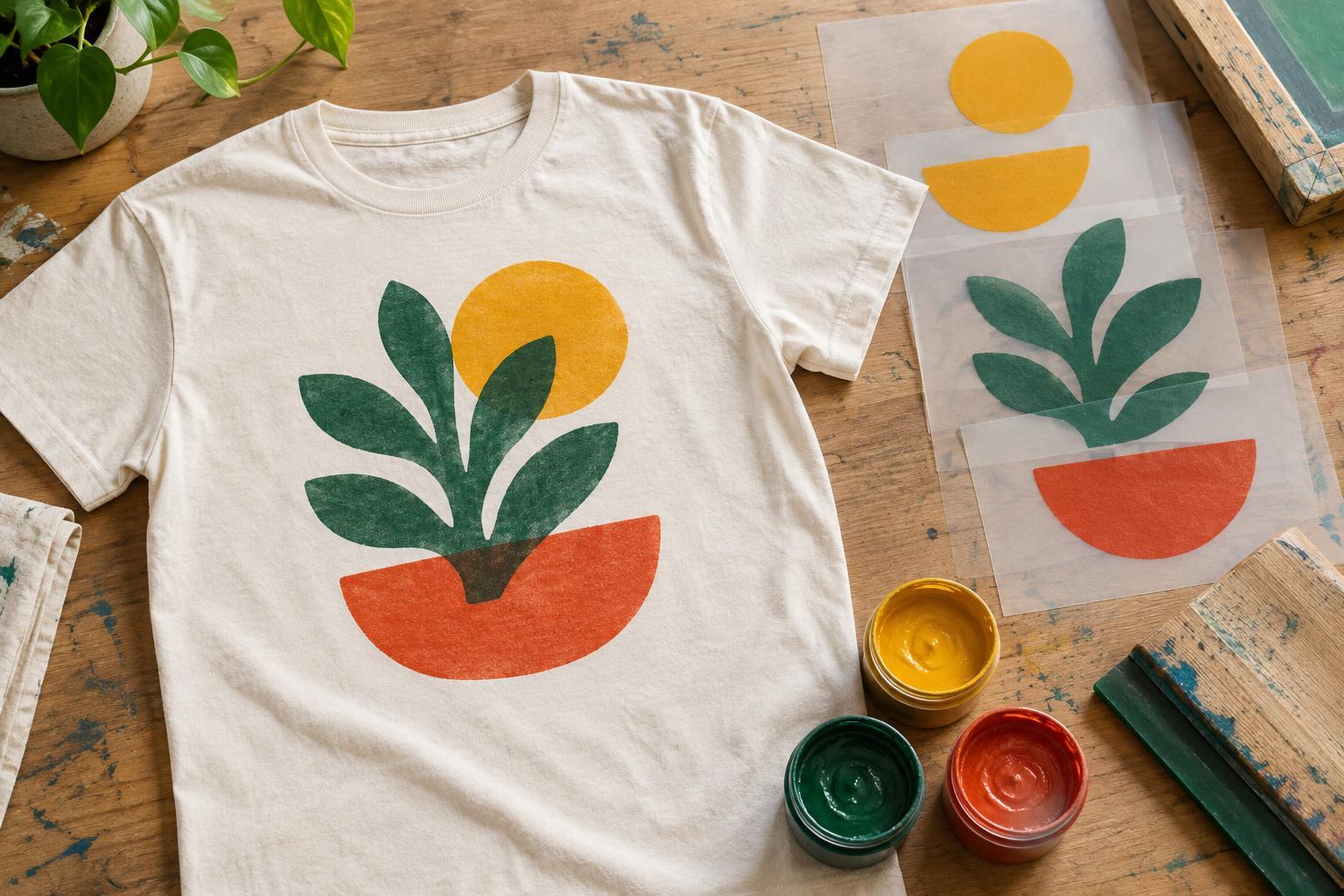
The decoration method may influence how you organise the design. Methods that use a shared setup may be more convenient when the main artwork stays identical, while individual names or changing colours can add steps. Other methods may be better suited to varied artwork. Capabilities depend on the material, design and provider, so check artwork requirements before preparing final files. If you make the shirts yourself, test a small sample where practical before committing to the full set.
Give the set a life beyond one occasion
Matching shirts are more likely to be worn again when the design works outside the event that inspired it. Consider putting an occasion-specific phrase in a discreet location and letting the main graphic stand on its own. For a reunion, for instance, a small shared motif may be easier to wear later than a large date across the front. Letting people choose a wearable base colour can help too, provided the overall palette remains connected.
Once the shirts are finished, follow the garment label and any care guidance for the decoration method. Turning printed shirts inside out for washing and avoiding excessive heat are common precautions, but exact care needs can vary. A little planning at the design stage makes the set easier to produce and more enjoyable to wear: everyone gets a shirt that belongs to the group without giving up their own style.