Start with the chart, not your usual size
A medium in one T-shirt may fit differently from a medium in another. The cut, fabric and way a brand defines its sizes can all affect the result. Before measuring, look at the chart for the specific shirt you want. Check whether it lists body measurements, which describe the wearer, or garment measurements, which describe the finished T-shirt. Also check whether the figures are in inches or centimetres.
If the chart shows a chest measurement but does not say what it refers to, look for a measuring diagram or an explanation of how the number was taken. A flat chest width measured across a shirt is not the same as a chest circumference measured around a person. Keeping those two numbers separate prevents one of the most common sizing mistakes.
Take your body measurements
Use a flexible tape measure and stand naturally, with your arms relaxed. Wear a thin top or measure over the clothing you would normally wear under the T-shirt. Keep the tape level and close to your body without pulling it tight. If possible, ask someone to help you read the tape, especially for measurements across your back.
For your chest, wrap the tape around the fullest part of your upper body, passing it under your arms and across your back. Breathe normally rather than expanding your chest or holding your breath. For your waist, measure around the area where you prefer a T-shirt to sit or where a fitted cut may narrow. Your waist measurement can be useful when choosing a close-fitting shirt, although many T-shirt charts list chest measurements only.
Shoulder and length measurements can help when the chart provides them. For shoulder width, measure across your upper back between the points where you want the shoulder seams to sit. For body length, measure from the high point where your shoulder meets your neck down to where you want the hem. These measurements are harder to take consistently on yourself, so treat them as guides rather than exact predictions of fit.
Measure a T-shirt you already like
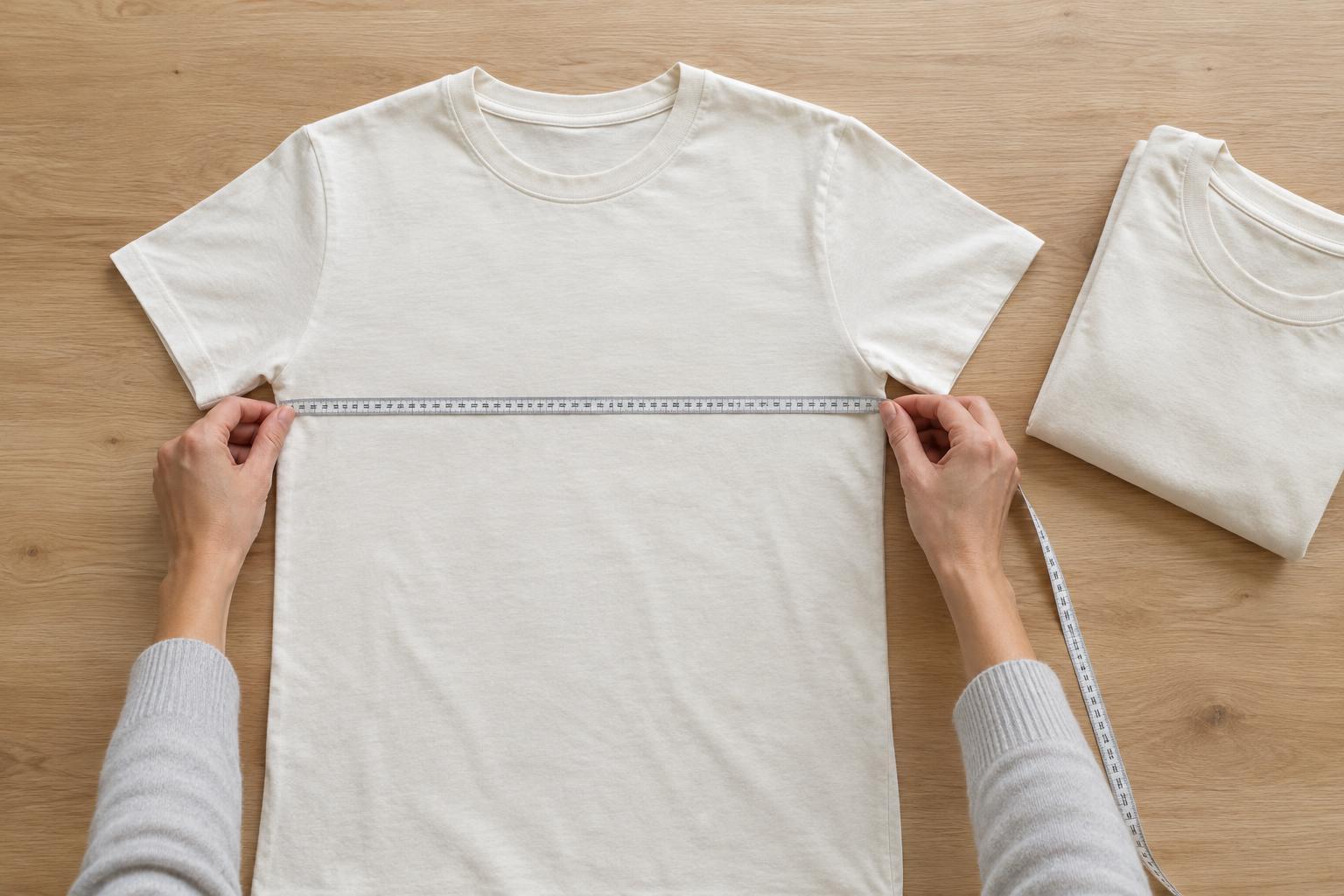
A well-fitting shirt from your wardrobe can be a useful reference, particularly when the new chart lists garment dimensions. Lay the clean shirt flat without stretching it. Measure straight across the chest from underarm to underarm. This is its flat chest width; double it only if the chart asks for garment chest circumference. Measure length from the high point of the shoulder beside the collar to the bottom hem. If needed, measure across the shoulders from seam to seam and note the sleeve length.
Compare like with like: your shirt’s flat width with a chart’s flat width, or its length with a chart’s garment length. Do not compare a flat width directly with your body’s chest circumference. Write down which shirt you measured and whether you like its fit throughout the body, sleeves and shoulders. A shirt that feels good in the chest but is too short is not an ideal reference for every dimension.
Choose the fit you want
A garment needs room beyond your body measurements so you can move comfortably. If a chart gives garment chest circumference, that number will generally need to be larger than your body chest circumference. How much larger depends on whether you want a close, regular or loose fit, as well as the fabric and cut. If a chart gives body measurements instead, use its suggested size range as a starting point rather than adding extra room to the figures yourself.
Consider where you want the shirt to fall. A relaxed shirt may have dropped shoulders and a wider body by design; sizing down could change its intended shape. A closer-cut shirt may fit your chest but feel restrictive at the waist or upper arms. When your measurements fall between sizes, decide which dimension matters most to you and check the chart’s length and width before choosing. If available, fit notes for that particular T-shirt may clarify whether its cut is intended to be snug or roomy.
Account for fabric and future care
Fabric affects how a measured size feels. A knit with stretch may feel comfortable closer to the body, while a less stretchy fabric may need more room for movement. Garments can also change with washing and drying, depending on their material and construction. Follow the care label rather than assuming that a slightly large shirt will shrink to the size you want.
Keep your measurements and the dimensions of a favourite shirt handy for future comparisons. Recheck the size chart for each new style, even from a familiar label. The goal is not to find one size letter that always works; it is to match the shirt’s actual dimensions to the fit you want.