Start with a clean, dry T-shirt
A little preparation makes packing easier. Wash the T-shirt according to its care label, then let it dry completely before putting it in a suitcase. Damp fabric can develop stubborn wrinkles and unwanted odors, especially when it stays compressed for a long journey. If the shirt has just been decorated, follow the printer’s or maker’s guidance about when it can first be washed or packed.
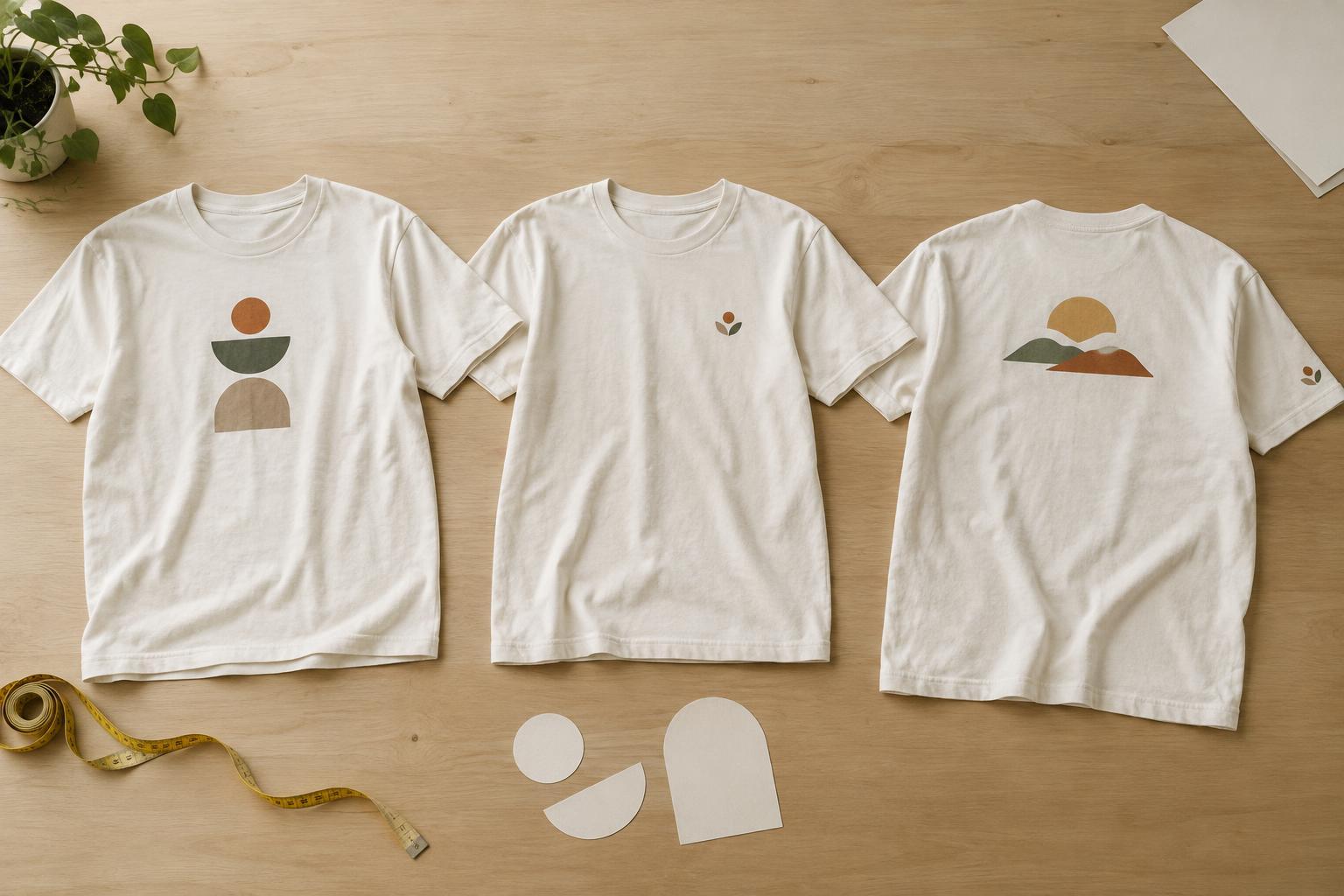
Smooth the shirt on a flat surface and check where the design sits. A small chest logo leaves plenty of room for folds, while a large graphic across the front needs more thought. The aim is to avoid putting a hard fold straight through the artwork or trapping it against a zipper, shoe or other rough item. Packing carefully may reduce creases, but it cannot guarantee a perfectly smooth shirt on arrival.
Choose a fold that works around the design
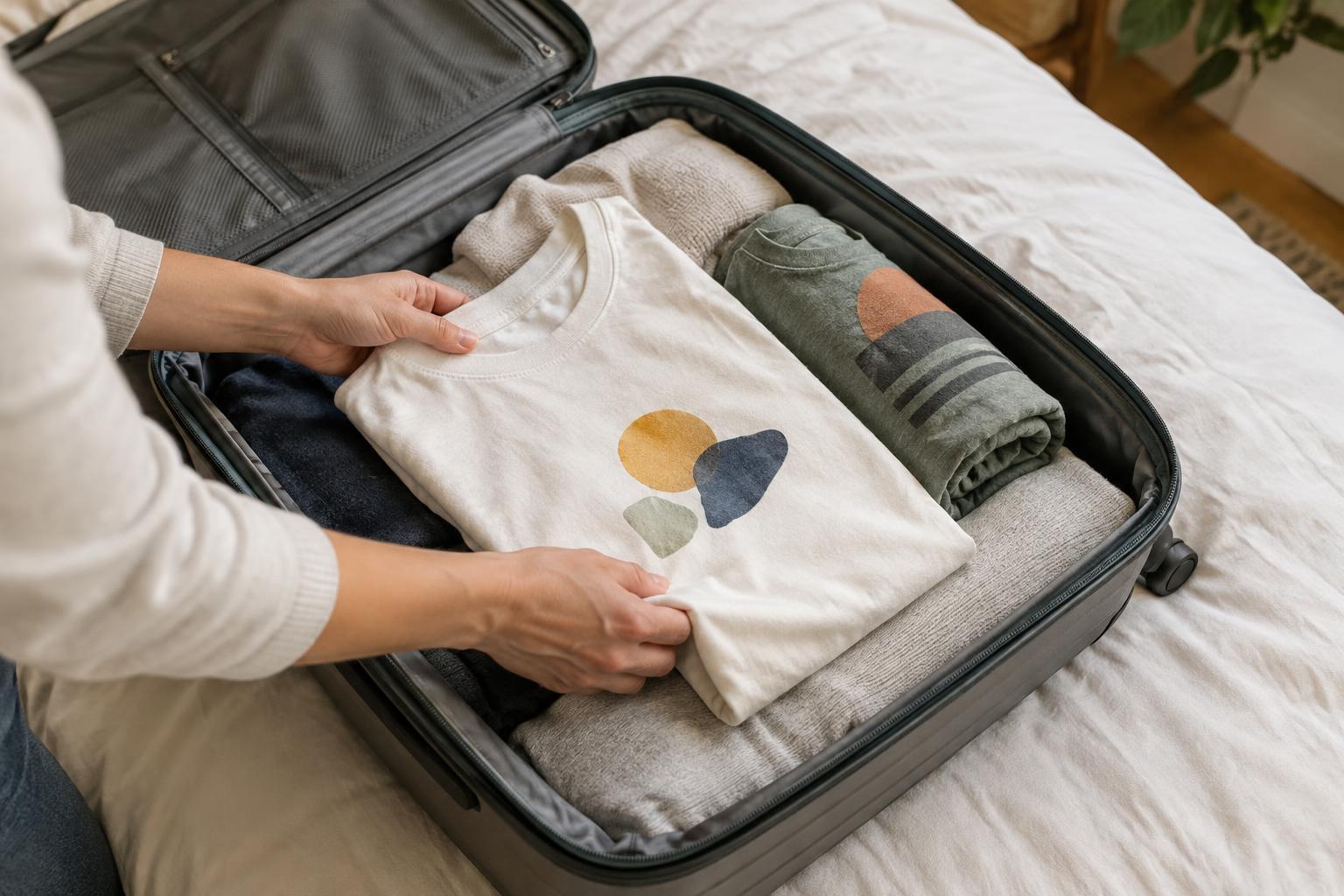
For a conventional fold, lay the shirt flat and smooth out the sleeves and hem. Bring each side toward the center, adjusting the fold lines so they fall beside the printed area where possible. Fold the bottom up in one or two loose sections rather than pressing a sharp edge through the middle of a large graphic. A soft, flat package usually works better than a tightly compressed square.
If the print covers much of the shirt, place a clean sheet of lightweight tissue paper over the decoration before folding. This creates a barrier between the design and the fabric touching it. Tissue is also useful for prints that feel textured, though it should not be relied on to protect a delicate decoration from heavy pressure. Pack shirts with raised lettering, transfers or embellishments near the top of the case so other items do not flatten them.
Roll when space matters, but keep it loose
Rolling can be a convenient choice for a plain shirt or one with a small print. Lay the shirt flat, fold in the sleeves, and roll from the hem toward the collar without pulling the fabric tight. A gentle roll avoids the sharp fold lines of a compact square, although it may leave soft wrinkles if the roll is squeezed into a crowded bag.
For a large or stiff graphic, folding may be the better option. A tight roll bends the entire design repeatedly and can put pressure on its surface. If you do roll a printed shirt, keep the roll broad and make sure the artwork is not pressed against a buckle or another hard object. Whatever method you choose, leave enough room in the suitcase that the shirt can hold its shape.
Arrange the suitcase to prevent pressure marks
Think of the suitcase as layers. Put shoes, toiletry bags and other firm items where they will not bear directly on the printed area. Use softer clothing as a cushion, then place folded graphic T-shirts on a relatively level layer. A packing cube can help keep shirts from shifting, but avoid filling it so tightly that the fabric is crushed. If you use a separate bag to protect a shirt, make sure the garment is completely dry first.
If you need an outfit soon after arrival, pack that T-shirt last so it is easy to remove. This also helps prevent repeated rummaging that can undo careful folds. For a trip with several shirts, stack them in the order you expect to wear them, with the most delicate decoration toward the top.
Unpack early and deal with creases gently
Take printed T-shirts out of your luggage when you can. Give each shirt a gentle shake, straighten the seams and hang it up. Some light wrinkles may ease as the fabric relaxes. For more noticeable creases, check the care label before using a steamer or iron. Keep direct heat off the print unless the garment’s care instructions specifically allow it; heat that is suitable for the fabric may still affect a decoration.
If ironing is permitted, turn the shirt inside out, use a suitable setting for the fabric and avoid pressing directly on the artwork. A clean cloth between the iron and garment can provide an additional barrier where appropriate. When in doubt, let the shirt hang or choose a different one to wear first. The simplest travel routine is to pack dry shirts without excessive pressure and give them space to recover at your destination.