Start with the whole label, not just the wash symbol
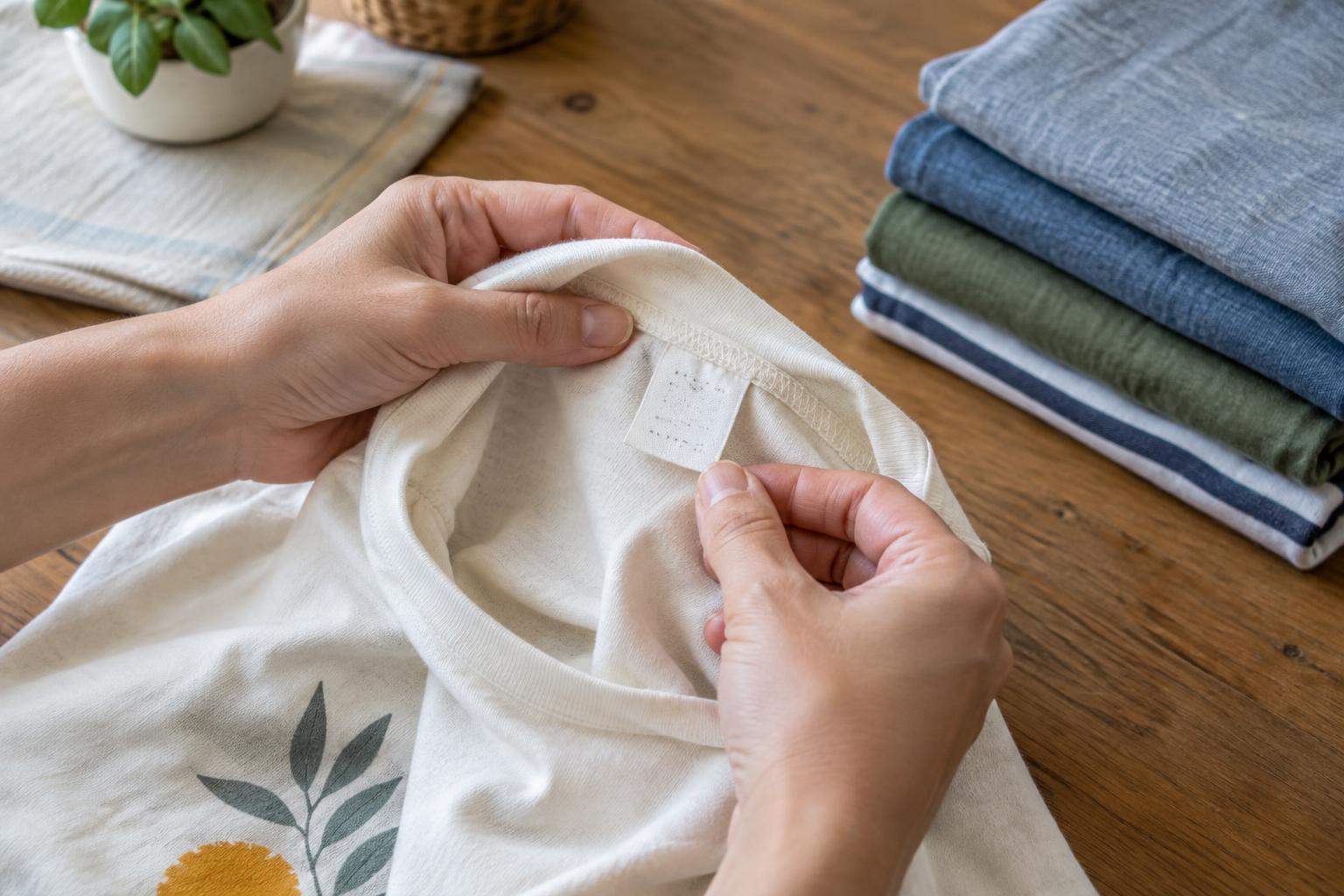
Before washing a T-shirt for the first time, find the care label at the neck or side seam and read every line. It may list the fabric content, written instructions, and symbols for washing, bleaching, drying, ironing and professional cleaning. Read the instructions together: a shirt marked as machine washable might still require a low temperature or need to be kept out of the tumble dryer.
Check for a second label or tag, particularly on a customised shirt. Decoration instructions may differ from the garment’s general care instructions. If a separate instruction says to avoid heat on the design, do not assume that an iron symbol on the original garment label applies to the printed area. When instructions seem to conflict, the gentler option is usually the more cautious choice.
Decode the washing and bleaching symbols
A washtub symbol indicates washing instructions. A number inside the tub gives the maximum wash temperature shown by that label; it is not a requirement to wash at that temperature. A hand in the tub indicates hand washing, while a crossed-out tub means the garment should not be washed in water. Lines beneath the tub indicate a gentler machine cycle. Symbol conventions can vary by region, so follow any accompanying words if a mark is unfamiliar.
The triangle relates to bleach. A plain triangle generally permits bleaching, while a crossed-out triangle means do not bleach. Other versions may restrict the type of bleach. If the label is unclear, avoid bleach rather than guessing, especially on a coloured shirt or one with a graphic. Check detergent packaging too: a product described as a stain remover or laundry booster may contain bleaching ingredients.
Check drying and ironing before you start
The square covers drying. A circle inside it refers to tumble drying; dots inside the circle indicate the heat setting, and a cross means do not tumble dry. Other marks inside a square describe ways to dry the garment without a machine, such as hanging or laying it flat. Written directions can be easier to follow than an unfamiliar symbol. If the label rules out tumble drying, plan where the shirt can dry before you wash it.
An iron symbol tells you whether ironing is allowed, with dots indicating the permitted heat level. A crossed-out iron means do not iron. Some labels also warn against steam. For a decorated T-shirt, an instruction allowing ironing does not necessarily mean it is safe to put an iron directly on the design. If ironing is permitted, work around the graphic or iron from the reverse side when the decoration instructions allow it. Do not use heat to test an unknown print.
Use fabric content to understand the instructions
Fabric content can explain why a label calls for a particular routine. Cotton, polyester, blends and fabrics containing elastane do not always respond to washing and heat in the same way. For example, a shirt with stretch fibres may have stricter heat instructions than a similar-looking cotton shirt. A T-shirt can also combine different materials in its body, ribbed collar and decoration, so appearance alone is not a reliable guide.
Treat fabric content as context, not a substitute for the care directions. Two shirts with the same fibre blend can have different labels because of differences in construction, dye or decoration. If the label has been cut off, start conservatively: separate colours, use a gentle wash with cool water, and air-dry away from direct heat. That approach cannot guarantee a result, but it avoids making assumptions about heat tolerance.
Make a quick pre-wash check a habit
Before loading the machine, check the label, look for stains, empty any pockets and separate the shirt from items that may snag it. Turning a printed T-shirt inside out can reduce rubbing against other garments during the wash. Avoid an overloaded drum so clothes can move and rinse properly. If you are washing several shirts together, choose a routine that meets the most restrictive care instructions in the load.
After washing, reshape the shirt gently while damp if needed and dry it as directed. Keep a printed design away from direct contact with a dryer’s heat or an iron unless its instructions permit it. For a favourite customised T-shirt, a photo of the care label can be useful if the text fades over time. The central habit is simple: read the entire label before washing, then let its most restrictive instruction guide each step.