Why a clean-looking T-shirt can still smell
Sweat itself is not the whole odor problem. Body oils, skin residue and microbes can remain in fabric, especially around the underarms. If a shirt sits damp in a hamper or washer, the smell may become more noticeable. A strong scent can cover it for a while, but removing the residue is usually a better goal than masking it.
Fabric matters, too. Cotton absorbs moisture readily, while some synthetic shirts can hold on to oily residue. Neither material is automatically difficult to clean, but a wash routine that works for one T-shirt may be less effective for another. Check the care label and note where the odor persists before changing how you wash the garment.
Start before laundry day
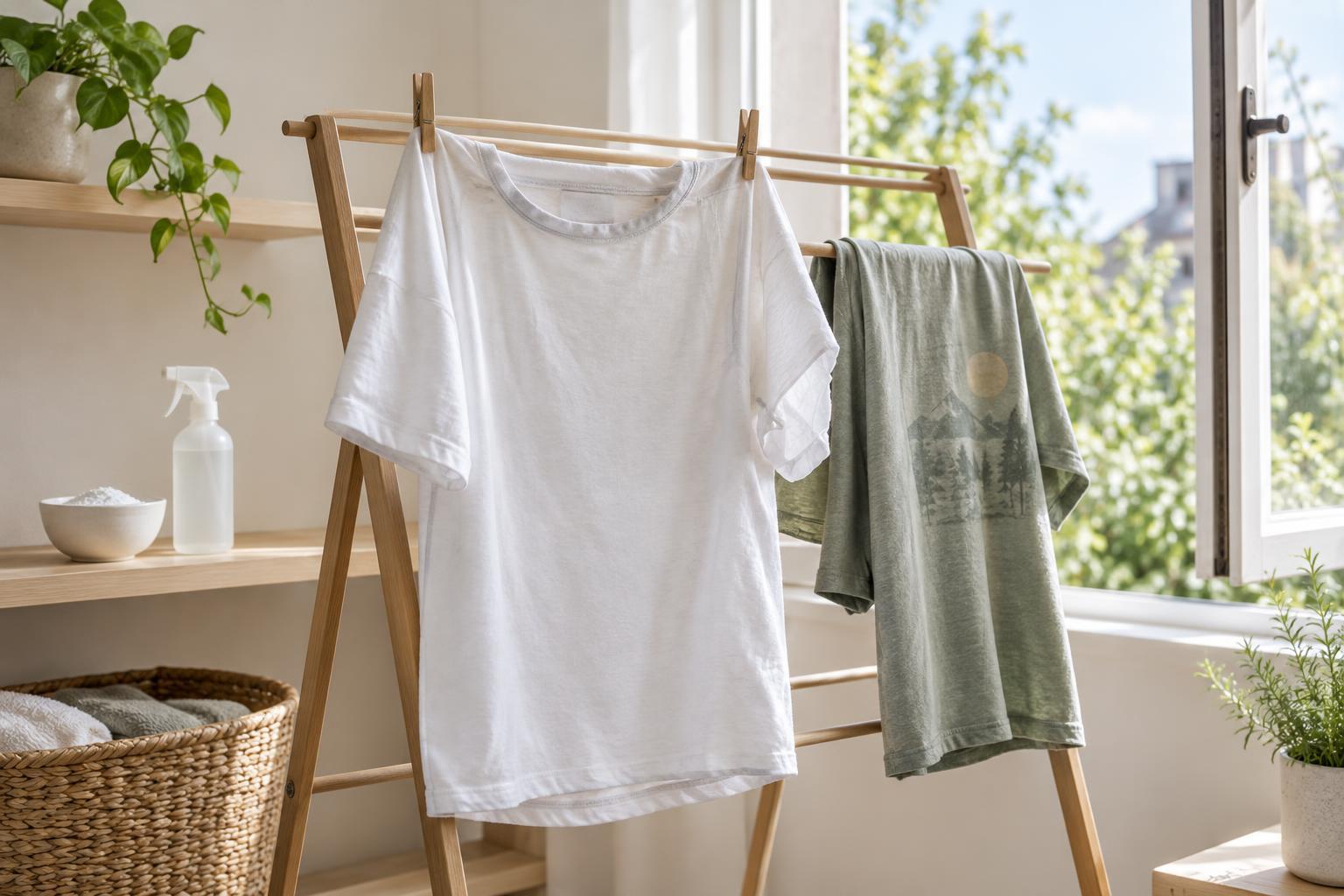
After wearing a sweaty T-shirt, let it dry rather than dropping it into a tightly packed hamper. Hang it somewhere with airflow until it is ready to wash, then place it with the laundry. If you can wash it soon, do so. Leaving a damp shirt bunched up gives odor more time to linger and can make the next wash less effective.
For an odor concentrated at the underarms, apply a small amount of liquid laundry detergent to the inside of those areas before washing. Gently work it into the fabric with your fingers, following the detergent directions for pretreatment. Avoid hard brushing, particularly near a printed design or delicate knit. Test any new product on an inconspicuous area if you are unsure how the shirt or its decoration will react.
Wash to remove residue, not add perfume
An unscented detergent can clean without leaving a heavy fragrance. Use an amount suited to the load and your machine; adding extra detergent is not necessarily better, because poorly rinsed product can leave buildup. Give shirts enough room to move in the washer. If several garments still smell after washing, try a smaller load and check that the machine is rinsing and draining properly.
Choose a water temperature the care label permits. Warm water may help with body oils, but it is not suitable for every fabric, dye or decoration. An enzyme-containing detergent may help with some body-related stains and residues; follow its label and the garment’s care instructions. If a shirt needs more attention, consider a short soak with a suitable laundry product rather than repeatedly adding fragrance boosters.
Treat optional additives with care. An oxygen-based laundry product may be appropriate for some washable fabrics, but check both product and garment labels first. Do not combine cleaning chemicals in hopes of making them stronger. In particular, never mix chlorine bleach with vinegar or ammonia.
Protect printed and personalised shirts
Turn a graphic T-shirt inside out before washing to reduce rubbing against other clothes. Fasten any nearby zippers in the load, and avoid aggressive spot-scrubbing over a print, transfer, embroidery or other decoration. Because decoration methods vary, follow any instructions supplied with the shirt when they are more specific than the general fabric label.
High heat can be hard on some prints and can also make a lingering odor more frustrating to deal with. Before tumble drying, smell the underarm area while the shirt is still damp. If it has not come clean, wash it again rather than sending it straight through a hot dryer. When drying is appropriate, use the setting allowed by the care label, or air-dry the shirt out of harsh direct sunlight if you want a gentler option.
Keep the fresh result
A shirt should be completely dry before it goes into a drawer or closet. Check seams and underarm areas, which may dry more slowly than the rest of the fabric. Store clean shirts where air can circulate, rather than compressing them while they are still slightly damp.
If odor returns quickly, look at the whole routine instead of reaching for a stronger scent. Prompt drying after wear, pretreating the problem area, using an appropriate detergent and allowing a full rinse are useful places to start. A T-shirt that still smells after careful washing may have stubborn buildup; another targeted wash may help, but it is worth respecting the limits of the fabric and its design.