Start with the care label, then make color groups
Before building laundry piles, check each T-shirt’s care label. It may call for a particular water temperature, a gentle cycle or separate washing. Follow those instructions even if the shirt’s color seems easy to sort. A dark tee with a delicate print, for example, may need different handling from a plain dark tee.
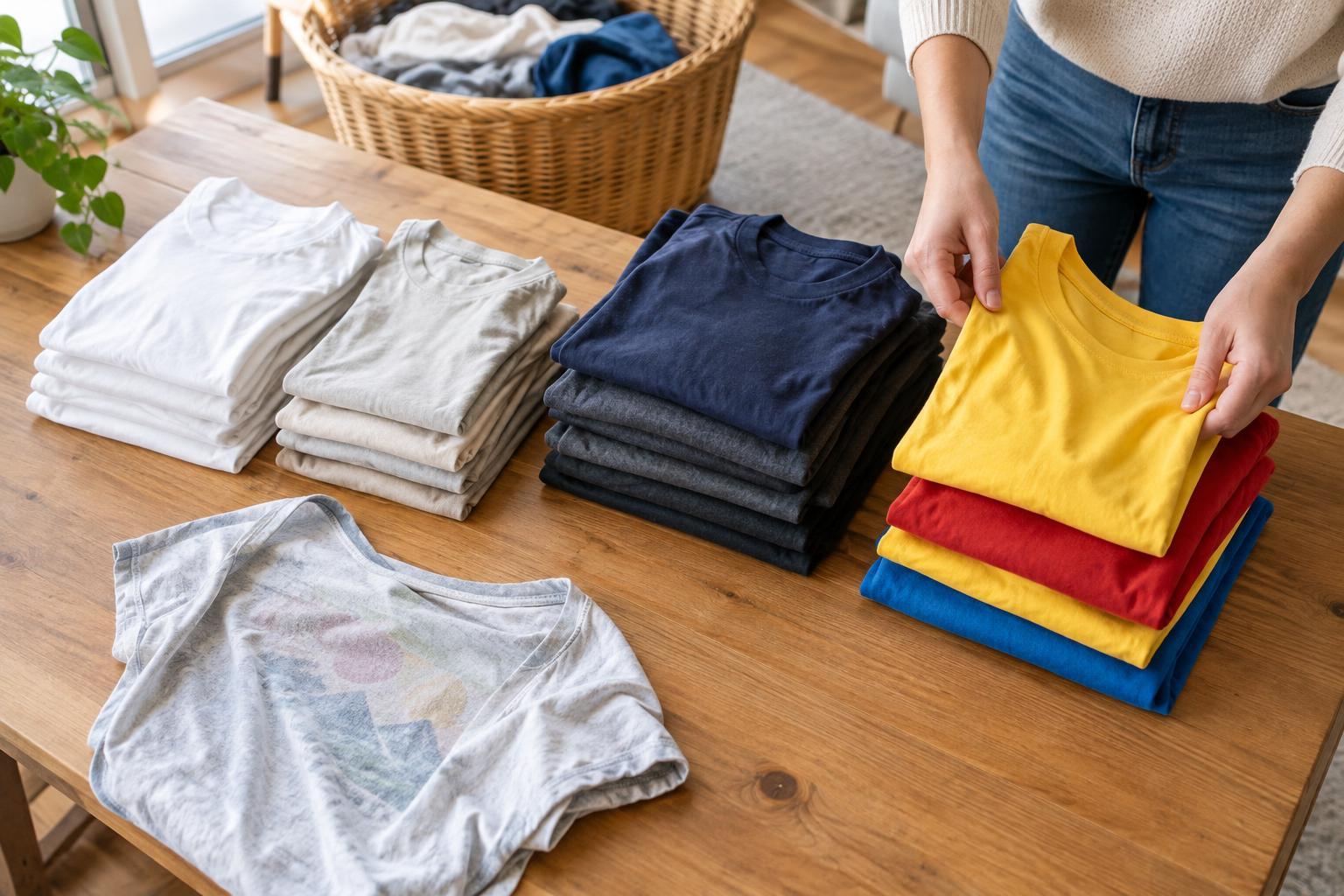
For a practical routine, make three main groups: whites, light colors and dark colors. White shirts are best kept away from colored garments, especially if you want them to stay bright. Lights might include pale gray, cream and soft pastels. Darks include black, navy, charcoal and deep brown. This does not have to become a complicated system; the aim is to keep strongly contrasting colors apart during washing.
Give bold colors a closer look
Bright red, saturated blue, vivid green and other strong colors can be harder to place. If you have enough laundry for another load, group similar bold colors together. If not, put a well-washed bright tee with the closest color group rather than with whites or very pale shirts. A bright pink T-shirt, for instance, is a safer companion for other strong colors than for a white tee.
Be more cautious with a new colored T-shirt. Some garments release excess dye in their first washes, although how much varies by fabric and dyeing process. Wash a new, deeply colored tee separately or with similar colors until you are comfortable that it is not transferring color. If you are unsure, dampen a small, inconspicuous area and press it with a clean white cloth. Visible color on the cloth is a reason to keep that shirt separate.
Sort by more than color when needed
Color is only one part of a useful laundry sort. Heavy items such as jeans and towels can rub against lightweight T-shirts, so consider washing tees with similarly soft garments. Separating very dirty shirts from lightly worn ones can also help you choose an appropriate cycle without putting every tee through more agitation than it needs.
Printed and decorated shirts deserve particular care. Turn a graphic tee inside out before washing to reduce direct rubbing against the design. For shirts with embroidery, textured decoration or a print that feels delicate, a gentle cycle may be suitable if the label permits it. Sorting a printed tee with like colors still matters: turning it inside out protects the surface from friction, but it does not prevent dye from moving between garments.
Choose a manageable routine for mixed loads
You do not need a full load in every shade to sort effectively. If laundry day brings only a few T-shirts, start by separating whites from everything else, then keep new or potentially dye-releasing colors apart. Combine established light colors with other lights and established dark colors with other darks, provided their care labels allow the same wash settings. When a shirt sits between groups, such as medium gray, choose the group with the smaller color contrast.
A color-catcher sheet may offer an extra precaution in a mixed load, but it is not a substitute for separating a garment you suspect will release dye. Likewise, cooler water may help reduce some color transfer and fading, but it cannot guarantee either outcome. Use a detergent and cycle suited to the garments, and avoid overfilling the machine so shirts have room to move and rinse.
Keep the sorting habit going after the wash
Check the load before drying. If you notice transferred color or a stain, drying may make it harder to address, so treat the affected shirt according to its care label before trying again. When drying graphic tees, follow their labels and be mindful that high heat can be hard on some prints and fabrics. Air-drying is an option when space and time allow.
A small change to your hamper setup can make the whole process easier. Use separate sections or bags for whites, lights and darks, with a spot for new bright shirts that need a closer look. The goal is not perfect color classification. It is a repeatable check that helps you protect pale shirts, handle new dyes cautiously and give your favorite printed T-shirts care that suits their design.