Start with the intended shape
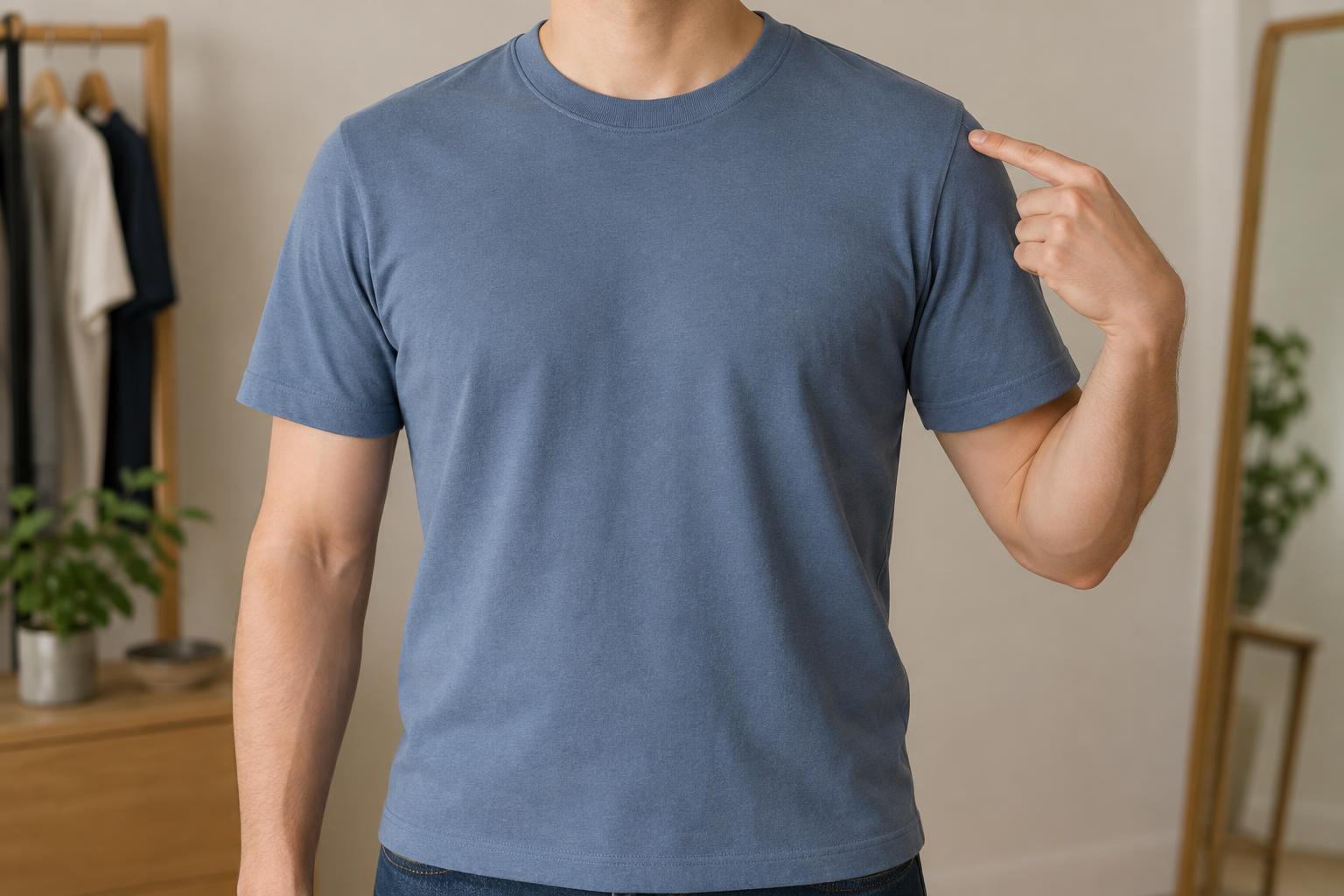
A T-shirt that fits at the shoulders should look and feel consistent with its intended cut. On a conventional set-in-sleeve tee, the seam joining the sleeve to the body usually sits close to the outer edge of your shoulder, where the shoulder begins to curve down into the arm. It does not need to land on one exact point. Your shoulder shape, posture and the structure of the fabric all affect how it sits.
Check the garment while standing naturally, with your arms at your sides. Look at both shoulders from the front and, if possible, the back. A seam that follows a similar position on each side is a useful sign, although small differences are normal. Avoid judging fit only from a flat product photo or a shirt laid on a table: the way a T-shirt hangs on your body matters more.
Spot a shoulder that is too narrow
If a conventional shoulder seam sits well inside the outer edge of your shoulder, the shirt may be too narrow across the upper body. You might notice fabric pulling from the neckline toward the sleeve, tightness around the upper arm or diagonal wrinkles near the armpit. The sleeve may ride up when you move, even if the rest of the shirt feels roomy.
Raise your arms forward and reach across your body. You should be able to move without feeling that the shirt is holding your shoulders back. Some movement of the hem is normal; persistent strain across the upper chest or back is more informative than seam position alone. If the shirt feels restrictive, compare a larger size or a cut with more room through the shoulders rather than relying on the fabric to stretch into shape.
Recognise excess room without mistaking it for a relaxed fit
On a standard-fit tee, a shoulder seam that falls noticeably down the upper arm can suggest that the shoulders are too wide. Excess fabric may bunch above the sleeve or make the sleeve hang lower than you want. Check the chest and body too: sizing down might improve the shoulders but leave the torso uncomfortably tight.
A dropped shoulder, however, is a deliberate feature of many relaxed and oversized T-shirts. Its seam is designed to sit below the shoulder edge, often with a wider sleeve and a looser body. For this style, ask whether the fabric hangs evenly and whether you like the overall proportions. A lower seam is not a fit problem by itself. Likewise, a raglan sleeve runs from the underarm toward the collar and has no conventional shoulder seam to line up.
Use movement and balance as a final check
Seam placement is only one part of a comfortable fit. Roll your shoulders, reach overhead and sit down while wearing the shirt. Notice whether the neckline pulls backward, the sleeves twist or the upper back feels tight. Then let your arms rest naturally again. A shirt that settles back into place without constant adjustment is often a better choice than one that looks precise only when you stand still.
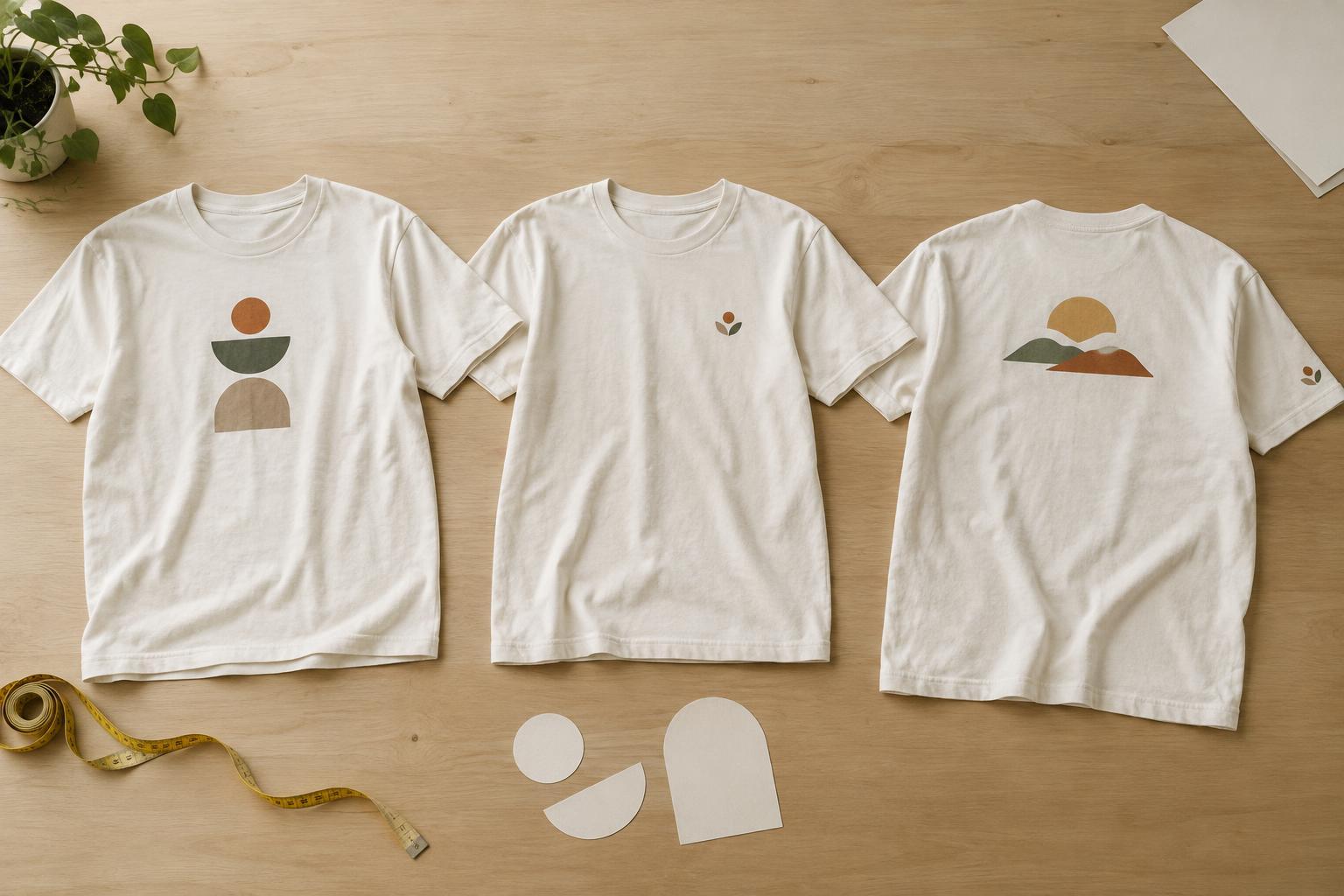
Look at the T-shirt as a whole. Shoulder width affects how sleeves fall, but sleeve length, chest width and body length change the overall impression. For a graphic tee, also check that the garment lies comfortably across the area where the design will appear. A print placed on fabric that is already pulling may look distorted when worn. Choose the fit you want before deciding where a design should sit.
Compare shirts with care
If you are choosing between sizes or buying a similar T-shirt later, measure a shirt that already fits you well. Lay it flat without stretching it and compare the distance between its shoulder seams with the same measurement on another set-in-sleeve tee. Also compare the chest and sleeve measurements. Measurements are most useful when the two shirts have similar cuts; a dropped-shoulder design calls for a different comparison.
Finally, consider how the fabric behaves over time. A soft, lightweight knit may drape differently from a heavier one, while washing and drying can change a garment’s dimensions. Follow its care label and avoid assuming an uncomfortable shirt will shrink or stretch into the fit you need. The best shoulder fit is the one that suits the shirt’s design, lets you move freely and feels good enough to wear throughout the day.