Start with the part of the story you both remember
A shared memory can contain too much for a single T-shirt: the place, the people, the conversation and a dozen small details. Instead of trying to capture everything, ask what makes the moment recognizable to the person who will wear it. Was it a phrase you still repeat, an object you both noticed, a familiar route or something that went amusingly wrong? Write down a few possibilities before choosing one.
The strongest starting point is often specific but simple. A drawing of a crooked tent peg might mean more to two friends than a detailed illustration of their entire camping trip. Someone else can enjoy the design without knowing the story, while the wearer gets the private connection. If the memory involves a group, look for a detail everyone can recognize rather than one that belongs to only one person.
Choose a visual shorthand
Turn your chosen detail into a design element that can be understood at a glance. An object can become a small icon; a route can become a loose line drawing; a remembered phrase can become the main lettering. You can also pair two elements, such as a sketch of a train window with a few words from a trip. Keep the connection clear to you, even if it remains a little mysterious to everyone else.
Try describing the concept in one sentence: “A tiny sketch of the café table where we first met, with our usual order underneath.” If that sentence needs several extra explanations, the design may be doing too much. One focal point and a small supporting detail usually give the memory room to breathe. For a more understated shirt, consider a symbol without text; for a more playful one, let a short phrase carry the personality.
Make it personal without making it awkward
A T-shirt is worn in public, so consider how the recipient might feel about displaying the memory. An exact date, full name, address or deeply private joke may be meaningful on paper but uncomfortable on clothing. You can hint at a place through its shape or a familiar landmark instead of naming it. If a photo or identifiable likeness is involved, check that the people pictured are comfortable with its use.
Think about the recipient’s style as much as the story. Do they wear bold graphics, or do they prefer a small mark near the chest? Would they enjoy a sentimental line, or would a dry, understated reference feel more like them? A personal design works best when it reflects both the memory and the person who will wear it. If it is a surprise, a glance at shirts they already choose can offer useful direction.
Shape the idea for a wearable design
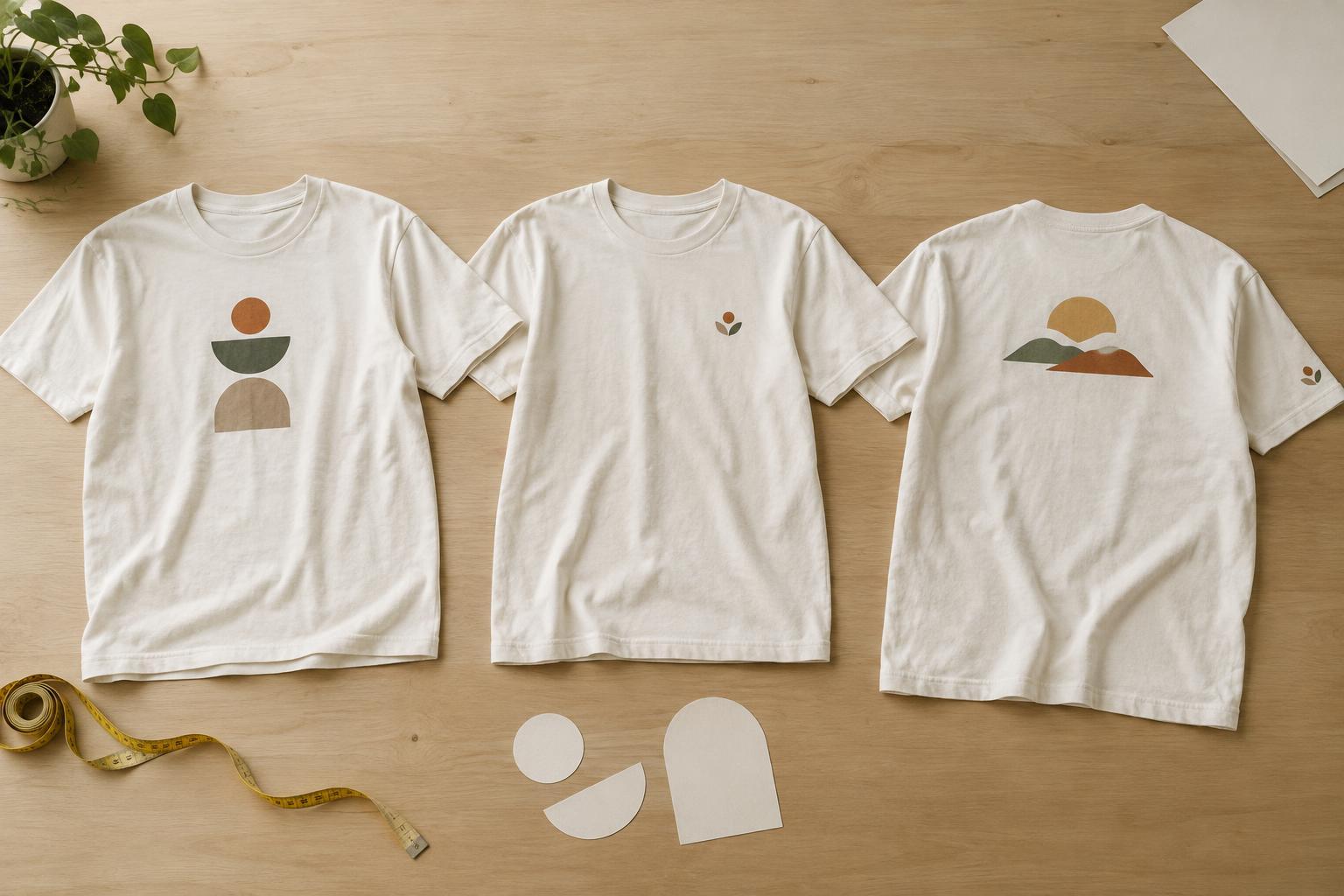
Before refining the artwork, decide where it should sit. A compact chest design can feel like a quiet reminder; a larger front or back design gives an illustration more space. Keep any words short enough to read comfortably, and check whether fine lines or tiny details still make sense when the design is viewed at shirt size. A quick paper sketch held against a T-shirt can help you judge the scale.
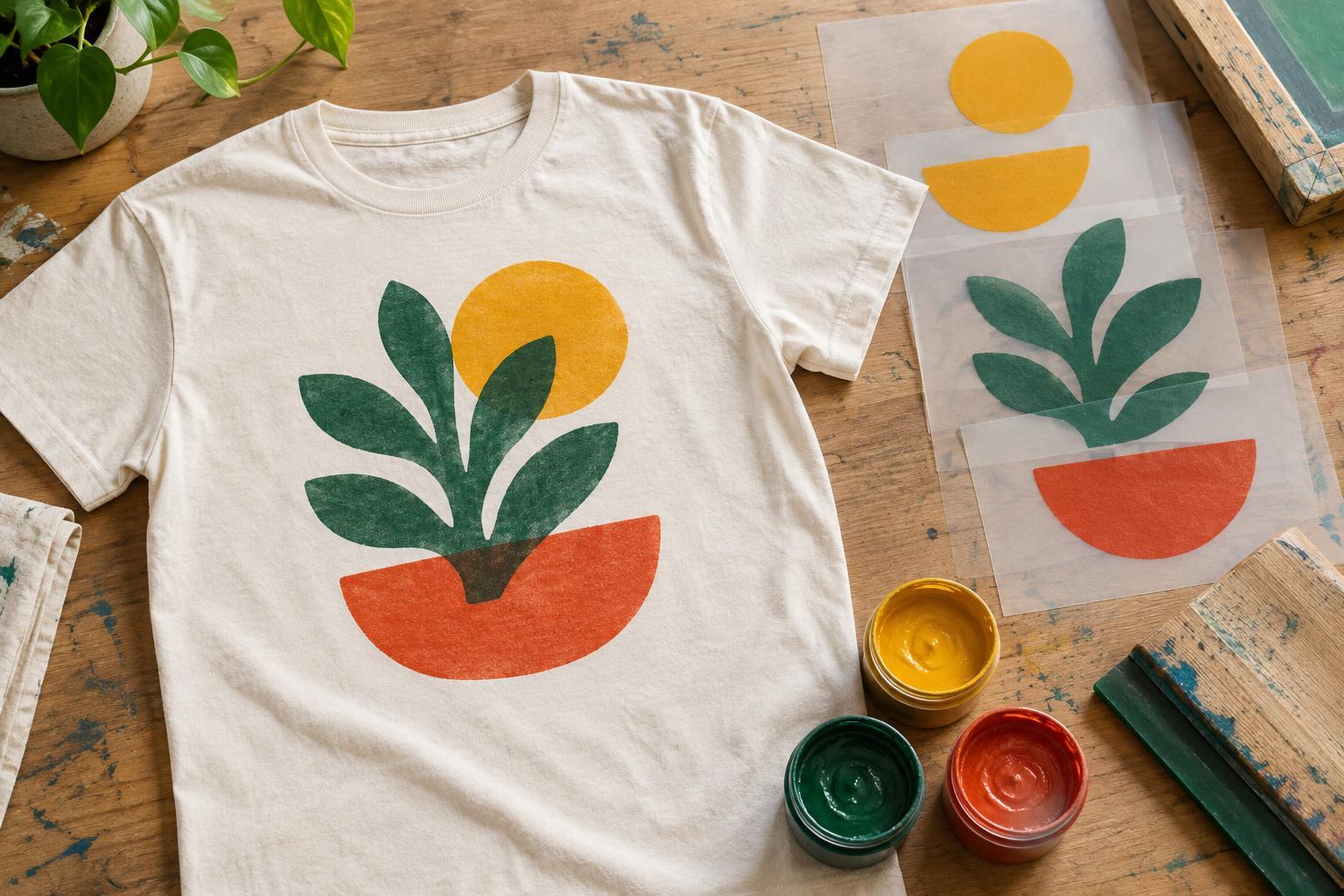
Colour also changes the mood. A limited palette may suit a simple symbol, while a fuller illustration may need more contrast to stay legible. Consider the shirt colour alongside the artwork rather than treating them as separate decisions. Printing and decoration methods handle detail, colour and texture differently, so the final artwork may need adjusting once you choose a method. Aim for a clear concept first, then ask the person preparing the design about practical file and sizing requirements.
Check that the memory still comes through
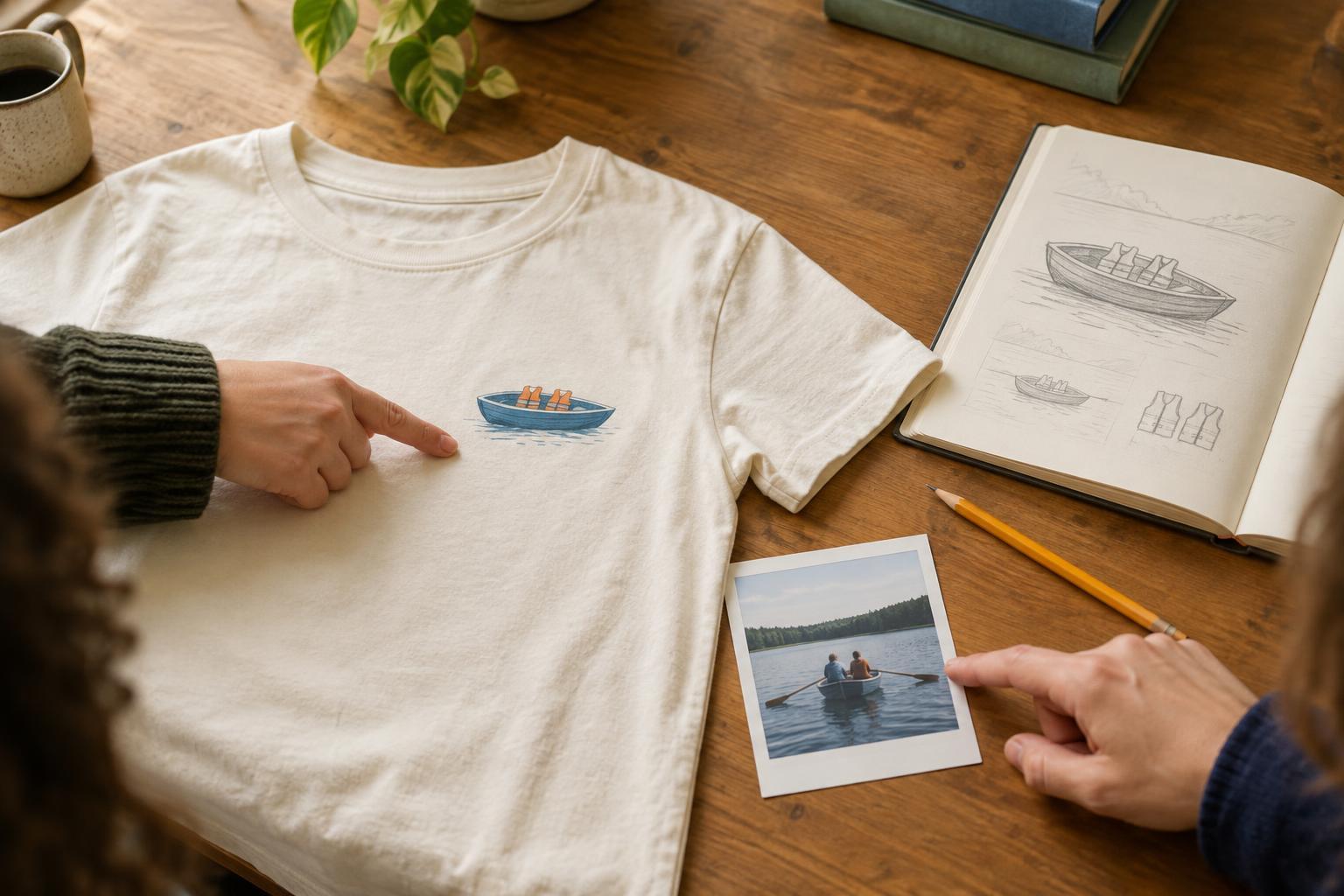
Make a rough version before committing to polished artwork. This could be a phone sketch, a simple layout of words and shapes, or a paper drawing placed over a photo of a blank shirt. Step back from it and ask three questions: Is the main idea easy to spot? Does the design feel like the intended wearer? Would the memory still be recognizable without an explanation printed across the shirt?
If the answer is no, simplify rather than adding more clues. Remove a secondary image, shorten a line of text or give the focal point more space. You might also discover that a different moment from the same story makes a better design. The goal is not to document everything that happened. It is to make a wearable reminder that can bring the shared moment back each time the shirt is pulled on.