Start with one clear connection
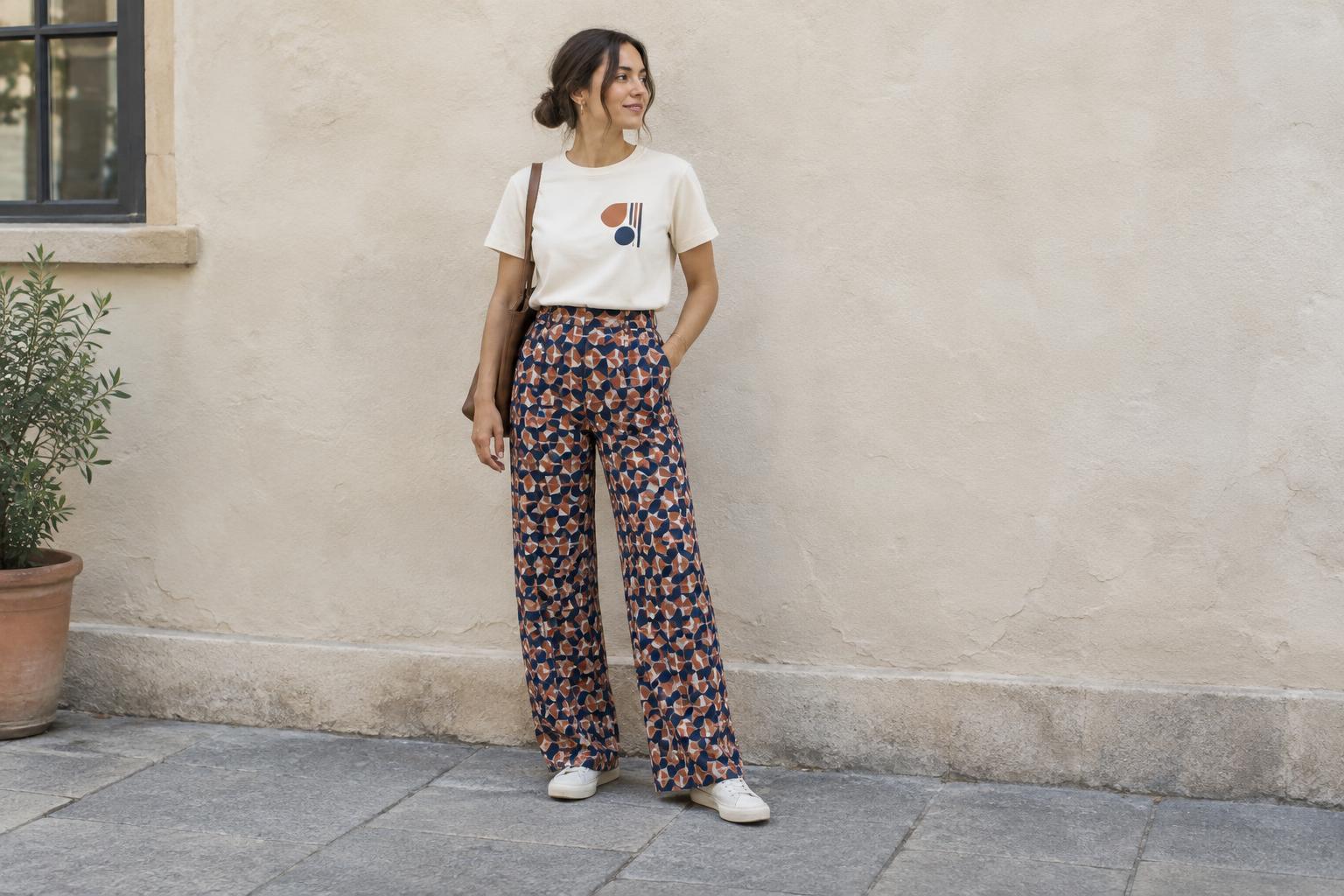
A graphic T-shirt and patterned trousers or a patterned skirt do not have to match exactly. They simply need a reason to sit together. The easiest starting point is a shared colour: pick a minor colour from the shirt’s artwork and look for it in the pattern below. A small red detail in a graphic, for example, can connect with red in a floral or check without making the outfit look coordinated from head to toe.
If the graphic is multicoloured, let the pattern draw on just one of its colours rather than all of them. You can also use the T-shirt’s background colour as the link. A white tee gives a busy pattern room to stand out, while a dark tee can ground a bright print. Look at the outfit from a few steps away: the pieces should read as a pair before their finer details become noticeable.
Balance bold graphics and busy patterns
The scale of each design affects how the outfit feels. A large, high-contrast graphic tends to work well with a smaller or more regular pattern, such as narrow stripes or a fine check. Conversely, a small chest graphic can sit comfortably above broad stripes, oversized florals or an expressive abstract print. This is a useful starting point, not a rule; the goal is to give the eye somewhere to rest.
Contrast matters as much as size. A vivid shirt graphic and a vivid pattern can work together when their colours relate and the rest of the outfit stays quiet. If they compete, try a pattern with fewer colours or a tee whose artwork has more open space around it. A solid jacket or cardigan can create a visual break while leaving both designs visible.
Use fit to give the outfit shape
When both pieces have visual detail, a clear silhouette keeps the combination intentional. With wide-leg patterned trousers, try a tee that ends near the waistband, a partial tuck or a full tuck if the fabric sits comfortably. With a close-fitting or straight skirt, a looser shirt can provide contrast. A flowing patterned skirt often pairs well with a tee that is tucked or gently gathered at the waist.
Pay attention to where the artwork lands after styling the shirt. A tuck may hide the bottom of a large graphic or make it fold awkwardly. If that happens, leave the tee untucked, choose a shorter shirt, or tuck only a small section at the side. Comfort comes first: a silhouette that lets you move and sit easily will usually look more natural than one that needs constant adjustment.
Let shoes and accessories support the pairing
Once the shirt and patterned bottom are doing the expressive work, simple shoes and accessories can help the outfit feel settled. Plain trainers, sandals or boots each change its mood without adding another competing design. Repeating one colour from the outfit in a bag, belt or pair of earrings is another gentle way to bring the pieces together.
You can still add a third pattern, but it helps to keep it small and distinct. A narrow striped sock beneath floral trousers, for instance, is less likely to overwhelm the outfit than a large patterned coat. There is no need to fill every space: leaving some solid colour visible often makes the graphic and the pattern more enjoyable to look at.
Keep the graphic and pattern looking their best
Before washing, check the care labels on both garments; the shirt and bottom may need different treatment. Turning a printed T-shirt inside out can reduce rubbing against its artwork during a wash. A gentle cycle and avoiding unnecessary heat may also help limit wear, though the best approach depends on the fabric and decoration method. Let any printed area cool completely before folding the shirt after ironing, and avoid ironing directly over the graphic unless its care instructions allow it.
For patterned trousers or skirts, consider the fabric as well as the print. Some materials wrinkle easily, while others can lose their shape if hung when wet. Follow the label, reshape the garment as needed and store it so creases do not cut across the pattern. Caring for each piece separately makes it easier to keep wearing them together in new combinations.