Knit structure is not the same as fiber
A label that says “cotton T-shirt” tells you what the fabric is made from, but not how its yarns are arranged. Jersey, interlock and rib describe knit structures: different ways of forming loops into fabric. Those loops give T-shirts their flexibility and help explain why two shirts with similar fiber content can feel quite different.
Structure is only part of the picture. Yarn, fabric weight, finishing and any added elastane also affect softness, stretch and shape retention. A lightweight interlock may feel less substantial than a heavy jersey, for example. Treat knit names as a useful starting point rather than a guarantee of how a finished shirt will fit.
Jersey: the familiar everyday T-shirt knit
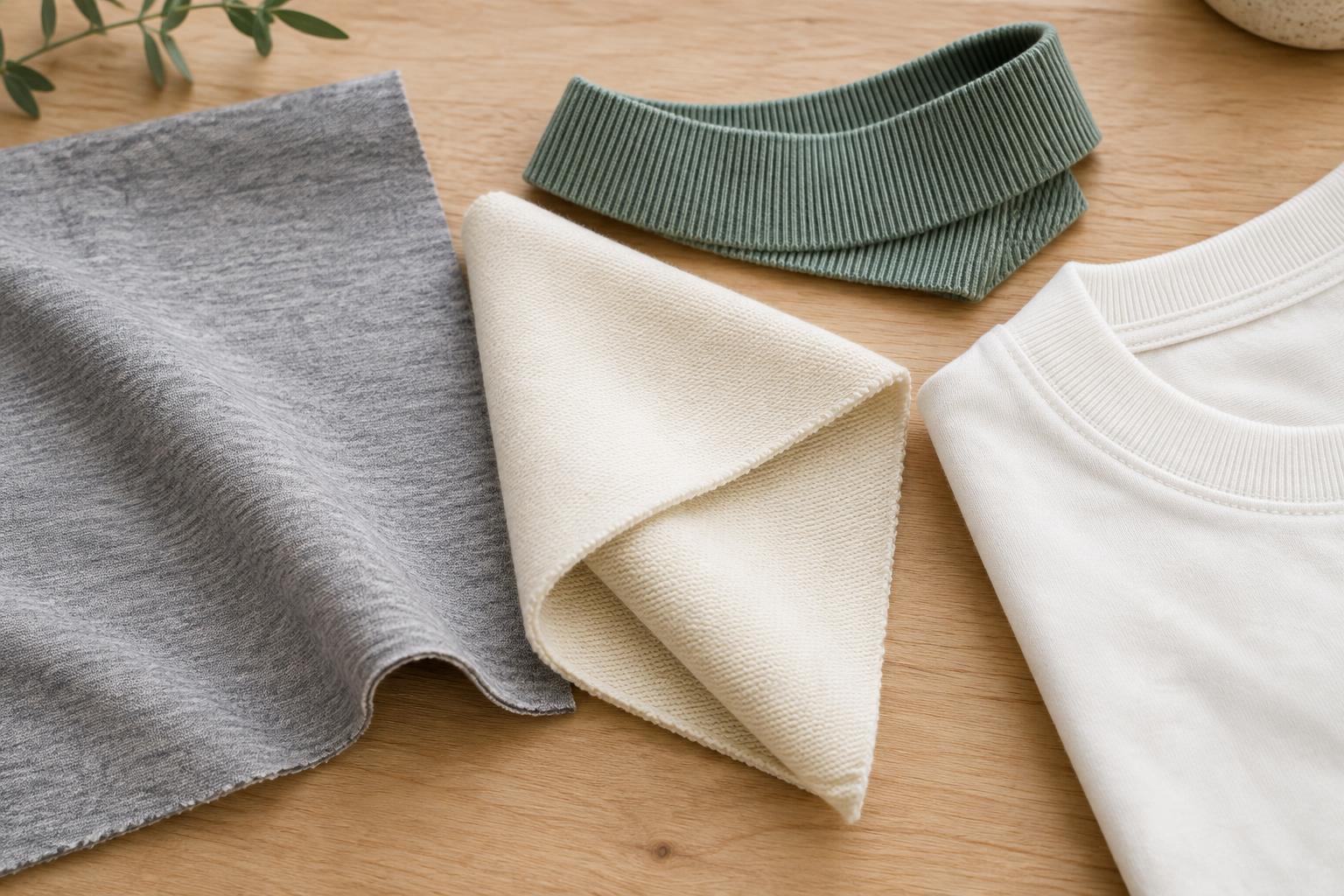
Single jersey has a face with small, neat vertical loops and a back with a different, more textured appearance. It is widely used for T-shirt bodies because it can feel soft and flexible without adding much bulk. Depending on the yarn and weight, jersey can make a shirt that drapes loosely or one that feels more substantial.
Jersey usually stretches more across the fabric than along it. Its cut edges may curl, which matters during sewing but is normally managed by seams and hems in a finished garment. Some jersey shirts can twist or lose their shape with wear and washing; that depends on factors beyond the knit name, including how the fabric was made and the garment was assembled.
For decoration, pay attention to the surface rather than assuming every jersey behaves alike. A smooth, fairly even face can provide a practical area for a graphic, while a very thin or highly stretchy fabric may need a design and application method suited to its movement. Checking a sample is more informative than relying on the word “jersey” alone.
Interlock: a smoother, more stable feel
Interlock is a double-knit construction that often looks similar on both sides. Compared with a single jersey of comparable yarn and weight, it commonly feels fuller and lies flatter at a cut edge. Its structure can make it feel more stable in the hand, which appeals to people who prefer a less fluid T-shirt.
That stability can be useful when you want a shirt to hold a clean-looking silhouette or provide a relatively even surface for a design. It does not mean interlock cannot stretch, nor does it guarantee that a printed image will look a particular way. Fabric weight, finish and the chosen decoration method still matter. If you are comparing blanks, handle the fabrics, look at them in daylight and see how they recover after a gentle stretch.
Rib: stretch where a T-shirt needs it
Rib knit has visible raised columns alternating with recessed ones. It can stretch across its width and draw back in, making it a common choice for T-shirt neckbands. A rib band helps the opening sit against the body while still allowing the shirt to pass over the head. Rib can also appear at sleeve edges, hems or across an entire fitted top.
Not all rib has the same grip. The width of the ribs, the fibers used and the presence or absence of elastane influence how far it stretches and how well it recovers. A neckband that feels firm on a new shirt is worth checking for comfort as well as appearance: it should sit where you want it without feeling restrictive. On an all-over rib shirt, remember that the textured columns may change how a large graphic looks as the fabric stretches.
How to compare knits when choosing a T-shirt
Start with the use you have in mind. For a relaxed everyday tee, compare the drape and feel of jersey options. If you want a slightly more structured appearance, include interlock in the comparison. For a close-fitting top or a neckline detail, look at how the rib stretches and returns to shape. None of these choices replaces checking the actual garment’s cut: shoulder width, body length and sleeve shape have a major effect on fit.
If you can examine a sample, hold it up to the light, feel both sides and gently stretch it across and down the body. Look at the neckband, seams and hem, not just the fabric name. For a decorated tee, check whether the intended design area lies flat when worn and ask the decorator which fabrics suit the planned method. Follow the garment’s care label after decorating; washing and drying choices can affect both the knit and its decoration. The best choice is the one whose feel, fit and design surface work together for your purpose.