Start with the story behind the dish
A recipe-inspired T-shirt does not need to reproduce an entire recipe. Often, the most personal detail is the dish’s name, who made it, or when everyone gathered to eat it. Think about what makes the food recognizable to the people who matter: a nickname, a serving suggestion, or a familiar phrase such as “Save me a corner piece.” Those details can give the design character without filling the shirt with small print.
Decide who the shirt is for before choosing the artwork. A gift for the family cook might celebrate their signature dish with a simple name and illustration. Shirts for a reunion could use the same main design, with each person’s name or a different kitchen role added underneath. If the recipe comes from a living relative, asking which details they would enjoy sharing can make the result more thoughtful.
Choose a format that suits the recipe
For a recipe-card look, place the dish name at the top, followed by a short ingredient list and one memorable instruction. Leave generous space between lines so the design reads as a deliberate card rather than a crowded label. A full recipe may work better on a poster or printed card; on a shirt, a shortened version is usually easier to read and wear.
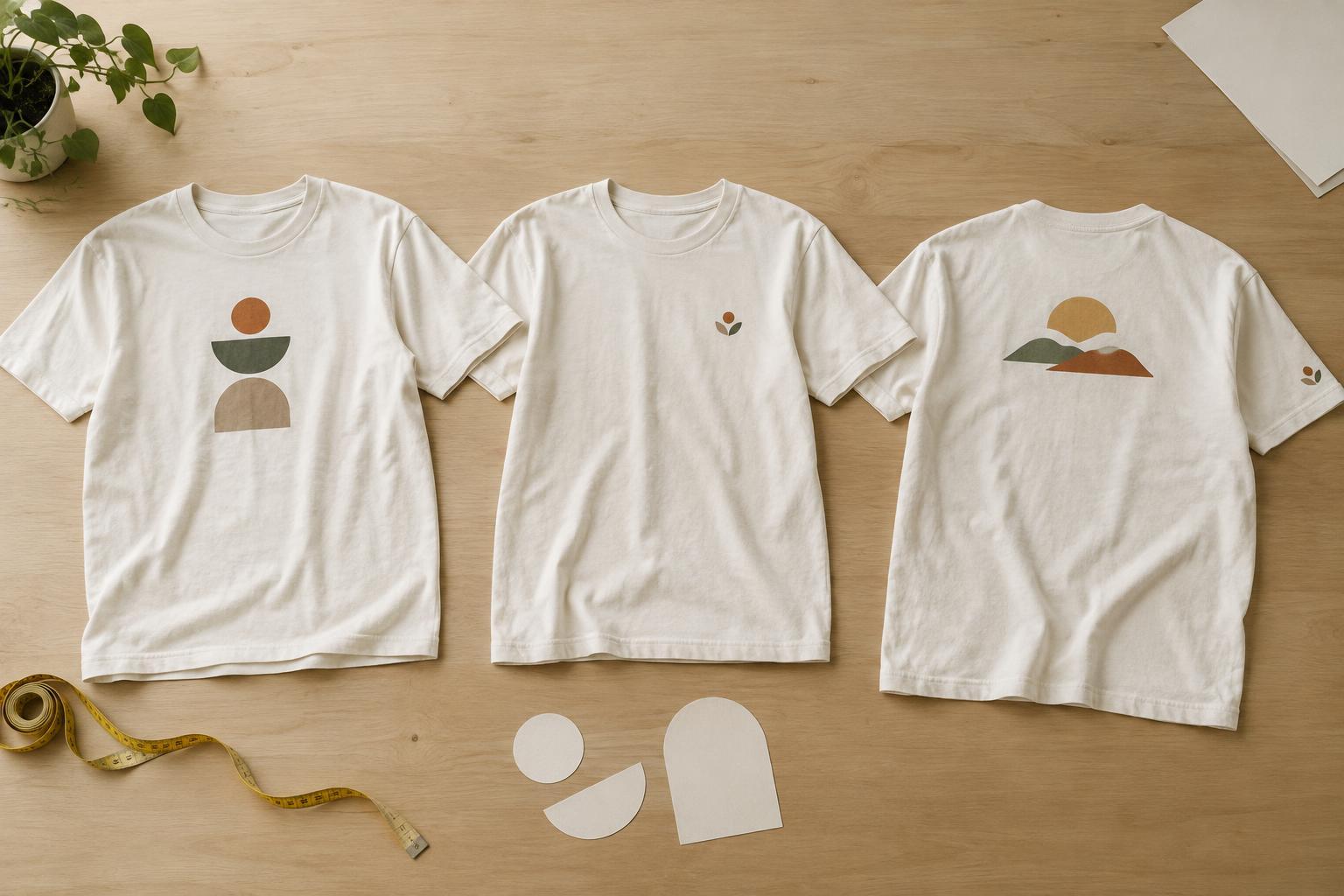
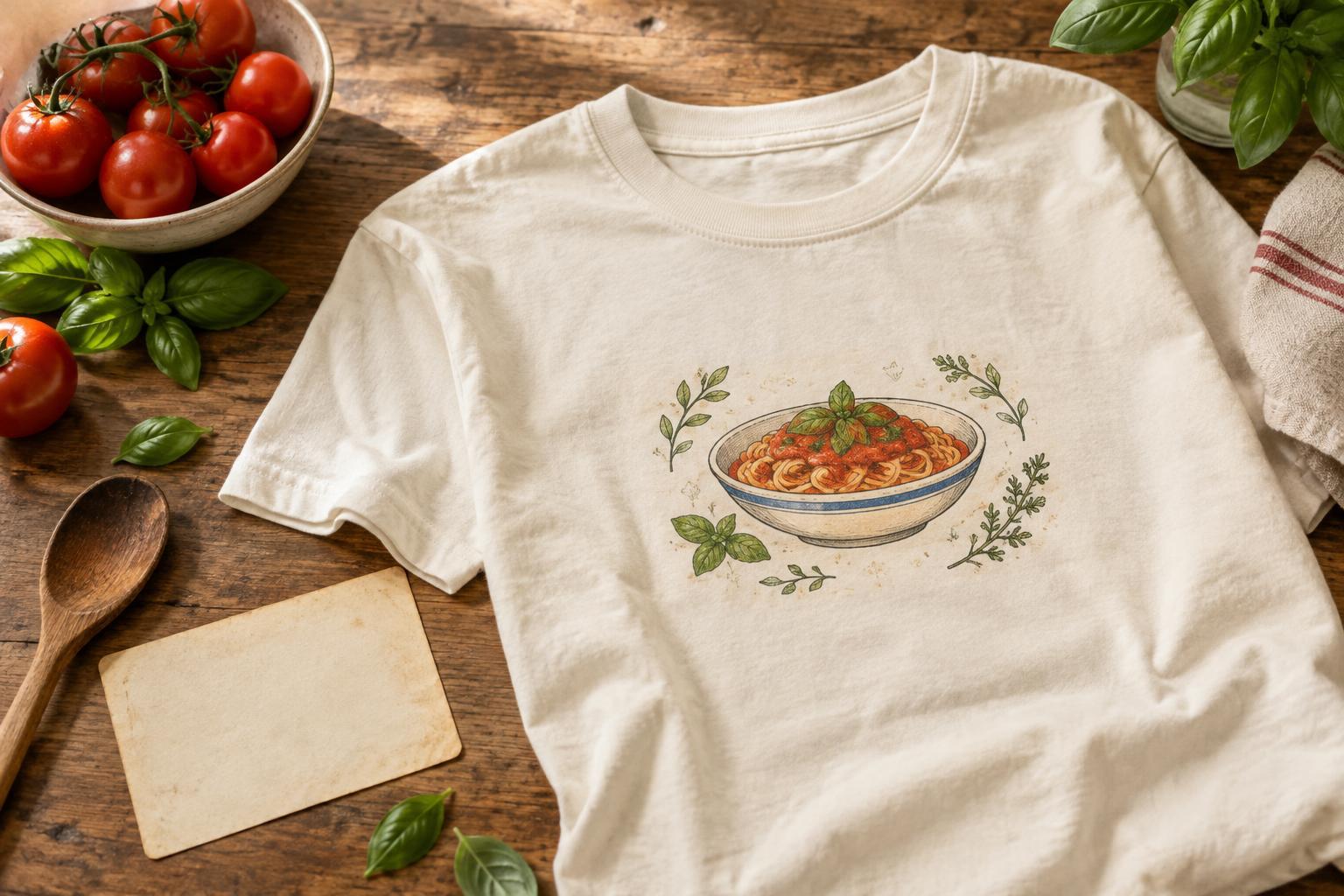
Another approach is to make the dish the centerpiece. An illustrated mixing bowl, pie slice, noodle bowl, or serving spoon can be paired with a few words such as “Sunday Sauce Crew.” A small chest design might show only the dish name, while a larger back design carries the illustration and recipe details. If humor fits the family, try a playful instruction, but make sure someone who does not know the joke can still understand the image.
Make personal details part of the design
Handwriting can be especially meaningful when a recipe has been passed around on paper. A scan or clear photo of a handwritten title, margin note, or distinctive measurement can become a design element. You do not have to use the whole page: one legible line may preserve its character more effectively. Keep the original safely stored, and work from a copy when editing or sharing the artwork.
Other details can carry the same sense of connection. A patterned tablecloth, a particular casserole dish, or a sketch of the herbs used in the meal may be more distinctive than a generic chef hat. You could add a first name, a family nickname, or a place associated with the dish. Before ordering shirts for a group, check that everyone is comfortable with any names, handwriting, or family information included.
Design for readability and decoration
Test the design at roughly the size it will appear on the shirt. Ingredient lists, thin handwriting, and tiny punctuation can become difficult to read from a normal viewing distance. Choose a clear typeface for essential information, keep enough contrast between the artwork and fabric, and let the illustration carry some of the story. If an exact handwritten note is hard to decipher, pair it with a small typed caption rather than trying to force every word into the print.
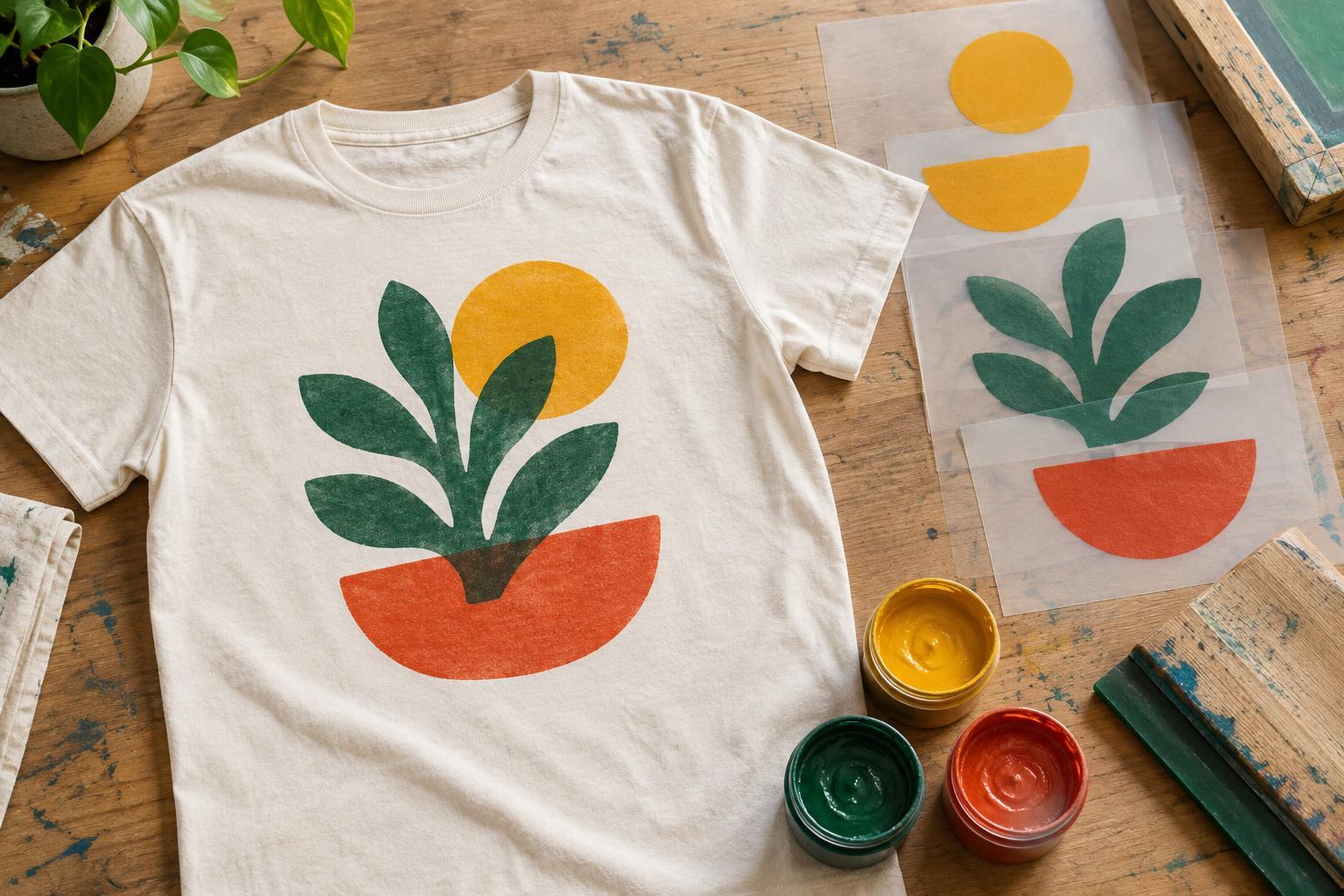
The artwork can also guide the decoration method. A bold, limited-color drawing may suit screen printing, particularly when making several shirts with the same design. A design with many colors or a reproduced handwritten note may call for a different printing approach. Embroidery can work well for a short dish name or small icon, but it is less suited to a detailed ingredient list. Ask a printer which details their process can reproduce clearly on your chosen garment.
Plan a shirt people will want to wear
The fabric color and fit should support the idea rather than compete with it. A warm-toned illustration may stand out on a dark shirt, while a simple dark-ink recipe card can feel at home on a light one. Check whether the chosen garment has enough uninterrupted space for the design, and consider offering a choice of fits if the shirts are for several people. A shared design can still feel cohesive across different shirt styles.
Before finalizing, print the artwork on ordinary paper at its intended size. Hold it against a shirt to judge placement and ask someone else to read it without an explanation. Confirm the spelling of names and the wording of any ingredient or instruction you include. After the shirts are made, follow the garment and decoration care guidance provided; gentle washing and avoiding direct heat on the artwork are often sensible precautions.