Start with what makes your pet recognizable
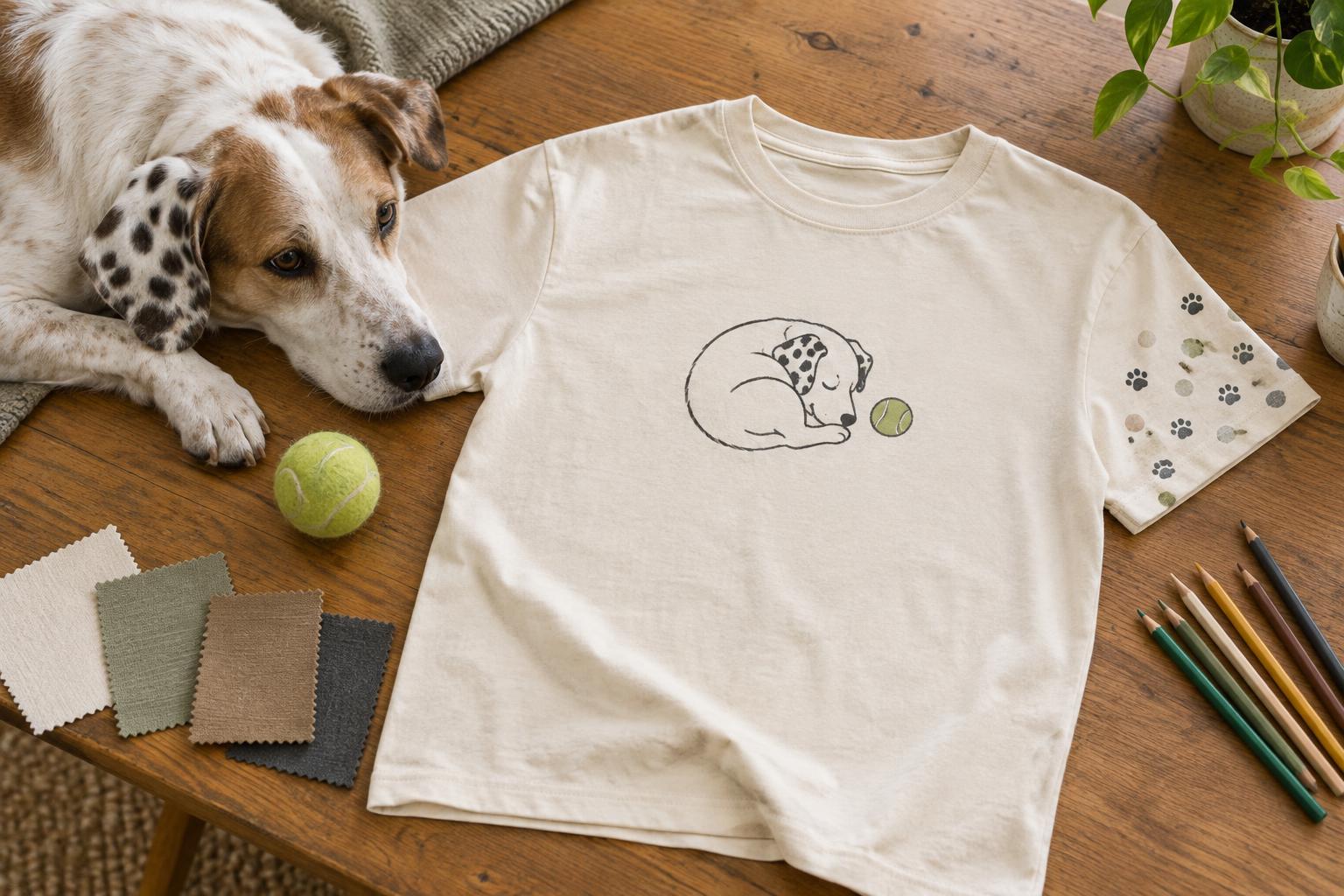
A photo is only one way to celebrate a pet. Think about the details you would recognize in a simple sketch: a bent ear, a curled tail, a distinctive patch of fur or the way they sit while waiting for dinner. These features can become a clean outline, a small chest emblem or a repeating pattern. The goal is not necessarily a perfect likeness; it is a design that feels familiar to you.
Personality offers another starting point. A dog that always carries the same toy might be represented by its shape. A cat devoted to one sunny window might inspire a silhouette framed by a windowpane. For a pet whose most memorable trait is a habit rather than an appearance, a short phrase paired with a simple symbol may tell the story better than a detailed portrait.
Try symbols, lettering and patterns
Paw prints are an obvious motif, but they need not be the whole design. A single print can sit at the end of a line of text, while several prints can form a border or a trail around the hem. Other possibilities include a collar tag, a leash loop, a feather toy, a food bowl or the outline of a favorite sleeping spot. Choose objects that connect to your particular pet rather than adding every familiar pet symbol at once.
Lettering can make the idea more specific. Set a pet’s name in a type style that suits their character, or use a nickname that only people close to them would know. You could arrange a few words like a mock club badge, with a small illustration in the center. For a quieter design, repeat a tiny motif across the shirt or place it near a cuff. If you include identifying details on something you will wear in public, consider how much personal information you want to share.
Choose an illustration style that suits the idea
A continuous-line drawing can suggest a pet’s shape with very little detail. Bold, flat shapes work well when the defining feature is easy to spot, such as long ears or a round, fluffy outline. A hand-drawn style can make a design feel playful, while a geometric treatment can give it a more restrained look. Try sketching several versions in black and white before deciding whether color adds anything useful.
If you want a design based on your pet’s markings, simplify them enough that they remain clear at the intended size. Tiny whiskers, fine fur strokes and small lettering can become hard to read, particularly on a shirt viewed from a distance. Check the design at its likely printed size, not just enlarged on a screen. Strong contrast between the artwork and fabric will usually make the main idea easier to see.
Match the placement and decoration to the design
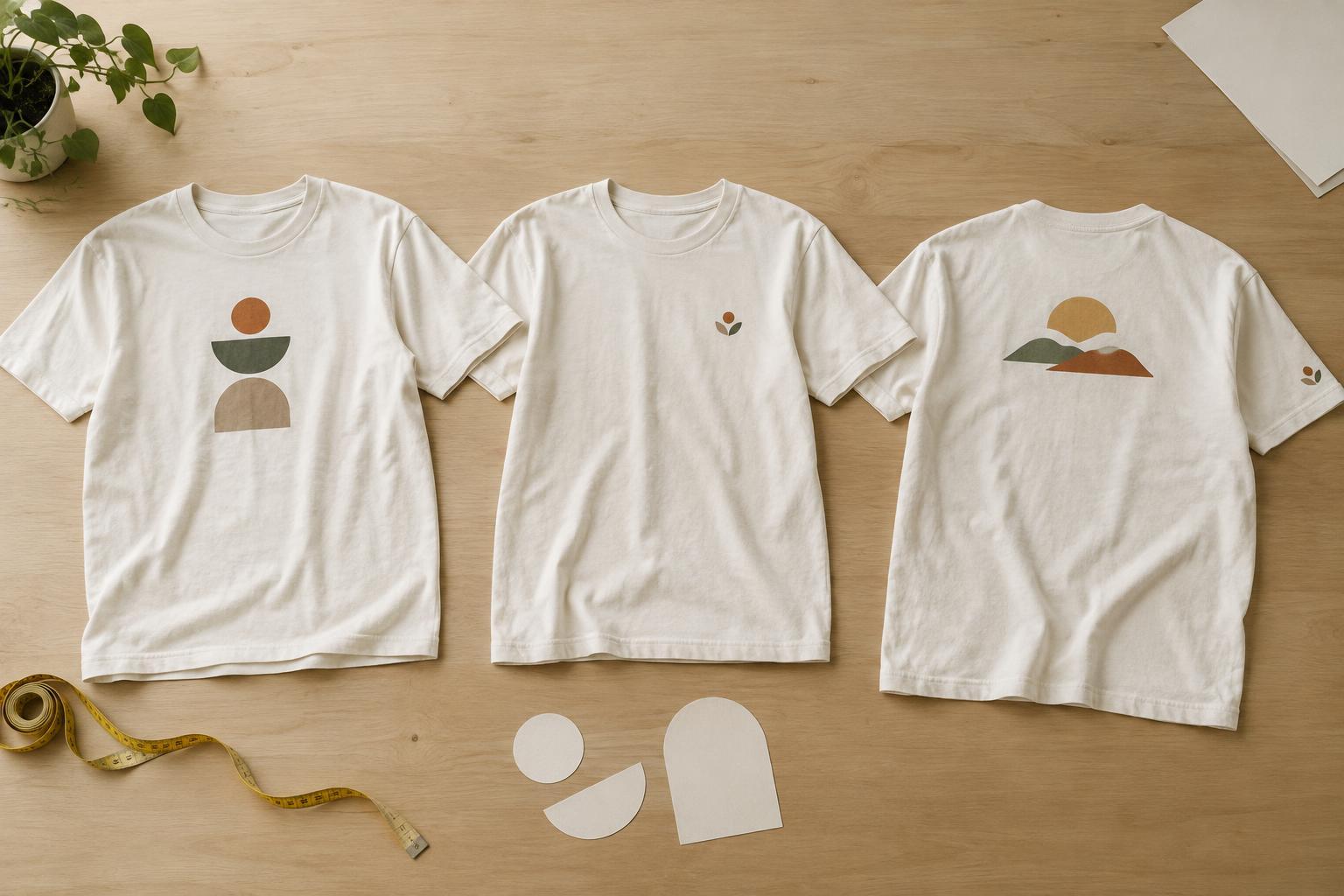
Placement changes the mood of a pet-inspired shirt. A small design over the heart can feel personal and understated. A large back illustration gives a story or pattern more room, while a centered front graphic makes the idea immediately visible. You can also split the concept: put a small symbol on the front and a larger version, name or short phrase on the back. Leave enough empty space around each element so the shirt does not feel crowded.
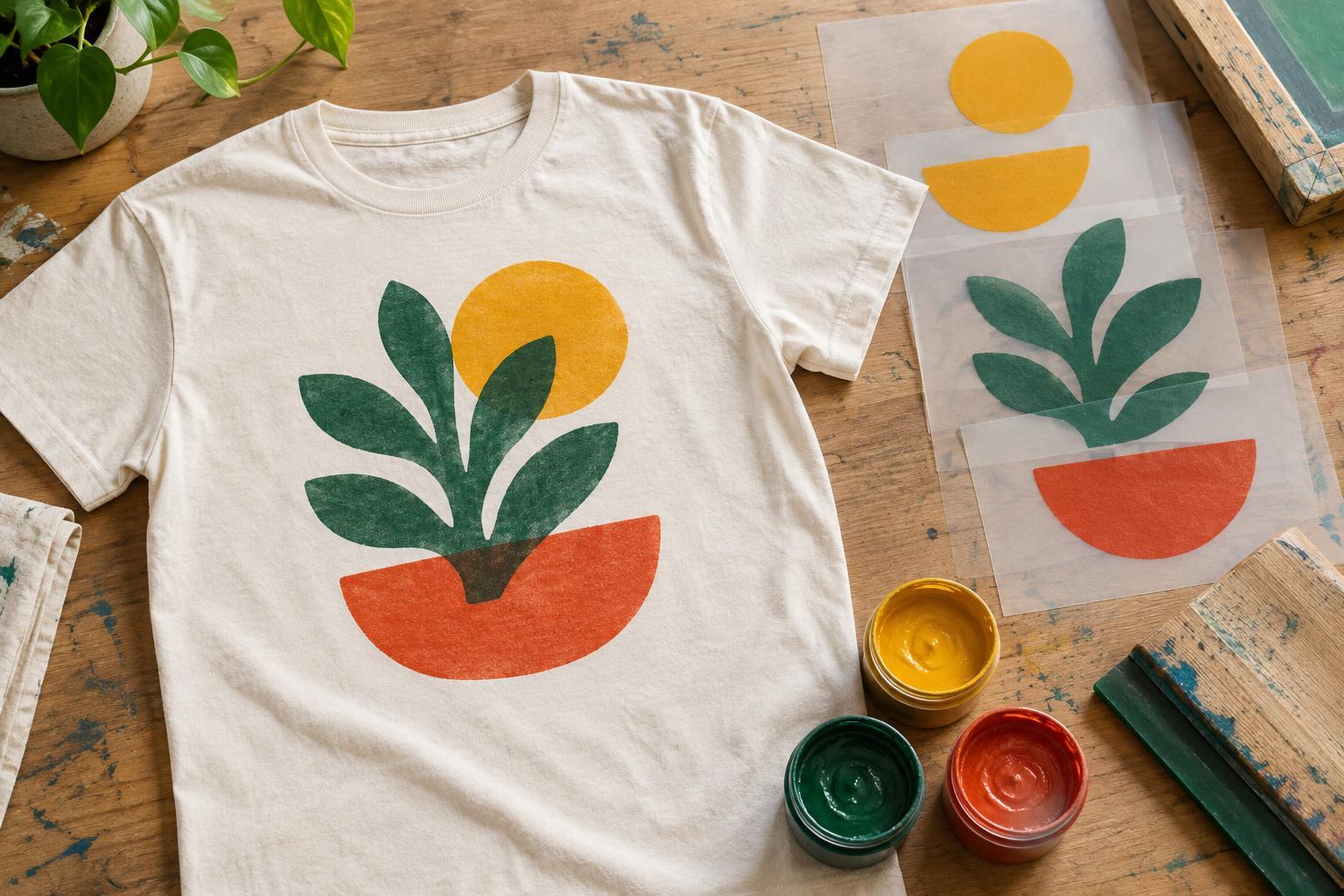
The decoration method matters, too. Embroidery may suit a compact name or simple icon, but very fine details may need to be simplified. Screen printing can be a practical choice for artwork built from defined areas of color, while digital printing can accommodate more varied tones and detail. Exact results depend on the garment, artwork and provider, so review the available size, color and file guidance before preparing a design.
Make it personal without making it complicated
A good pet shirt can be meaningful without announcing its entire backstory. Consider a date-free “walking club” design, an illustration of a much-loved toy or a tiny symbol in the color of a pet’s collar. For a gift, ask what the recipient associates with the pet rather than assuming they want a large portrait or a joke. An affectionate detail they recognize may be the strongest part of the design.
Before finalizing the artwork, make a simple mockup on a shirt in the color you intend to use. Check the spelling, the balance between text and image, and how the design looks from a few steps away. If the shirt is meant for frequent wear, think about the recipient’s preferred fit and the garment’s care instructions as well. Those practical choices help a personal idea become a shirt someone will enjoy reaching for.