What pilling is and where it starts
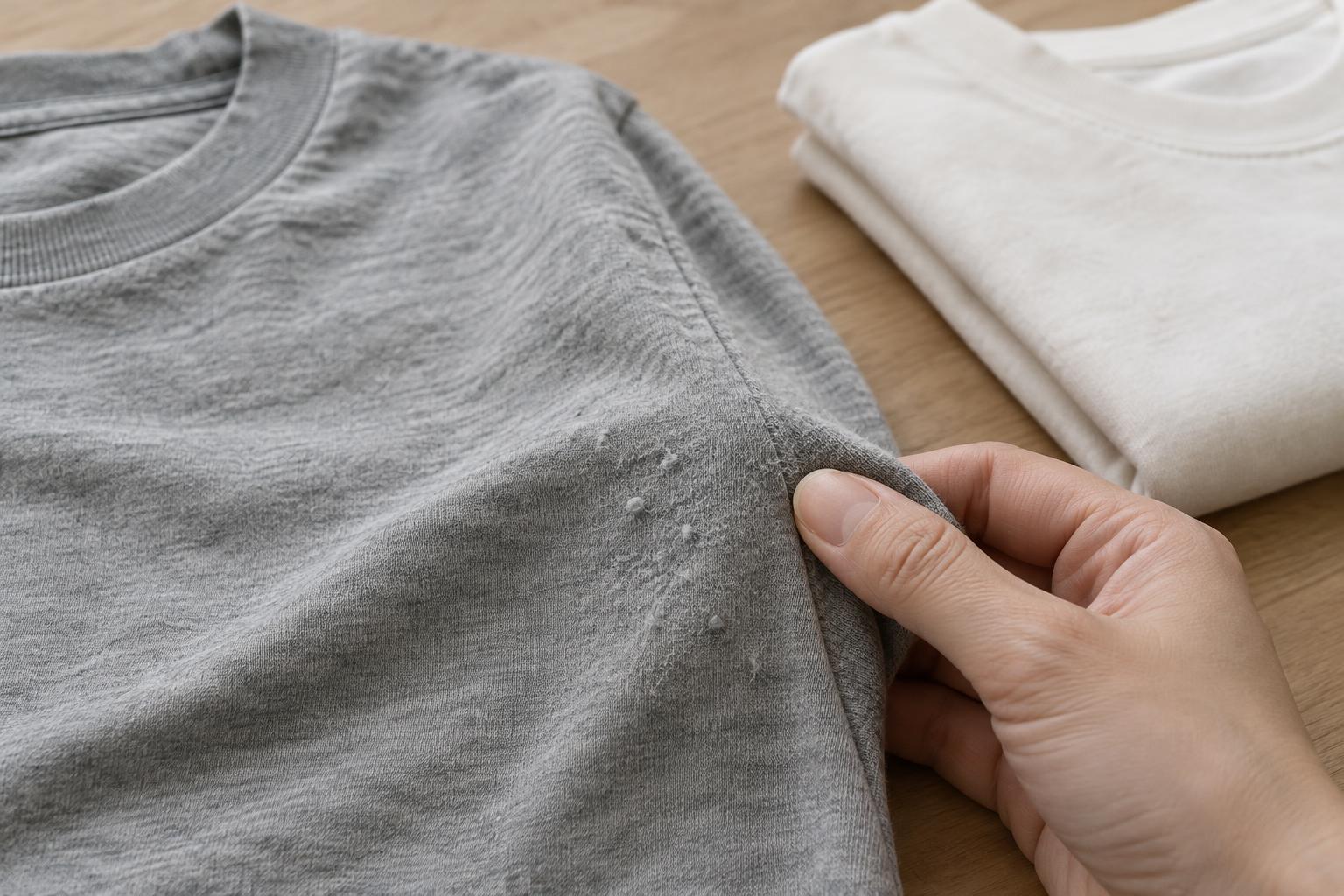
Pills are small tangles of fibers that form on a fabric’s surface. As a T-shirt is worn or washed, friction lifts loose fiber ends out of the yarn. Those ends can twist together into visible balls. Pilling does not automatically mean a shirt is poorly made: any fabric with exposed fibers can develop it. The amount depends on the yarn, knit, finishing, wear and care.
Look first at areas that rub repeatedly, such as under the arms, along the sides, beneath a bag strap or where a seat belt crosses the chest. Laundry can add friction, especially when a tee tumbles against rougher items. Knowing where pills form helps distinguish a general change in the fabric from wear concentrated at a few contact points.
How fiber and yarn choices affect pilling
A fiber-content label is a useful starting point, but it cannot predict pilling on its own. Cotton can pill when short or loose fibers work their way to the surface. Some cotton pills may break away with wear; that does not mean the fabric is immune. Polyester and other strong synthetic fibers can hold pills in place longer, making them more noticeable. A cotton-polyester blend may combine the feel or easy care of one fiber with the durability of the other, but the blend ratio alone is no guarantee of a smooth surface.
Yarn construction matters too. Yarns made with more closely aligned, securely held fibers generally leave fewer loose ends exposed. Terms such as combed or ring-spun cotton can describe processes associated with smoother yarn, but they are not a promise that a finished T-shirt will not pill. A soft, fuzzy surface may feel appealing at first while offering more fiber ends for friction to catch. Compare actual fabric samples when possible rather than relying only on a material name.
What to inspect before choosing a T-shirt
Examine the surface in good light. Does it look even, or are there already many stray fibers? Gently stretch and release a small area: a stable knit should return without leaving an obviously distorted patch. Check the fabric around seams as well as across the body, since a smooth front panel does not tell the whole story. These checks cannot reproduce months of wear, but they can help you compare two tees in front of you.
Consider how you will use the shirt. A close-fitting tee may experience more rubbing under the arms or against another layer; a looser fit may reduce some of that contact, though a swinging bag strap can still abrade either one. If you are selecting blanks for a custom design, ask for a sample and wear and wash it as you expect to use the finished shirt. That gives you a more relevant impression of its feel, shape and surface than a product description alone.
Choosing a fabric for a decorated tee
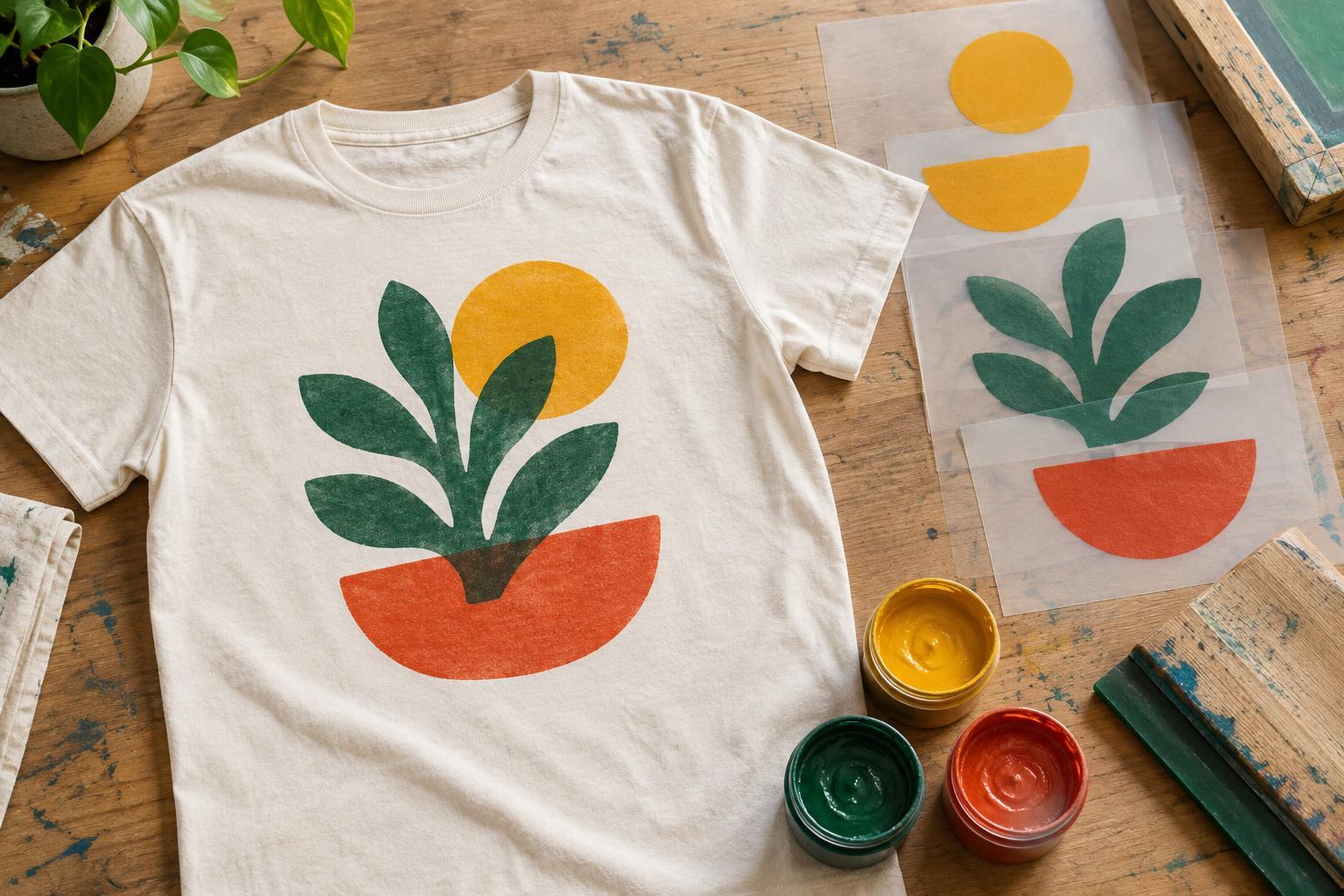
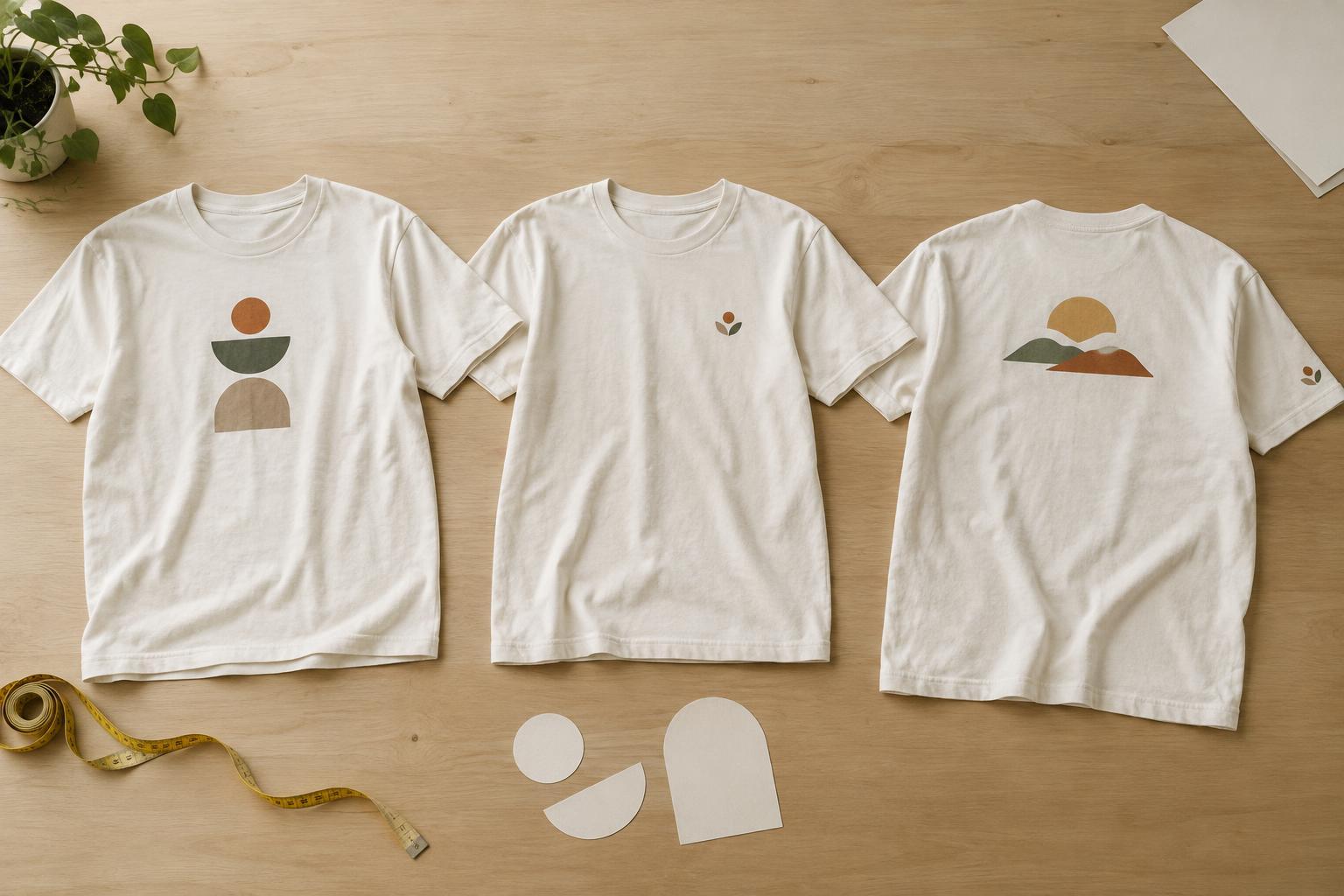
Pilling can affect more than the plain areas of a shirt. Fuzz near a printed graphic may make its edges appear less crisp, even when the decoration itself is intact. If a design must look neat after frequent wear, pay attention to the surface around its placement, especially where straps or outer layers are likely to rub. A smooth, consistent knit gives you a useful starting point, but printing method, artwork and garment care also influence how the finished tee looks over time.
Balance appearance with comfort and intended use. A substantial-feeling shirt is not necessarily pill-resistant, and a lightweight one is not necessarily fragile. Handle the fabric, check its construction and try the fit rather than treating weight or fiber content as a single quality score. For a group order, testing one representative shirt can be particularly helpful before committing to a fabric for everyone.
How to reduce pills and handle the ones you find
Follow the garment’s care label, including any instructions for its decoration. Turning a tee inside out and washing it with similarly soft items can limit rubbing against zippers, hook-and-loop fasteners and rough fabrics. Avoid packing the machine so tightly that clothes cannot move and rinse properly. Gentle washing and careful drying may reduce surface wear, although they cannot prevent every pill.
If pills appear, remove them cautiously with a fabric shaver or another tool intended for the job. Lay the shirt flat, test an inconspicuous spot and use a light touch, keeping the tool away from raised prints, embroidery and seams. Do not pull pills off by hand; that can draw out more fibers or snag the knit. A few pills are usually a maintenance issue, while widespread, rapid pilling may be a reason to choose a different fabric for your next tee.