Why standing still is not enough
A T-shirt may appear to fit when you stand with your arms at your sides, yet ride up, pull across the back or bunch at the waist as soon as you move. A quick movement test reveals more than a mirror check alone. It is especially useful when choosing a shirt for a long day, a custom print or an activity that involves frequent reaching.
Try the shirt with the trousers, skirt or other layers you expect to wear with it. Stand naturally first and notice where the shoulder seams, sleeves and hem rest. Then move at a comfortable pace rather than tugging the garment into place before every check. The goal is not a perfectly motionless hem; it is a shirt you can wear without repeatedly adjusting it.
Sit down: check the hem and torso
Sit in a chair as you normally would, then lean forward slightly. Notice whether the front bunches uncomfortably, the hem creeps higher than you like or the fabric pulls across your stomach or back. A longer shirt is not automatically a better fit: extra length can gather at the lap, while a snug hem may catch at the hips as you stand.
Pay attention to where you feel pressure. Pulling across the chest or upper back may point to limited room in the torso, while tension at the hips may be related to the shirt’s shape or hem width. Check again after standing. If the shirt returns to a comfortable position with little fuss, that may matter more to you than whether it shifted while you sat.
Reach forward: check the shoulders and sleeves
Reach both arms in front of you, as though typing, carrying a box or holding a steering wheel. Feel for tightness across your shoulder blades and watch what happens to the sleeves. If the whole shirt follows your arms forward, the shoulders or upper back may feel restrictive during everyday tasks. If you prefer a close fit, some movement may be acceptable; the useful question is whether it feels comfortable.
Next, reach one arm across your body and then the other. This can reveal a sleeve that grips your upper arm or an armhole that feels too high or tight for your preferred range of motion. Compare both sides without assuming they must feel identical. If a shirt is intended to sit under a jacket, repeat the reach with that layer on; the combination can feel different from the T-shirt alone.
Raise your arms: check coverage and drag
Lift your arms overhead as if taking something from a shelf. Look at how far the hem rises and decide whether you are comfortable with the coverage. Notice, too, whether the neckline pulls backward or the fabric presses into your underarms. These changes can help you distinguish a shirt that simply moves with you from one that limits how you move.
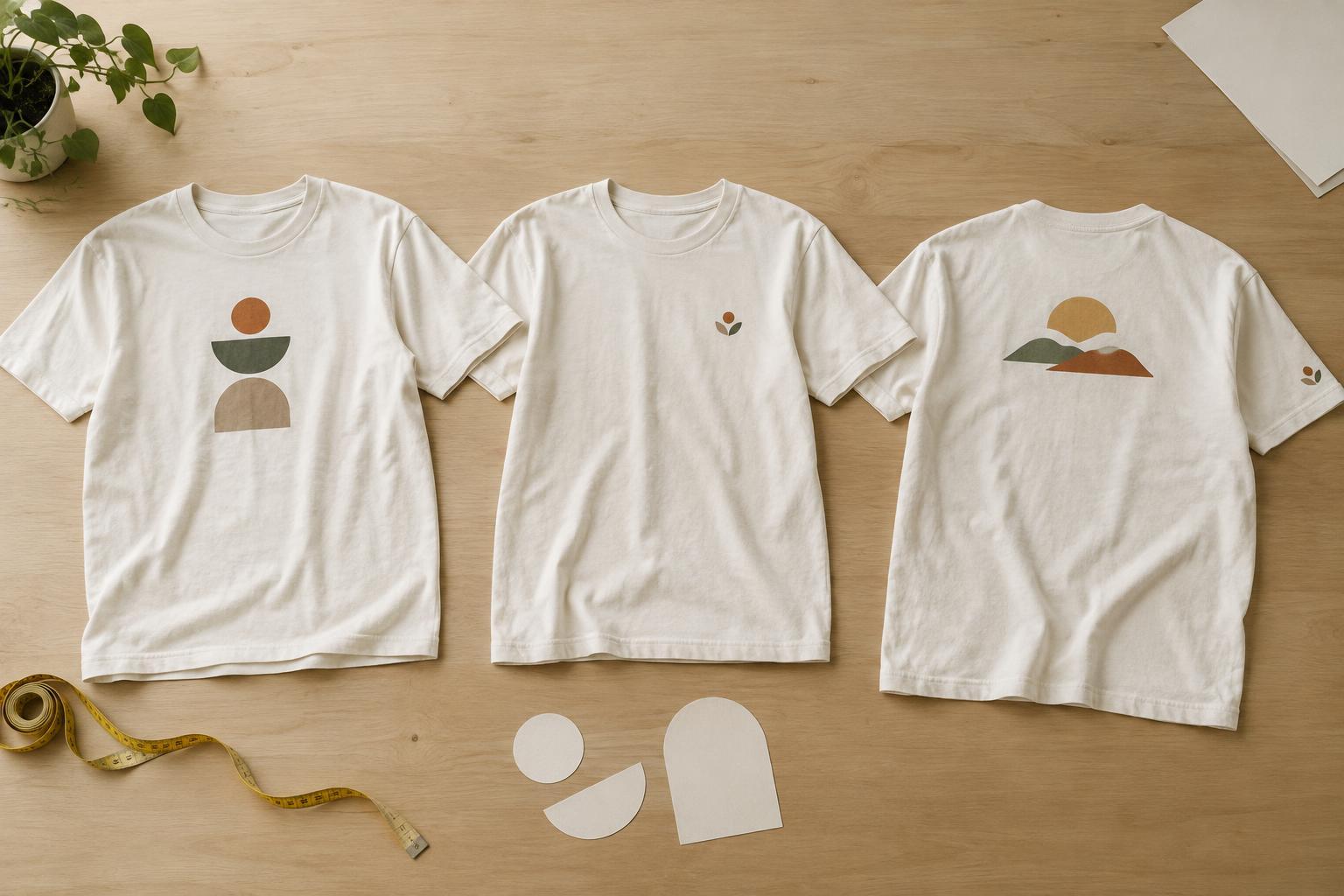
Lower your arms and see how easily the shirt settles. A hem that stays caught above the waist, or sleeves that need constant pulling down, may become annoying over time. If you are testing a shirt intended for a large front or back graphic, consider where the fabric folds during the movements you make most. The print placement should make sense on the garment as you wear it, not just while it lies flat.
Use the results to choose your fit
If one movement feels awkward, look for the specific cause before choosing a larger size. Going up a size may add room throughout the shirt when you only want more space at the sleeves or hips. Comparing cuts, shoulder shapes, lengths and hem widths may be more useful. If you can, try another size and another cut, then repeat the same movements so you have a fair comparison.
Fabric changes the experience too. A stretchy knit may give more during a reach, while a heavier or firmer-feeling fabric may hold its shape differently. Neither is inherently more comfortable; texture, drape and your preferred amount of ease all matter. Check the garment’s care instructions as well, since a shirt’s fit can change with wear and laundering. Use the movement test to choose the T-shirt that feels right during your ordinary day, not just in a fitting-room pose.