What the labels usually mean
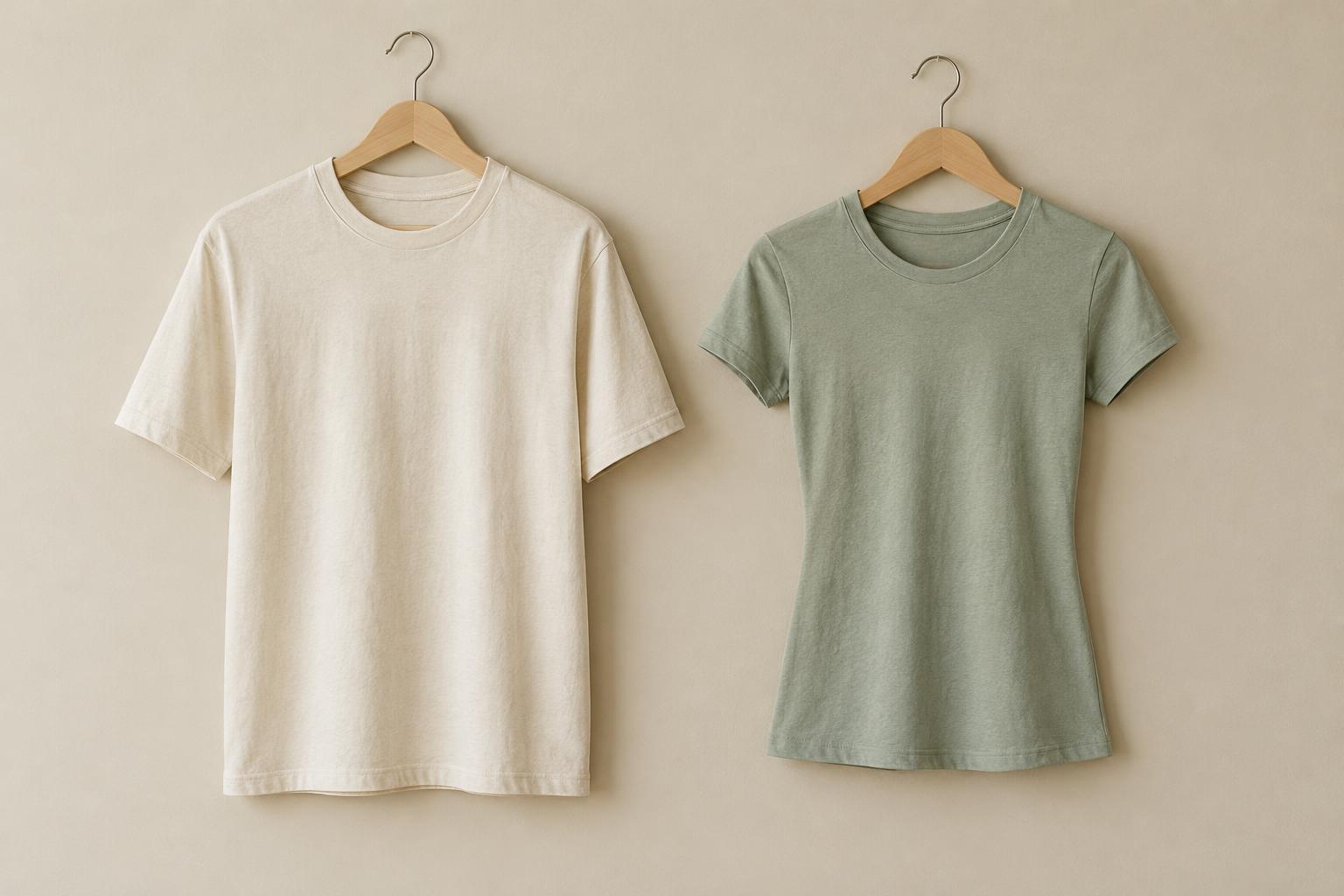
A unisex T-shirt is commonly based on a relatively straight pattern with room through the chest and waist. A women’s-cut T-shirt is often shaped more closely around the body, with narrower shoulders and a more defined waist. These are design conventions, not rules about who can wear either style. Anyone can choose the cut that feels and looks right to them.
The labels alone cannot tell you whether a shirt will be loose, fitted, short or long. One brand’s relaxed women’s cut may be roomier than another brand’s unisex cut. Even within a single range, two shirts marked the same size can have different measurements. Treat the cut name as a starting point, then look at the garment’s actual shape and size chart.
Shoulders, chest and waist
Shoulder width is one of the most noticeable differences. Unisex shirts often have a broader shoulder span and a seam that sits at or slightly beyond the shoulder on someone with a narrower frame. Women’s-cut shirts commonly have shorter shoulder seams, bringing the sleeve closer to the shoulder. That can give a neater appearance, but a shoulder that is too narrow may feel restrictive when you reach forward.
Through the torso, a typical unisex pattern falls fairly straight from the chest toward the hem. A women’s-cut pattern may narrow at the waist and widen again toward the hip, sometimes with extra shaping at the side seams. The amount of shaping varies widely. A pronounced waist can create a close fit, while gentle shaping may simply reduce excess fabric at the sides.
If you prefer a relaxed silhouette, do not assume that sizing up in a fitted cut will produce the same result as choosing a straight cut. A larger fitted shirt may add length and shoulder width while keeping its shaped proportions. Compare the pattern’s chest, waist and hem measurements to see where the extra room actually goes.
Sleeves, necklines and length
Unisex T-shirts commonly have wider sleeves that reach farther down the upper arm. Women’s-cut versions often use shorter, narrower sleeves and smaller arm openings. A close sleeve can feel tidy, but it should allow comfortable movement without pulling under the arm. Sleeve length matters visually, too: it changes the balance between the upper body and a large graphic on the chest.
A standard unisex crew neck may sit higher and have a narrower opening. Women’s-cut shirts may use a wider crew, scoop or V neckline, although many have a conventional crew neck. Check the neckline rather than relying on the label, especially if a design is intended to sit near the collar. Torso length also varies: some fitted styles are cut shorter, while others are lengthened to stay in place over the hips.
How to compare fits before choosing
Start with a T-shirt you already like. Lay it flat without stretching it and measure across the chest just below the armholes, across the hem, from shoulder seam to shoulder seam, and from the high point of the shoulder to the bottom hem. Compare those figures with the seller’s garment measurements, if available. A body-size chart is useful for a different purpose, so check which kind of measurements you are reading.
Think about where you want ease: the extra space between your body and the garment. A shirt can have a comfortable chest measurement but still pull at the hips, arms or shoulders. If possible, try the shirt on and raise your arms, sit down and move naturally. Fabric affects the impression of fit as well. A softer or stretchier knit may drape differently from a firm knit, even when the flat measurements are similar. Follow the garment’s care instructions, since washing and drying can also affect fit.
Why the cut matters for a printed design
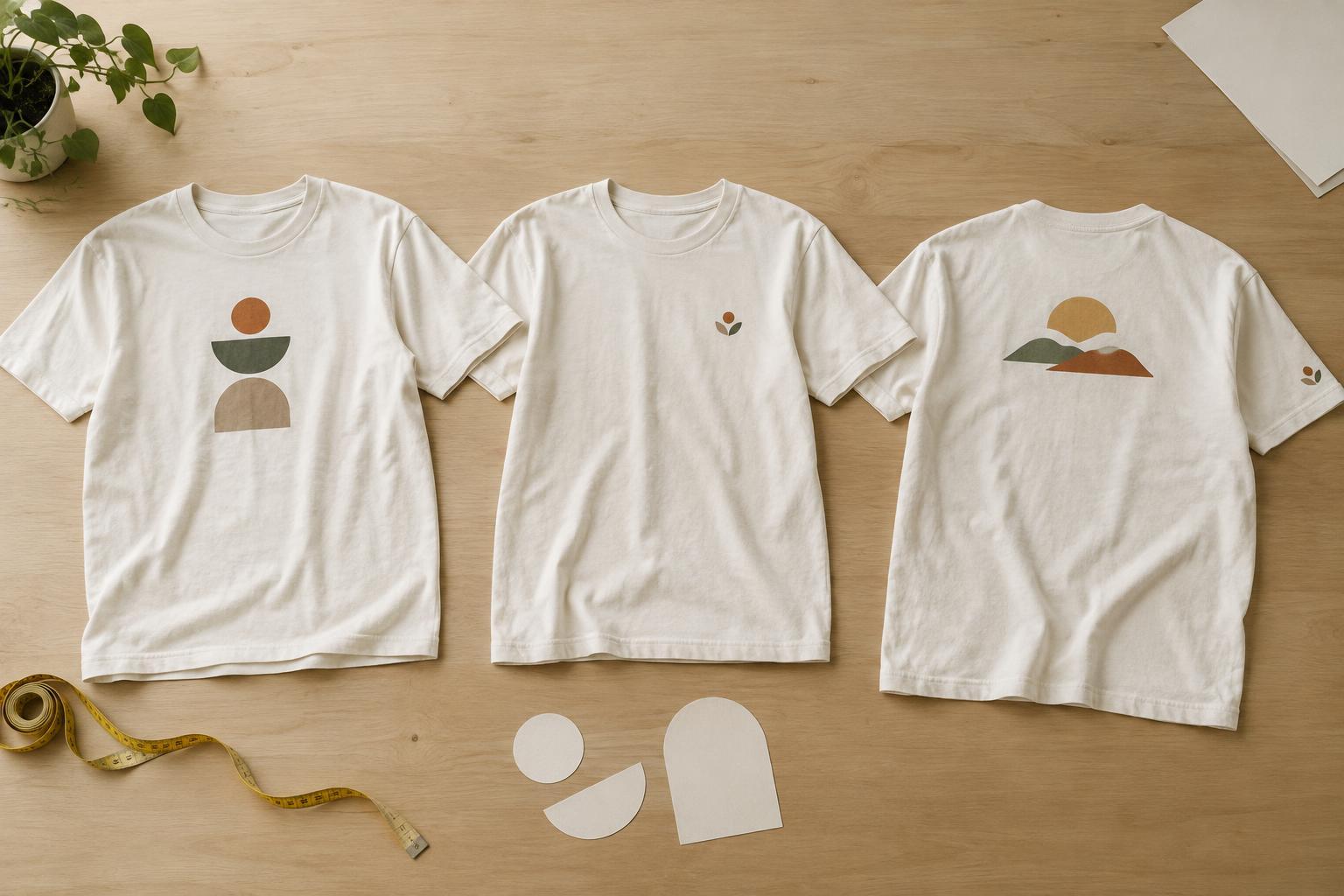
The same artwork may look different across cuts. A straight, roomy front can provide a broad, relatively uninterrupted area for a graphic. On a more fitted shirt, side shaping and the way the fabric follows the body can change how a wide design appears when worn. A print positioned well below one neckline may sit too close to a wider neckline on another.
Before committing to a design, consider the smallest shirt and the most fitted cut in the group. A compact graphic may adapt more easily across different shapes than artwork that stretches nearly from seam to seam. If you are preparing multiple cuts, check placement on each blank rather than assuming one measurement will suit them all. Choosing the shirt for comfort first, then adjusting the artwork to its shape, usually makes for a more wearable result.