Start with the chart, not the size label
It is common for chest, waist and hip measurements to fall in different columns of a T-shirt size chart. A size label is a shorthand for a set of garment proportions, not a verdict on your body. Your aim is to find a shirt that feels comfortable where it needs room while looking the way you want.
First, check whether the chart lists body measurements or finished-garment measurements. Body measurements describe the person the shirt is intended to fit; garment measurements describe the shirt itself. If the chart gives flat widths, such as an underarm-to-underarm measurement, compare them with a well-fitting T-shirt laid flat rather than with a measurement taken all the way around your body. Also check the units and any notes about the intended fit.
Let the tightest area guide your first choice
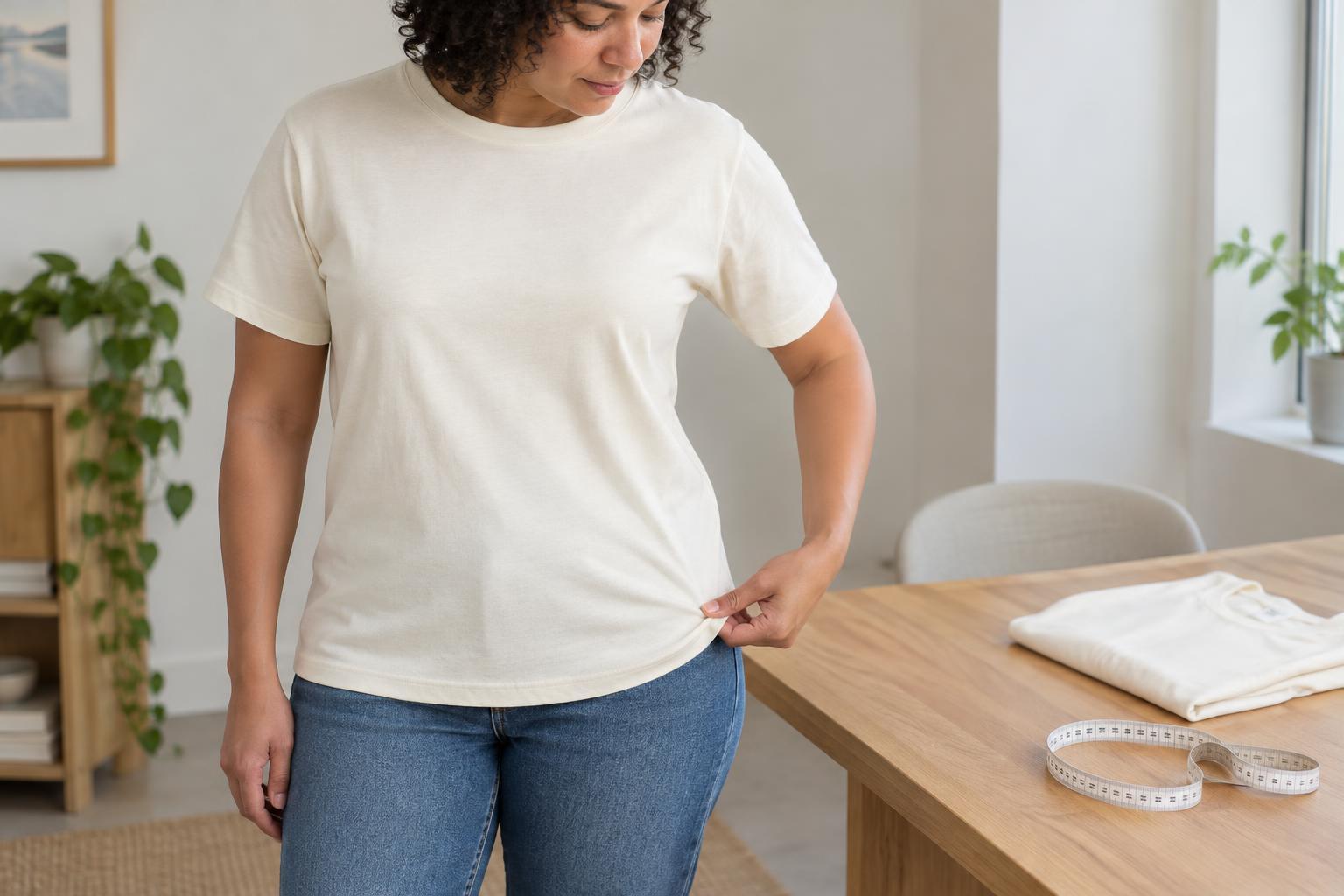
Take your chest, natural waist and fullest hip measurements with a flexible tape held level and comfortably close, without pulling it tight. Then compare each measurement with the same brand’s chart for the specific style you are considering. If two areas suggest a smaller size but one suggests a larger size, begin with the larger size as a candidate. You can judge whether the extra room elsewhere suits you; you cannot count on a shirt feeling comfortable if it is too narrow at a point you need it to pass over.
Which area matters most depends on the shirt’s shape and length. For a long, straight tee, the hip measurement may be decisive because the hem sits near the fullest part of the hips. For a short boxy tee ending above the hips, chest width and shoulder placement may matter more. A fitted waist can make a waist measurement important even when the chest and hips appear straightforward. Look at the garment’s outline, not just its size name.
Account for stretch and the fit you prefer
Fabric changes how a shirt feels in use. A soft jersey with some stretch may accommodate a close fit more readily than a firmer fabric, but stretch is not a reason to ignore a noticeably small measurement. A shirt stretched across the chest or hips may pull, ride up or distort a graphic. Fabric weight and recovery also affect how smoothly a tee hangs, so two shirts with similar listed widths can feel different.
Decide whether you want a close, regular or relaxed fit before choosing between sizes. If you dislike fabric clinging at the waist or hips, give those areas more room even when the chart suggests a smaller size could fit. If you prefer a neat shoulder and a loose body, look for a cut designed with those proportions rather than relying only on sizing up. Going up a size usually changes the shoulders, sleeves and length as well as the body width.
Use a shirt you own as a reality check
A T-shirt you already like can make an unfamiliar chart easier to interpret. Lay it flat without stretching it and measure across the chest, across the waist if it tapers, and across the hem. Note the length and shoulder width too. Compare those dimensions with the finished-garment chart, if one is available, while remembering that your reference shirt may have changed shape through wear or washing.
If you are between sizes, think about what bothers you more: extra room or a restrictive spot. Check product photos or fit descriptions for clues about where the hem falls and how the body is cut, but treat images as guidance rather than a precise measurement tool. When ordering several custom tees for different people, ask for individual size choices where possible instead of assuming one fit will suit everyone.
Consider the design and care before deciding
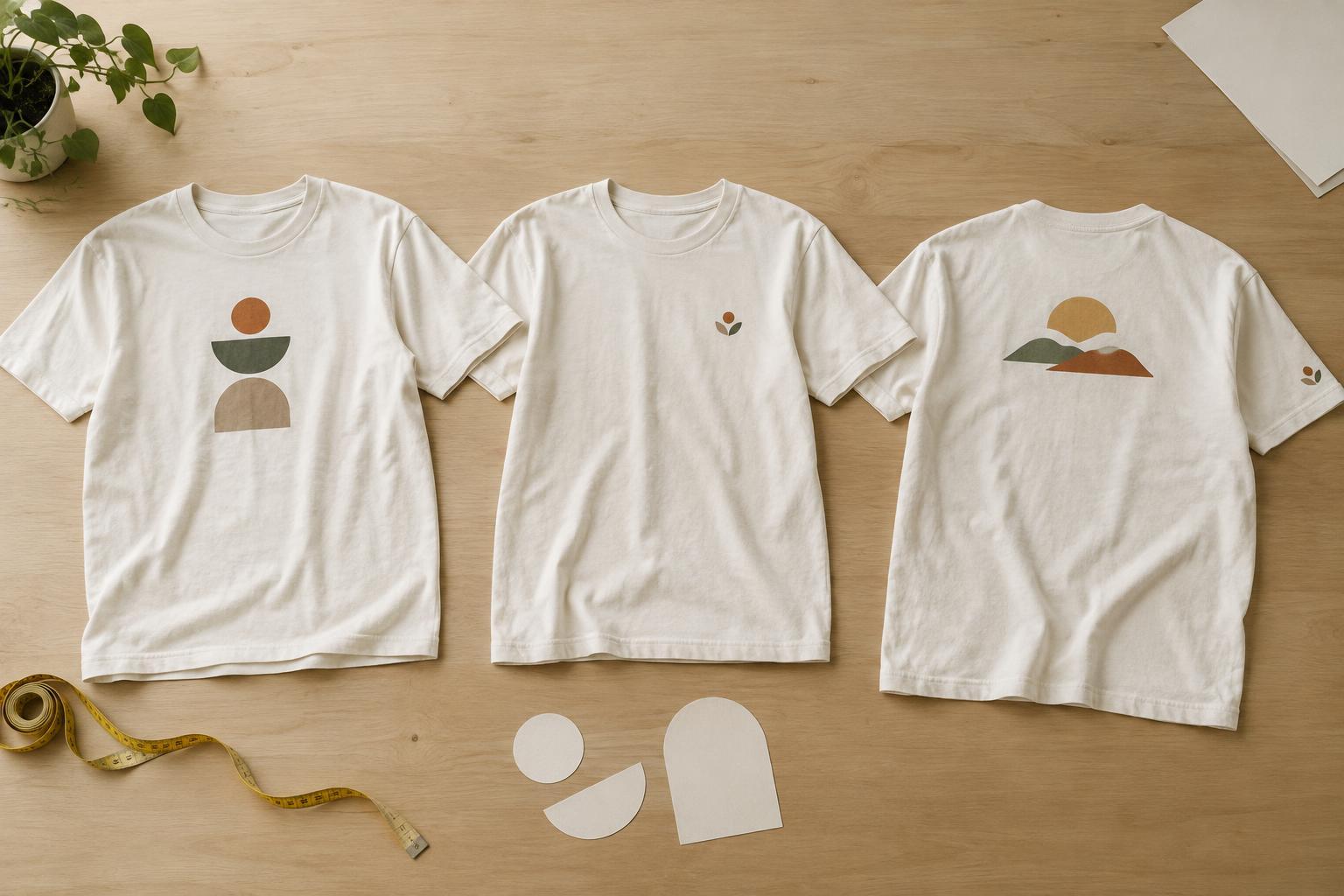
For a printed T-shirt, fit affects how the artwork appears. A design placed across a tight area may look stretched or curve more around the body; an oversized shirt can make a small chest graphic appear higher, lower or less prominent than expected. If the design’s position is important, consider the likely print area on each size and how the shirt will sit when worn. Sizing up alone will not necessarily create the proportions you want.
Finally, read the garment’s care instructions and any sizing notes before committing. Different fabrics and construction methods can behave differently after laundering, so avoid assuming every shirt will change size in the same way. When your measurements disagree, the best choice is usually the size and cut that allow comfortable movement at the most restrictive point while preserving the overall shape you want.